

H2O Audio Tri Run: Two-minute review
The H2O Audio Tri Run are bone conduction headphones designed for runners and cyclists who want to listen to music while staying aware of their surroundings. They undercut rivals on price and strip everything back to the essentials. No app, no frills, just good enough audio and a straightforward experience.
They’re not for swimming, despite their IPX8 waterproof rating. H2O Audio already makes a range of multi-sport devices, including the H2O Audio Tri 2 Pro Multi-Sport. But the Tri Run rely solely on Bluetooth with no onboard storage, so there’s no point taking them to the pool because the water will block the signal. What that waterproofing means is you don’t need to worry about sweat, rain or cleaning them with water.
Bone conduction transmits sound through your cheekbones, bypassing your ear canal. (To find out more, we have a handy how bone conduction works guide.)
They’re cheap, reliable and mostly comfortable. Sound is acceptable for the form factor, the fit is secure, and they’re genuinely easy to use. But battery life is just fine, the neckband design won’t suit everyone, and competition is fierce in this space. Let’s get into it.
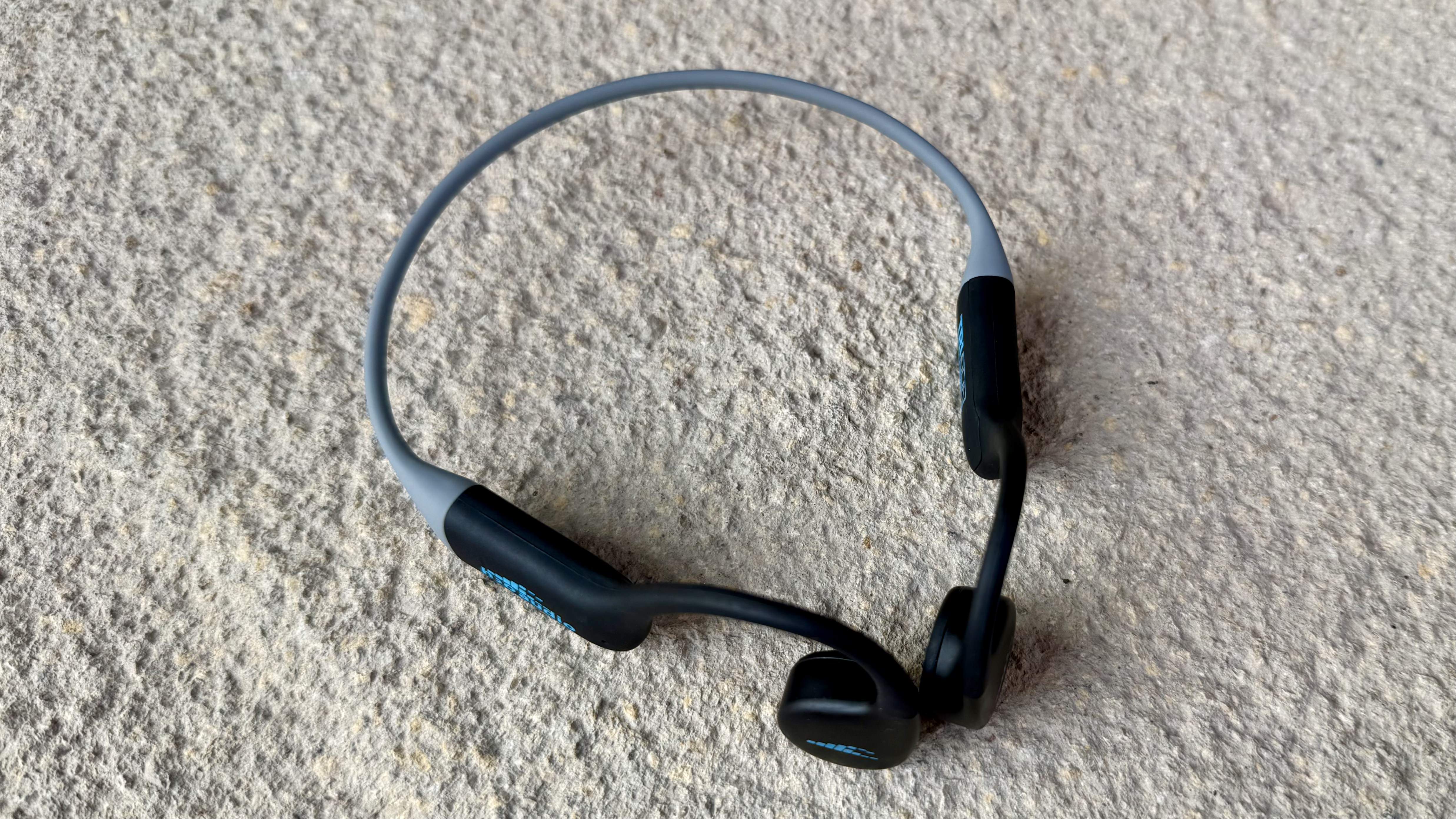
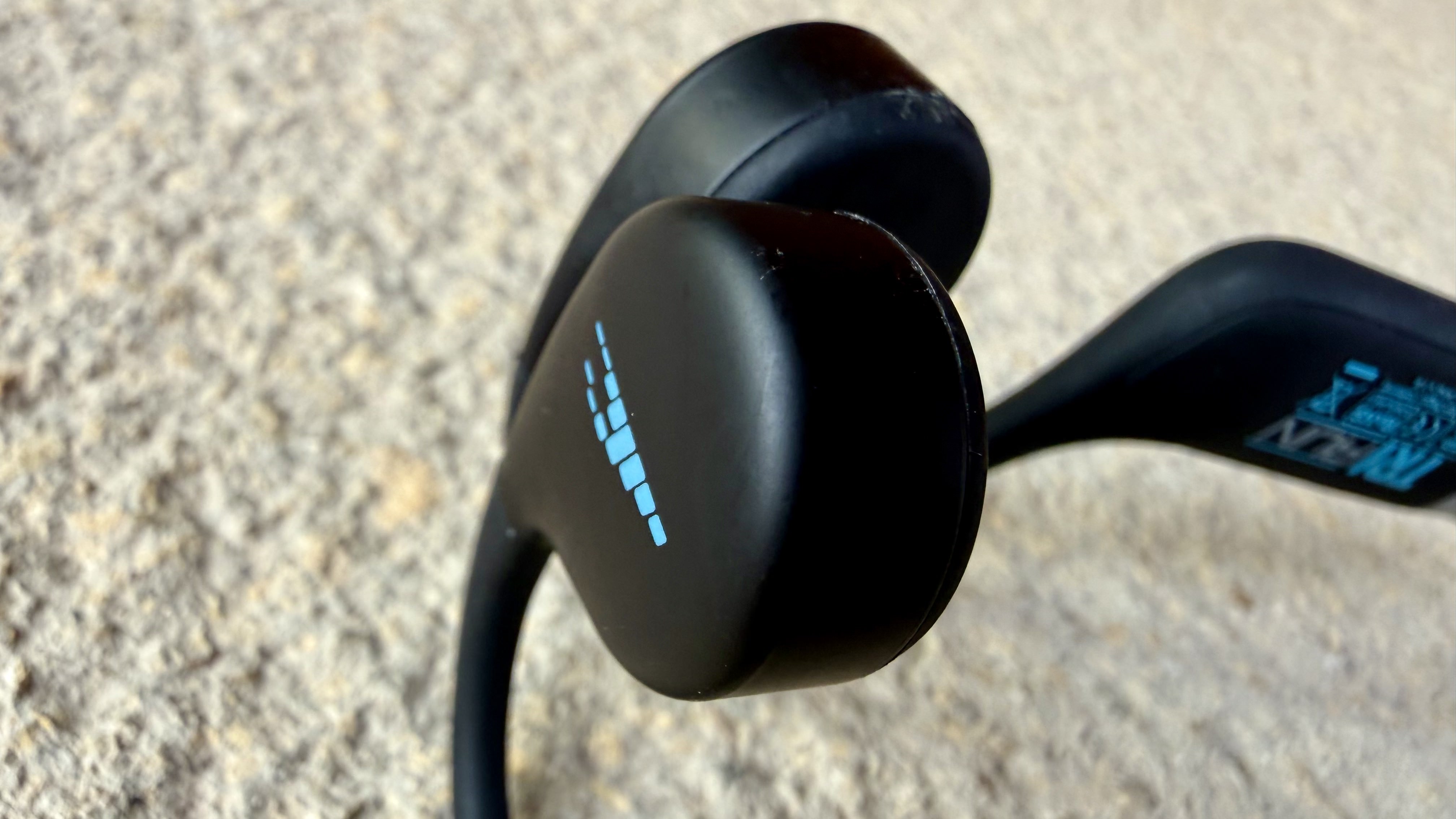
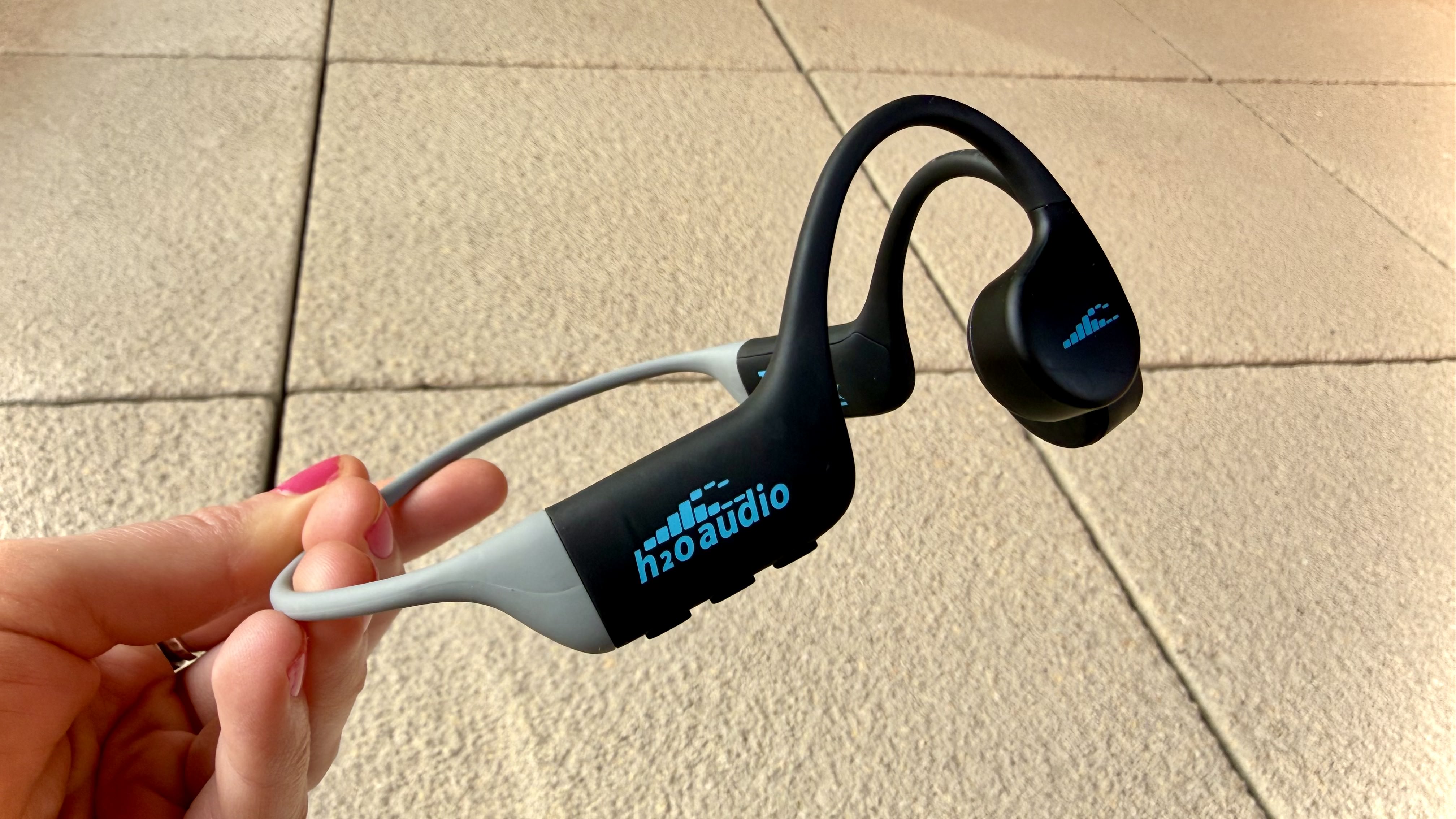
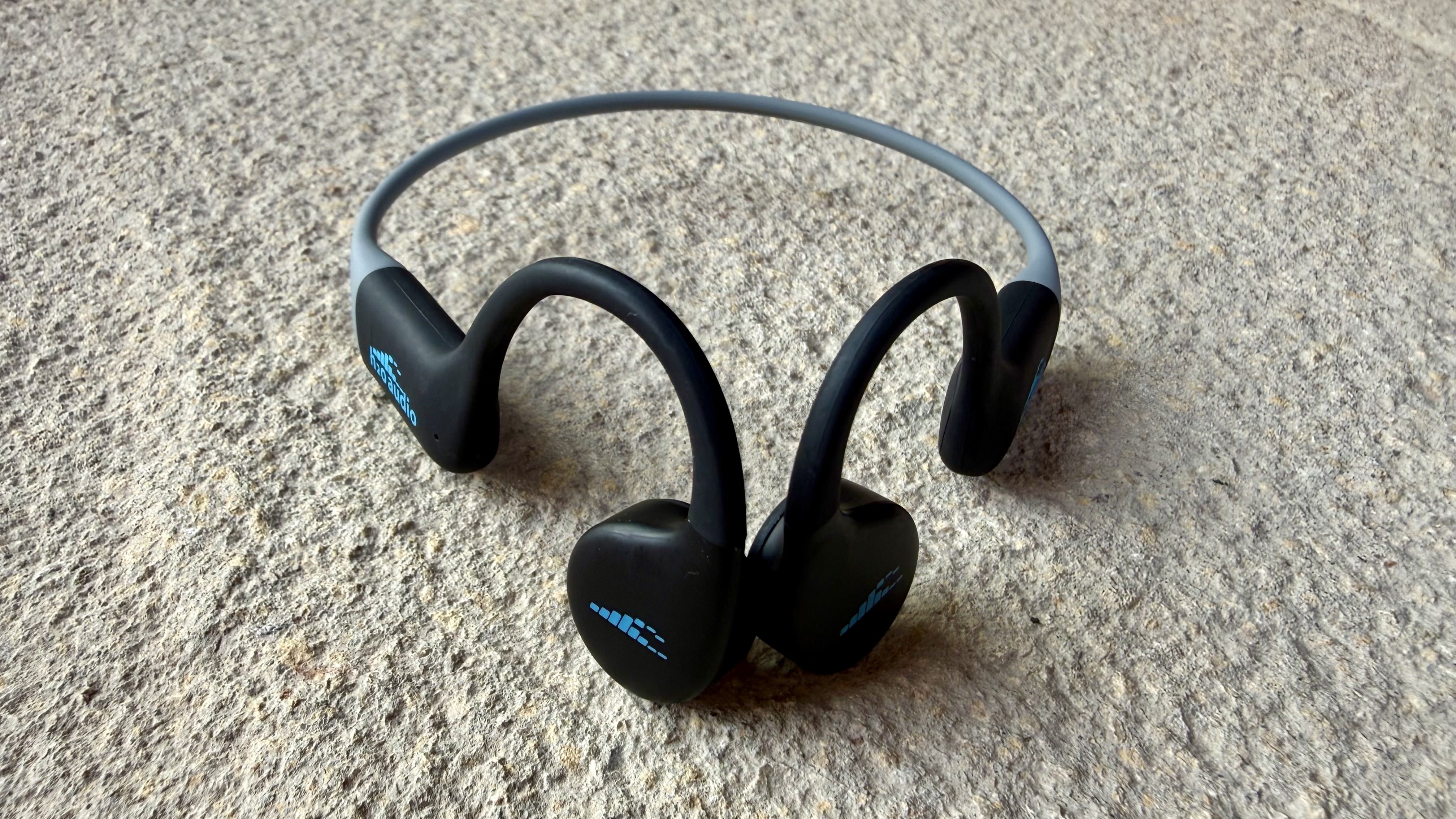
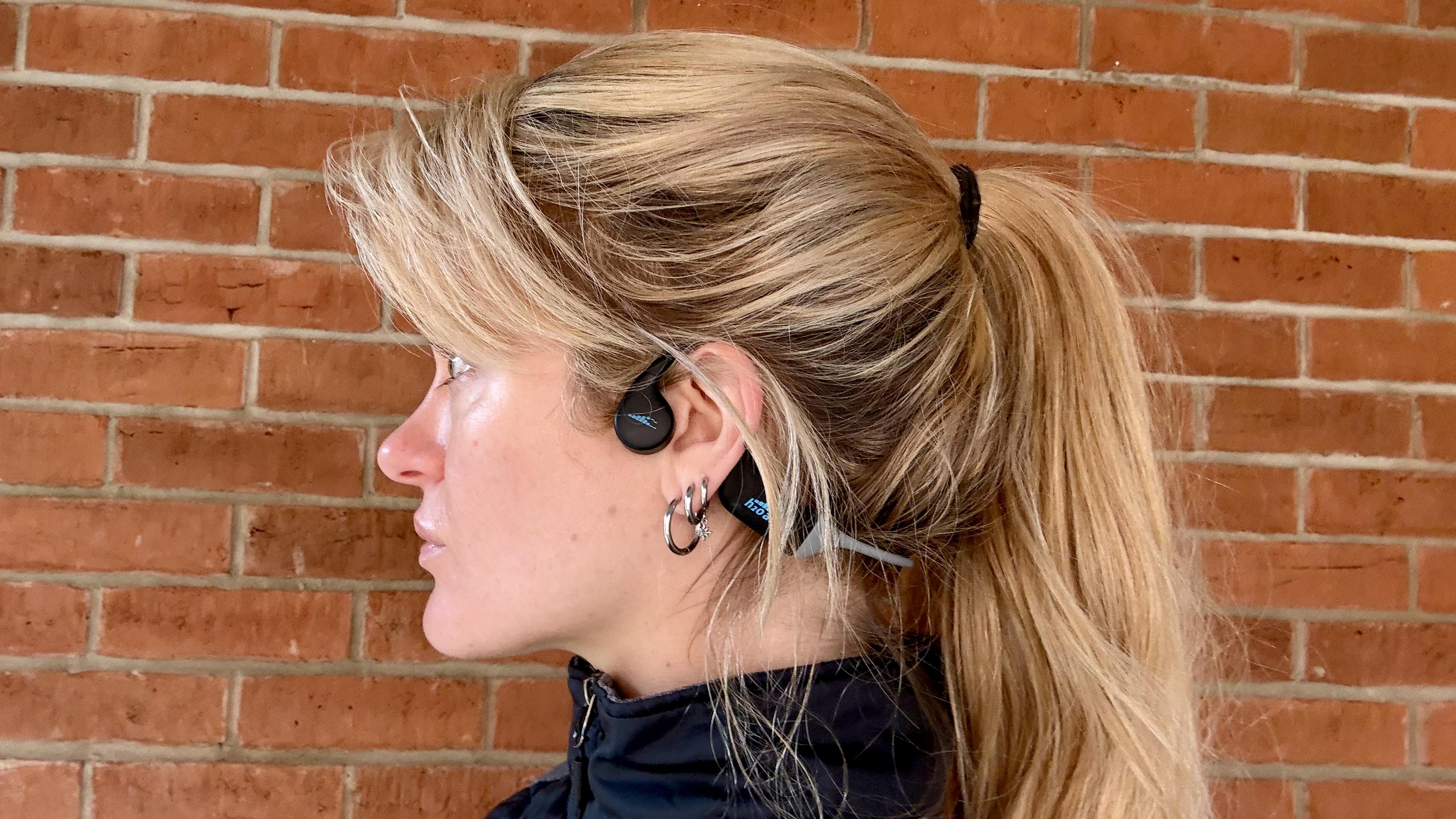
The Tri Run have a neckband design with the bone-conduction transducers sitting against your cheeks, between your ear's tragus and your high cheekbone. It’s a style you’ll either get on with or you won’t.
I’m not entirely sure I get on with them. I can never quite put my finger on what it is with a design like this. It’s not uncomfortable exactly, but I’m always aware of the transducers sitting against my face in a way that I’m not with other styles of bud. I have a lot of hair, which may not help with the fit of the ear hooks, and during colder testing sessions, a high-collared jacket displaced them more than once.
There’s a small rubber accessory in the box that can be used to tighten the fit for smaller heads, but that didn’t resolve things for me. It may just be that I’ve tested too many comfortable wireless buds recently and I've been spoiled by them. Either way, it’s worth flagging because comfort here is highly subjective, and if you haven’t tried neckband-style buds before, don’t assume they’ll feel comfortable.
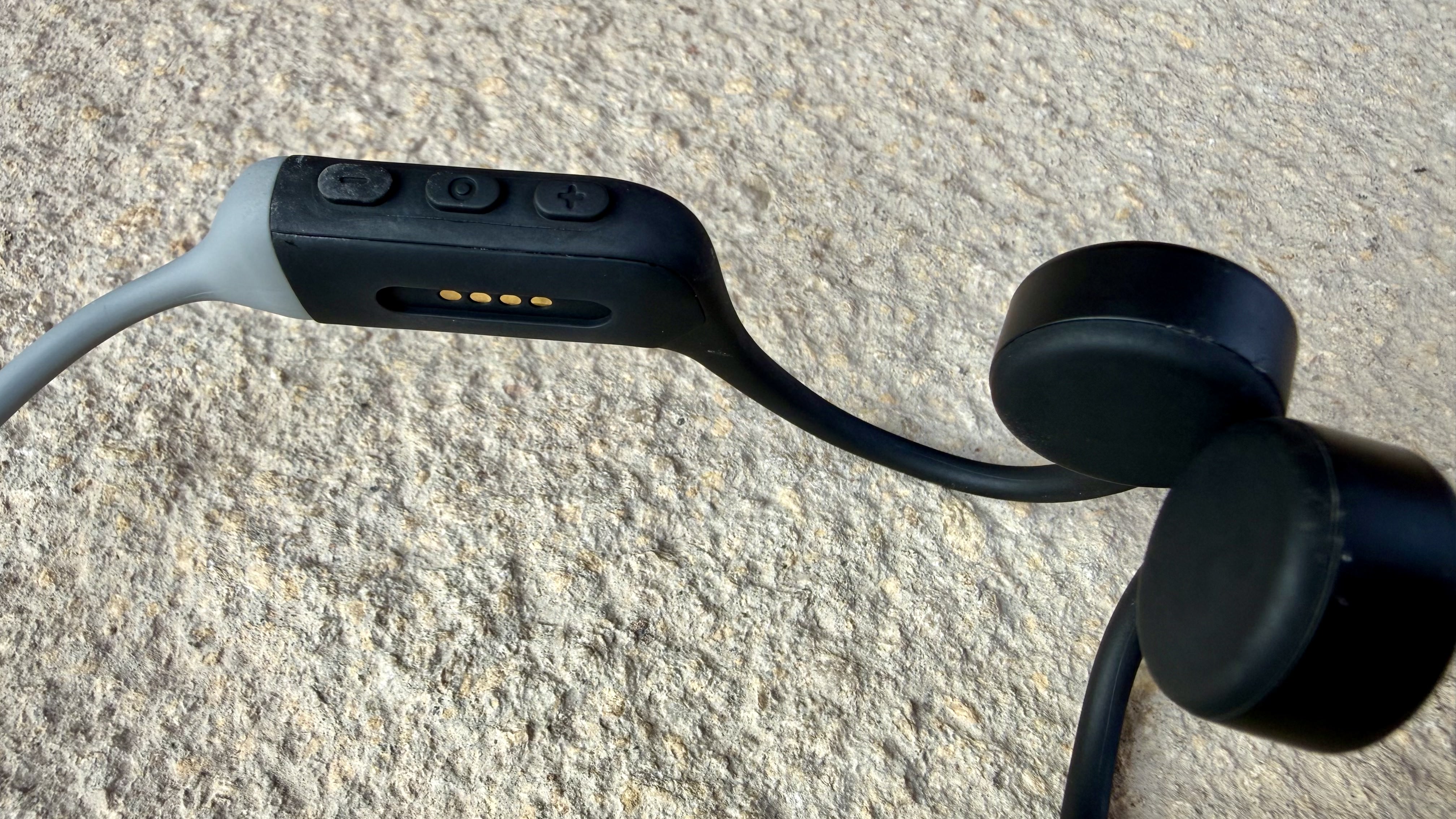
The band itself is light at 14g, flexible and sturdy, with a matte rubberized finish. Controls sit on the right side, with three physical buttons for power/playback, and volume up and down.
The buttons are easy to use on the move. I always tend to prefer a physical press to touch controls when I’m running, so there’s no ambiguity about whether it’s registered. The middle button, which handles power and play/pause, is responsive.
The volume buttons occasionally took a moment or two to register, but there’s a helpful audio tone when you hit max volume, which I liked — although you may reach that much sooner than you’d expect.
There’s no app here or companion software, so there’s nothing to tweak or change. Just turn them on and they pair seamlessly. Then every time you switch them on, they tell you whether your battery is high or low.
The audio is far from the level of quality you’d get from the best headphones, the best earbuds or even the best open earbuds. These are affordable bone-conduction headphones and they sound it. But I think how much that matters depends almost entirely on what you like to listen to.
Tracks with presence in the highs and mids come through well here. I found poppy, energetic tracks, such as New Constellations’ Hot Blooded sounded bouncy and enjoyable. There’s clarity in the upper ranges, vocals sit forward in the mix and there’s enough going on to make a run feel good. Podcast lovers are also well-served with clear, undistorted voices at most volume levels.
Bass-heavy music is a different story. Something like Hanumankind’s Big Dawgs, which is a staple on my workout playlist, simply doesn’t hit. There’s no low-end weight, so if you like listening to bassy tracks, you’ll notice the absence.
The volume is adequate in most quieter conditions. Running on my own down an off-road path, I could hear everything I needed to, but I could hear just as well running through the city first thing in the morning too.
Things were different in windy and noisy environments — I struggled to push the volume high enough, but that’s par for the course with most open designs.
Also, at high volumes you might notice a mild vibrating sensation in your cheeks or jaw. That’s a known side effect of bone conduction. It never reached the point of discomfort for me with the Tri Run, but it’s worth knowing about.
H2O Audio quotes six hours of battery life, and in testing I got almost exactly that. That said, six hours is on the lower end for bone-conduction headphones. The Shokz OpenRun Pro 2, for example, offer a huge 12 hours of battery, double what you get here. Granted, we’d consider them a high-end option, but with weaker audio and fewer features, I might have expected battery life to stay stronger.
It’s a similar story with open earbud rivals, like the Shokz OpenFit 2+, which offer 11 hours. That said, the Tri Run do offer an hour more than some other budget bone conduction headphones, such as the Jabees 7Seven, which only offer five hours.
Overall, there’s nothing wrong with the H2O Audio Tri Run. They fit securely, they’re easy to use, they’re waterproof, and they deliver acceptable sound for the form factor.
For a certain kind of runner or cyclist, someone who wants cheap, reliable, no-fuss awareness of their surroundings and mainly listens to poop and podcasts, they’ll get the job done without complaint.
But for everyone else, the value proposition is shakier than the price tag suggests. You won’t have to spend much more to get noticeably better performance, which we’ll get to below. The open earbud market in particular has expanded rapidly enough that there are now strong alternatives at similar prices.
If the neckband style suits you and simplicity is genuinely what you’re after, the H2O Audio Tri Run make sense. Otherwise, it’s worth shopping around — if you can get the Shokz OpenRun Pro 2 on sale for this kind of price, we'd recommend those. And if you'll switch from neckband bone-conduction buds to wireless open earbuds, the Huawei FreeArc are an excellent option at around the same price.
H2O Audio Tri Run review: Specifications
|
Drivers |
Bone conduction |
|
Active noise cancellation |
No |
|
Battery life |
Up to 6 hours |
|
Weight |
14g |
|
Connectivity |
Bluetooth |
|
Frequency range |
Not specified |
|
Waterproofing |
IPX8 |
H2O Audio Tri Run review: Price and release date
- How much does it cost? $99.99 / £76 / AU$145
- When did it first come out? Released in February 2026
- Where can you get it? Available globally
At $99.99 / £76 / AU$145, the Tri Run headphones sit at the more affordable end of the bone conduction market. That price makes sense when you think about the trade-off here. You’re paying for situational awareness rather than audio quality, and that’s a reasonable exchange if open-ear listening is a priority for you.
That said, affordable here is relative. The Shokz OpenRun Pro 2, our top pick for running in our best workout headphones guide, costs $179.95 / £169.00 / AU$319.00, which is a lot more. But it also offers significantly better performance.
And if you want some excellent bone conduction headphones that can handle swimming too from this same brand, the H2O Audio Tri 2 Pro Multi-Sport, our top pick in our best bone conduction headphones guide, comes in at £152 / $199.99 / AU$289.
There are also other budget bone conduction headphones on the market now too. Like the Jabees 7Seven bone conduction headphones for swimming and running, which are significantly cheaper at $59.99 / £47.99 / AU$99. They’re not perfect or topping any of our guides, but for the price, they’re terrific.
It’s also worth mentioning here that if open listening is your priority, there are now so many excellent buds to choose from as well. Yes, they’re a bit different to what the Tri Run headphones offer. But, for example, the Huawei FreeArc open buds are only £99.99 (roughly $130, AU$200). Yes that’s a little more, but you’re getting a great fit and much better sound quality.
So yes, the Tri Run might be cheaper than some rivals, but with no standout features they’re not automatically good value. It makes sense if you’re on a tight budget or simplicity is genuinely your priority. Otherwise, spending a little more gets you more.
H2O Audio Tri Run: Scorecard
|
Attributes |
Notes |
Rating |
|---|---|---|
|
Features |
Bone conduction, IPX8 and physical buttons are welcome. But there's almost nothing else, and battery life isn't great. |
2.5 / 5 |
|
Performance |
Clear and enjoyable for pop and podcasts, lacking in low-end and struggles to compete in noisy environments. |
3.5 / 5 |
|
Design |
Light, secure and waterproof with simple controls that work well on the move. Comfort will be subjective. |
4.5 / 5 |
|
Value |
They’re affordable but not exactly a bargain. Some rivals offer a far better experience for a small increase in price. |
3.5 / 5 |
Should I buy the H2O Audio Tri Run?
Buy them if...
You like to keep things simple
No app, no touch gestures, no features. You turn them on and they work. If that’s all you want, they deliver.
You know you like the neckband design
If you’ve tried this style before and you’re a convert, they’re a reliable and affordable choice.
You’re on a budget
At $99.99 / £76 / AU$145, they’re an affordable bone-conduction option, and you’re getting a solid and dependable package here.
Don't buy them if...
You could spare more
You don’t have to spend much more to get a boost in performance. If your budget has flexibility, shop around.
You want the best sound from an open design
There are other open-ear headphones at a similar or high price that offer more low-end presence and overall audio quality.
You like an app and extra features
There’s nothing beyond the basics here. No EQ, no customization and no companion app. If that matters to you, look elsewhere.
H2O Audio Tri Run: Also consider
Huawei FreeArc
If you're not wedded to the neckband-style but still want to hear your surroundings, check out these open buds from Huawei. Sound is excellent for the form factor, they're comfortable and they're only $20/£20 more than the Tri Run.
Read our full Huawei FreeArc review
H2O Audio Tri 2 Pro Multi-Sport
The H2O Audio Tri 2 Pro Multi-Sport are much more expensive, but they have a strong battery life, complete waterproofing, and onboard storage as well as a special Playlist+ feature that untethers you from your phone during a run or swim.
Read our full H2O Audio Tri 2 Pro Multi-Sport review
How I tested the H2O Audio Tri Run
- Tested for two weeks
- Used with an iPhone 16 Pro
- Ran with them in all sorts of environments
I tested the H2O Audio Tri Run over two weeks, taking them out running across a range of environments. Busy streets, a canal path and open countryside. I also kept wearing them after runs, grabbing a coffee and working in a cafe, to get a sense of how versatile they are beyond their stated purpose.
I paired them with an iPhone 16 Pro, using Spotify for music during runs and YouTube for video content. Testing took place in typical UK weather conditions (think wind, sun, rain all within the space of a day) and I made a point of trying them with different layers and necklines. From a light spring fitted running jacket to a high collared running coat, as I know this can make a real different to the way neckband-style headphones fit.
I’ve been reviewing consumer tech for more than 15 years now with a particular interest in how we use technology beyond the marketing claims. What fits into your life, what you’ll still reach for long after the novelty has worn off, and what’s reliable and comfortable enough to become a genuine daily staple.
- First reviewed March 2026
- Read TechRadar's reviews guarantee




