

OM System PEN: Two-minute review
Given the ongoing component shortages and price pressures, producing an affordable camera in 2026 is no mean feat — and that's exactly what OM System has achieved with the new PEN.
It has delivered the rangefinder-style mirrorless camera many PEN fans have been crying out for, and equipped it with in-body image stabilization, twin displays, a retro weather-proof design (IPX1-rated), and a range of fun computational photography modes — and kept the price to $1,000 / £850 / $AU1,800. Need a lens? The 14-42mm f/3.5-5.6 III kit (see below) is just $100 / £100 / AU$300 extra.
Beyond that kit lens, the OM PEN is part of the Micro Four Thirds system, with hundreds of lenses to choose, covering just about any situation, though any of these will add to the cost. I found it to be a great pairing with the low-cost Olympus 45mm f/1.8 for portraiture.
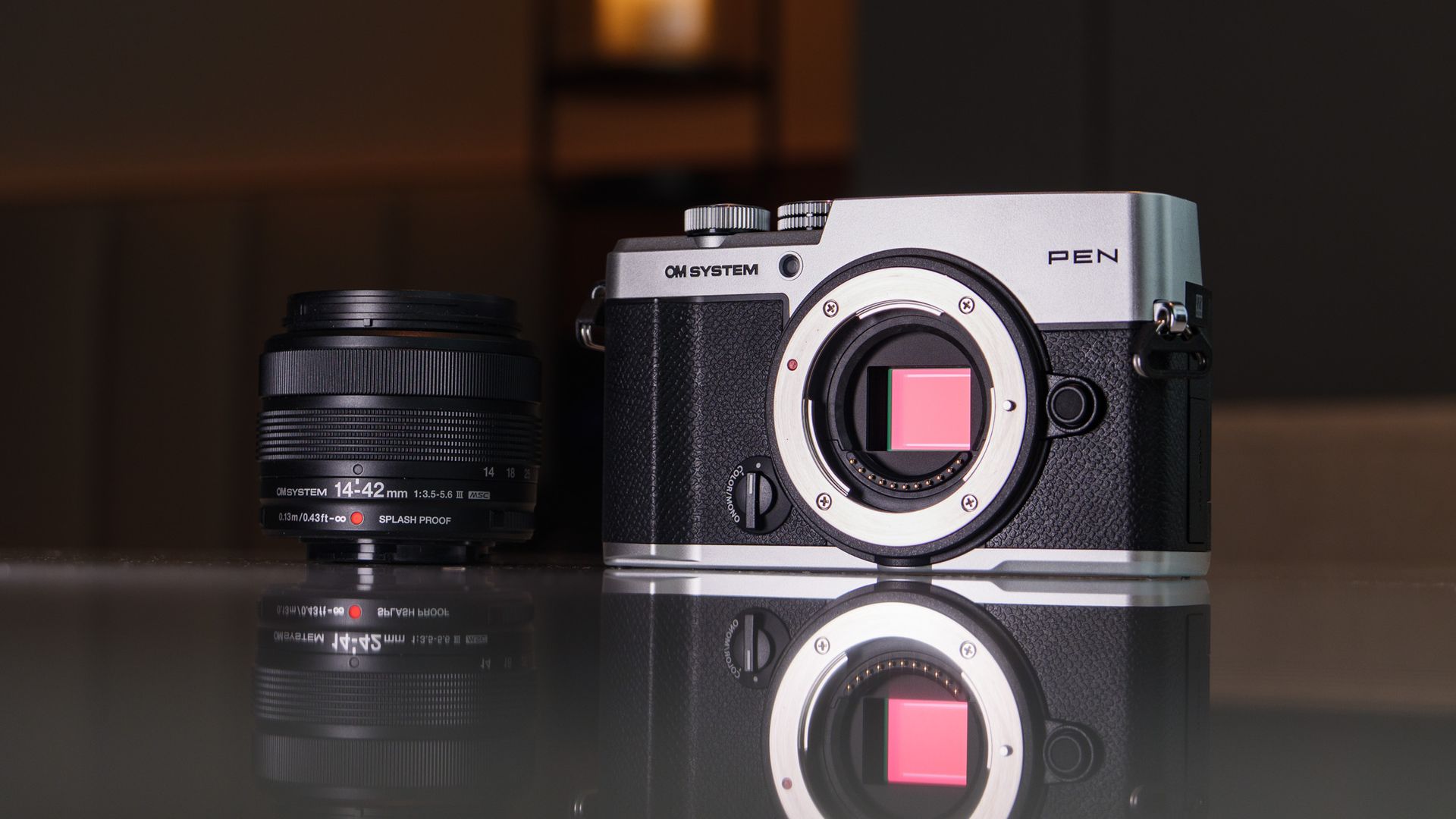
There's little that's new here, mind you — we have the same 20.4MP CMOS sensor with 5-axis image stabilization as previous models, including the OM System OM-5 II, and the same 121-point hybrid phase-detection autofocus, with stripped back subject-detection options. The vari-angle touchscreen and 2.36m-dot EVF are borrowed from previous models, too.
However, the OM PEN remains utterly compelling because it's so much fun to shoot the everyday with, so easy on the eye, and kind on the wallet. Sure, the PEN could be better in various areas (some of the controls are particularly fiddly), but all is forgiven when you consider the overall package, and that price tag.
Having used the camera for several weeks (and made direct comparisons with the excellent Lumix 10 premium compact), I think the OM System PEN as an ideal starter camera for smartphone upgraders — and it's the best beginner camera for 2026 so far.
OM System PEN review: Price and release date
- Announced in September 2026
- Costs $999.99 / £849 / AU$1,499 (body-only) or $1,099 / £949 / AU$1,799 with new 14-42mm f/3.5-5.6 III kit lens
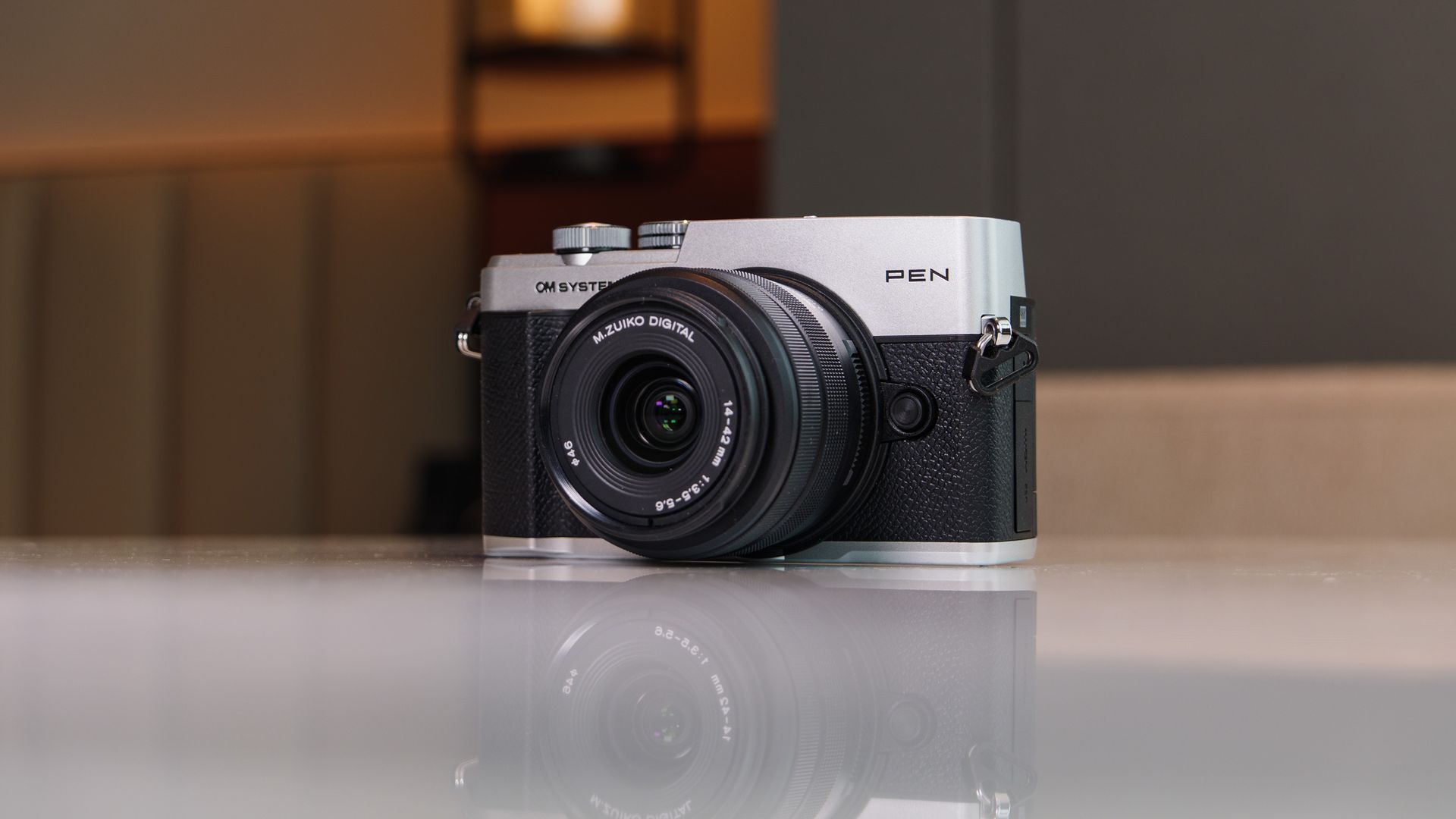
- Available in two colorways: all black, and black with silver trim
After years of rumors, OM System finally put its name on a successor for the Olympus PEN series of cameras. And like the OM-5 II before it, the OM System PEN is excellent value for money in an industry otherwise feeling the effects of component shortages and price hikes — where else can you find a new interchangeable-lens camera with a viewfinder and in-body image stabilization for less $1,000?
That price is for the body only, mind you, and if you're starting from scratch the best-value package is the camera with the new 14-42mm f/3.5-5.6 III zoom lens, and that costs $100 / £100 / AU$300 extra. The third-generation kit lens was announced alongside the camera, and gains a splash-proof design, matching the OM PEN camera.
The camera is available for preorder now in two colorways: black, and black with silver trim.
OM System PEN review: specs
Type: | Mirrorless camera |
Mount: | Micro Four Thirds |
Sensor: | 20.4MP (effective) MFT CMOS |
Autofocus: | 121-point hybrid phase detection, subject detection; cats, humans, dogs (stills only) |
Continuous shooting: | Up to 30fps (electronic shutter), 5fps mechanical |
Video: | 4K up to 30fps, C4K 24fps, 8-bit, OM-Log400 profile |
Viewfinder: | 2.36M-dot OLED EVF |
Screen: | 3.0-inch vari-angle touchscreen, 1.04m-dots |
Storage: | Single SD/SDHC/SDXC slot |
Connectivity: | 2.4 and 5GHz Wi-Fi, micro HDMI, USB-C, mic |
Battery | BLS-7, rated to 410 shots |
Dimensions: | 125.8 x 74.5 x 43.3mm |
Weight: | 13.9oz / 393g (with card and battery included, 344g without) |
OM System PEN review: Design
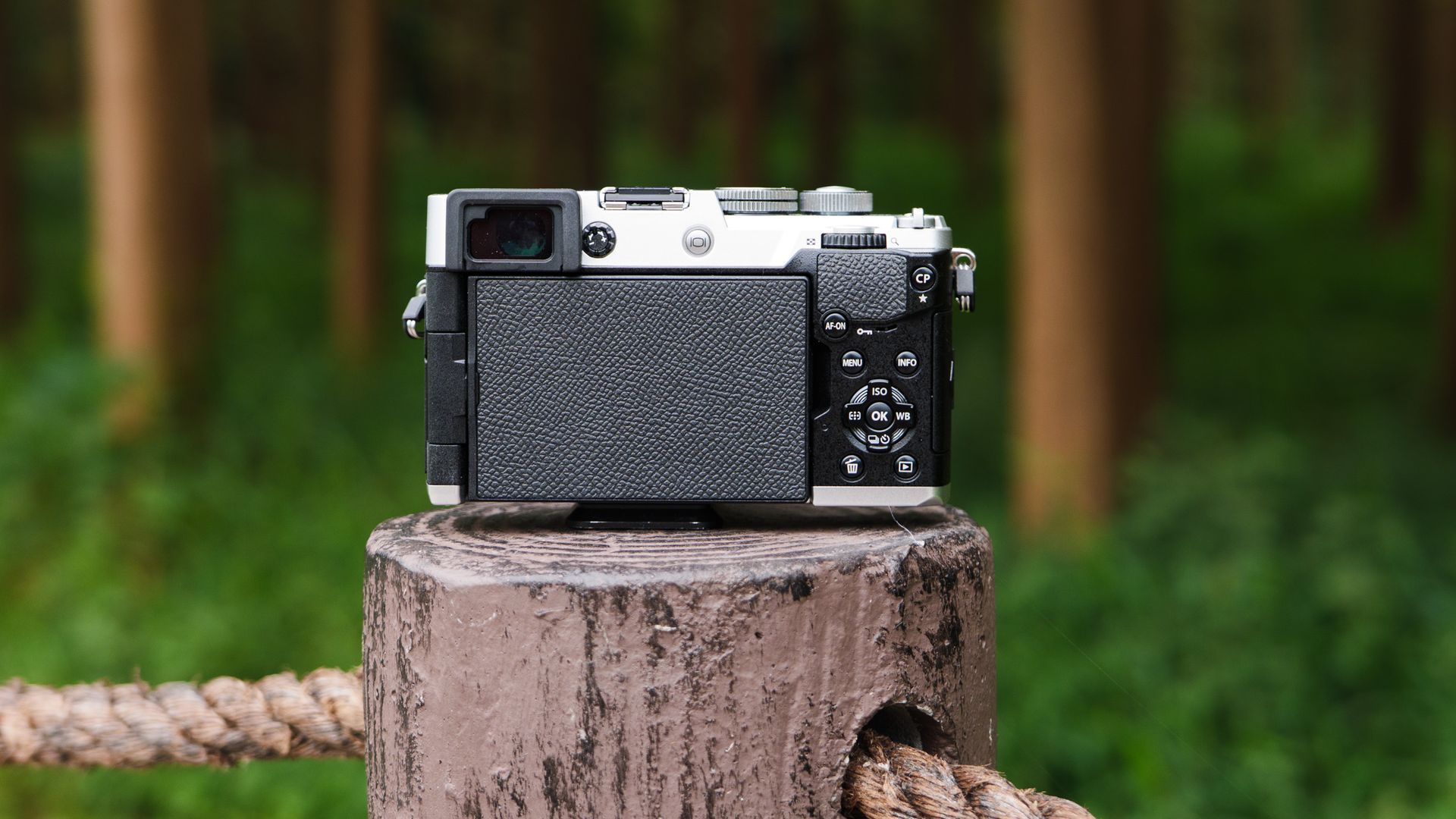
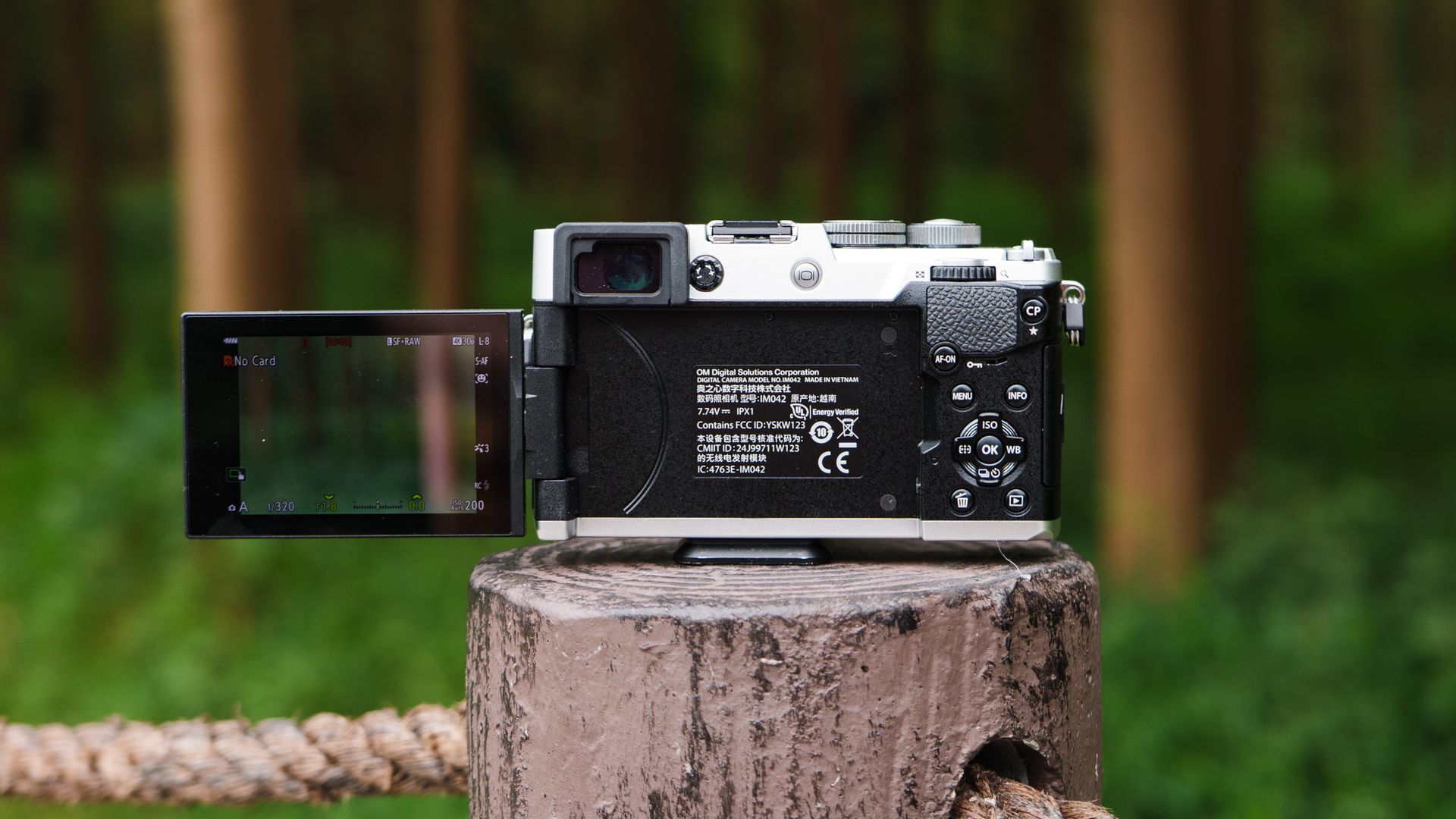
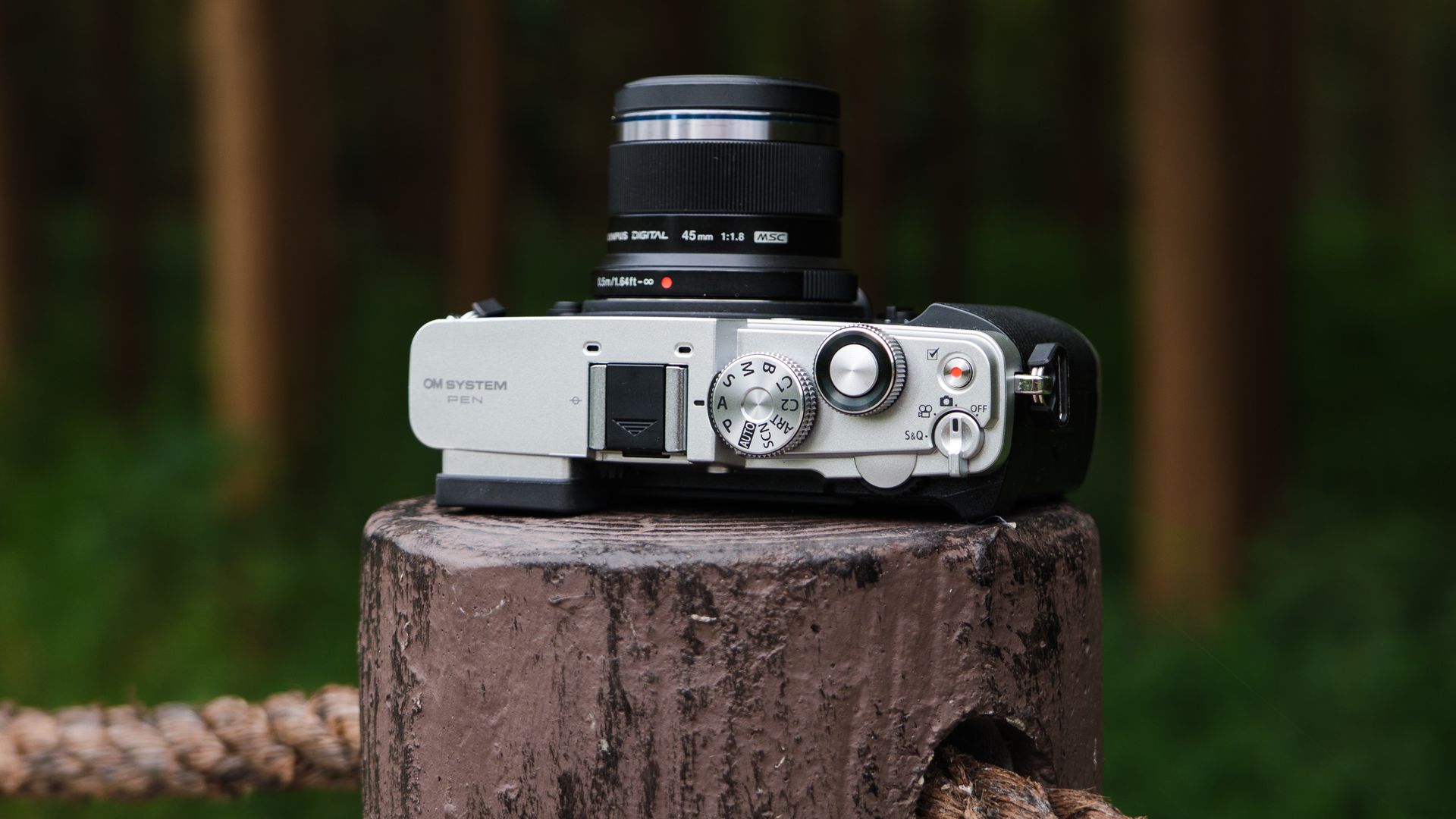
- Compact, IPX1-rated body that weighs just 13.9oz / 393g
- Twin displays: 2.36m-dot EVF and 1.04m-dot vari-angle touchscreen
- USB-C charging, mic port and hotshoe
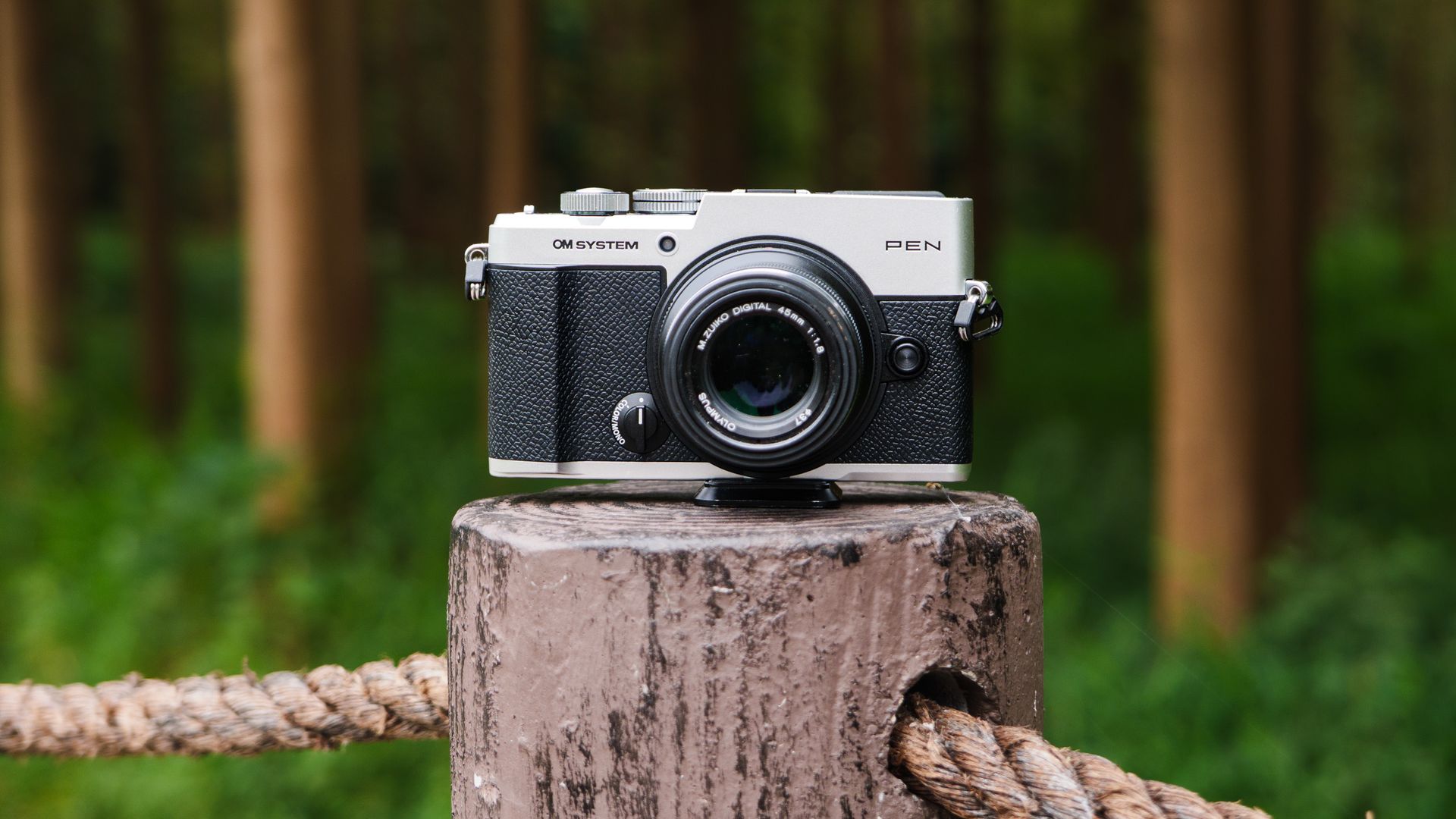
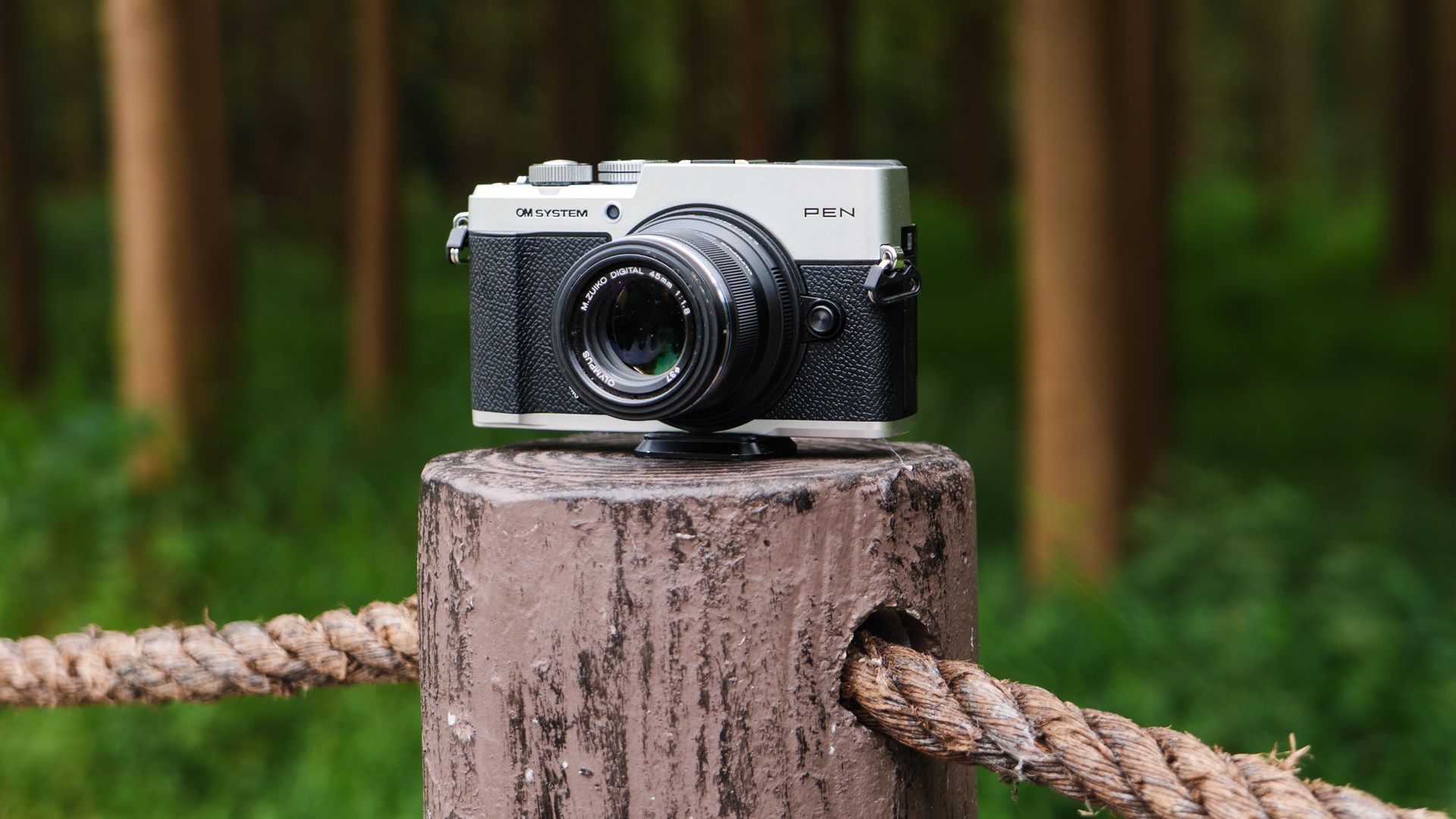
There's no shortage of OM System bodies, but the PEN is the first OM-branded rangefinder proper, with its 2.36m-dot EVF neatly tucked into the top-left corner of the compact, IPX1-rated retro body.
It's the same EVF that you'll find in the slightly pricier OM-5 Mark II — a camera that we awarded a 5-star rating, and which sits in top spot in TechRadar's best travel cameras guide.
The key difference between those two bodies is that the OM-5 Mark II has higher-rated weatherproofing, a pronounced viewfinder bump, and a larger grip — meaning it's better suited to inclement weather, outdoor photography, and use with larger lenses. The OM PEN is also a superb travel camera, but you'd typically use it on city breaks, for everyday and street photography with smaller lenses.
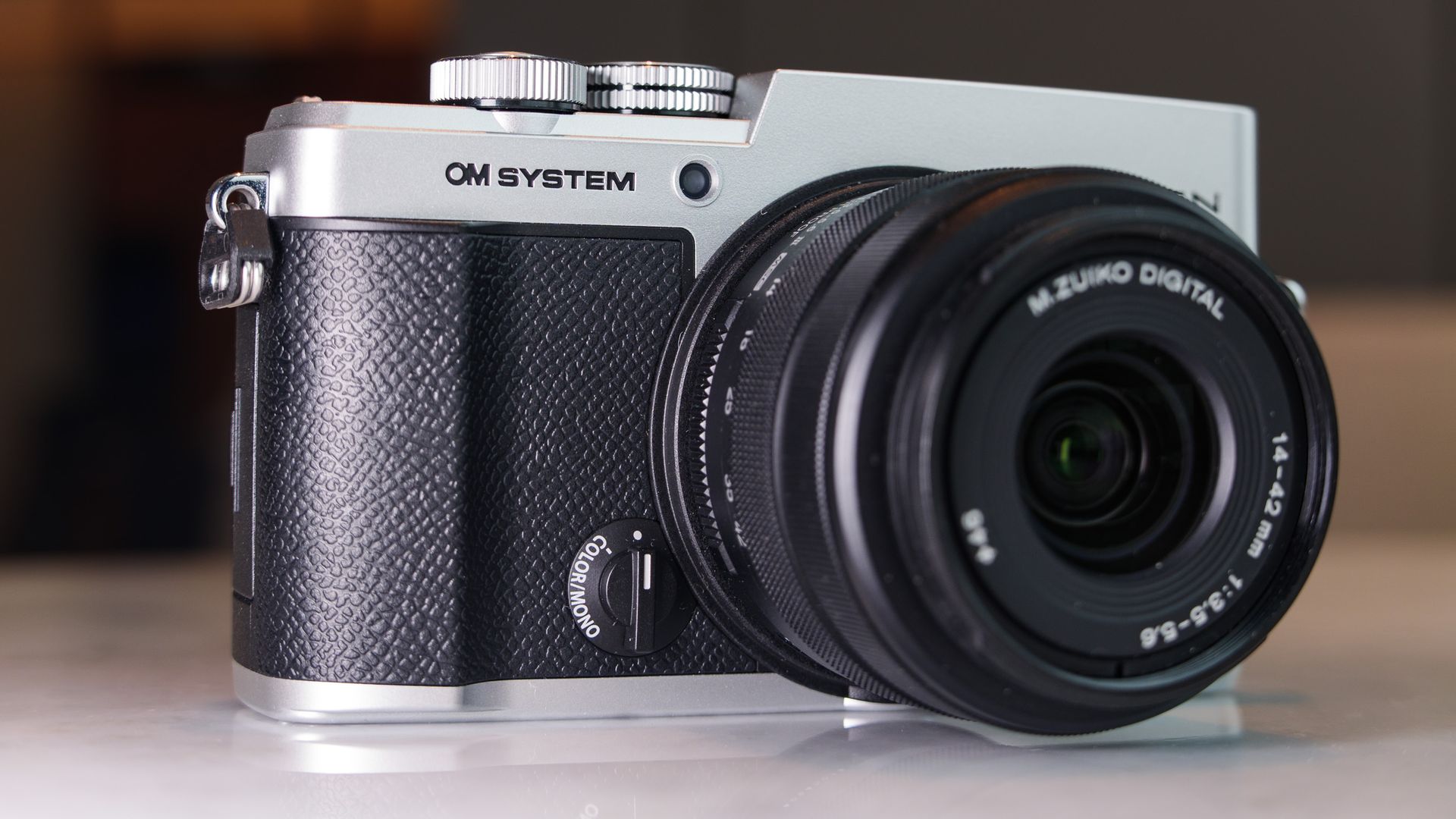
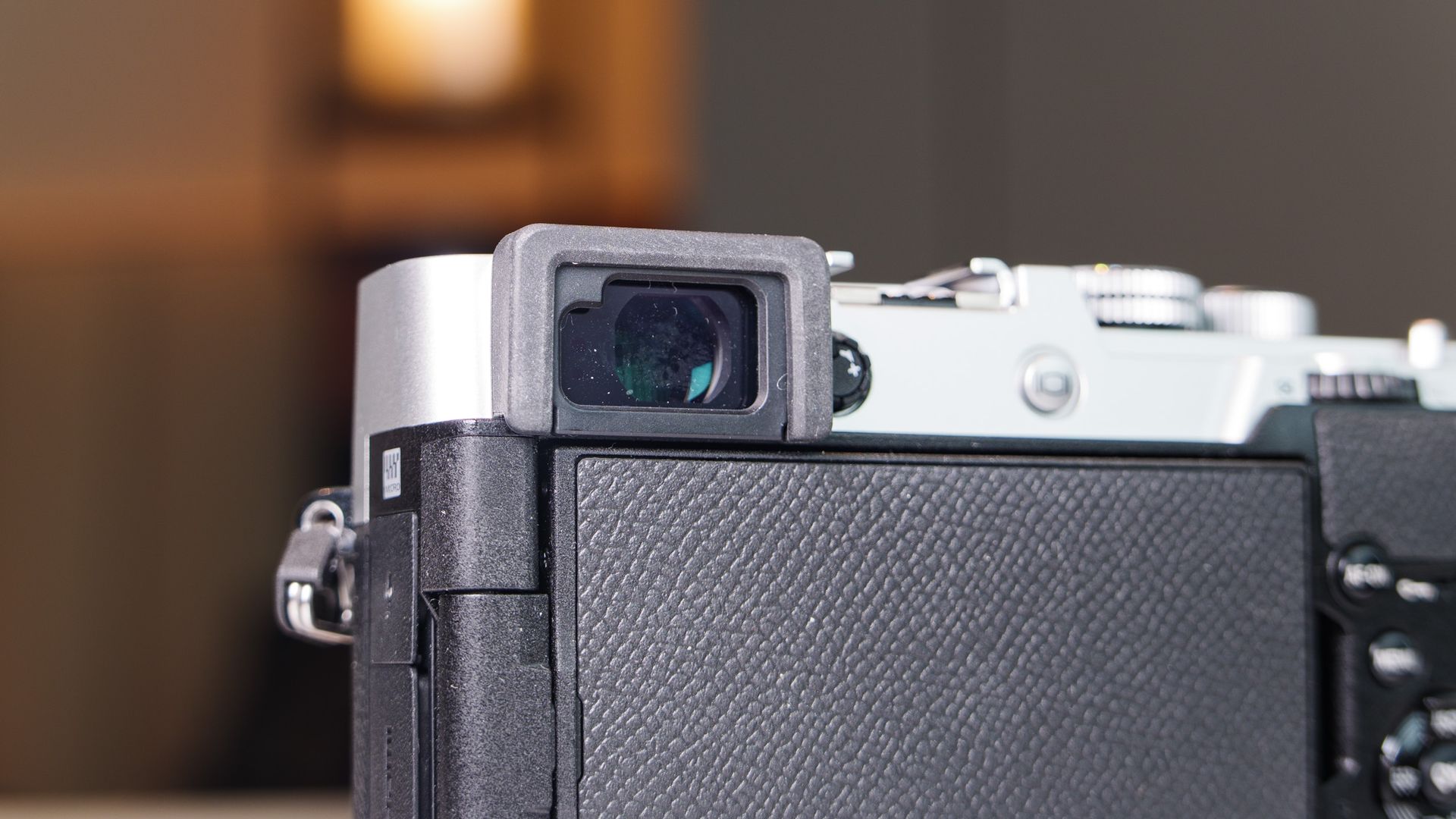
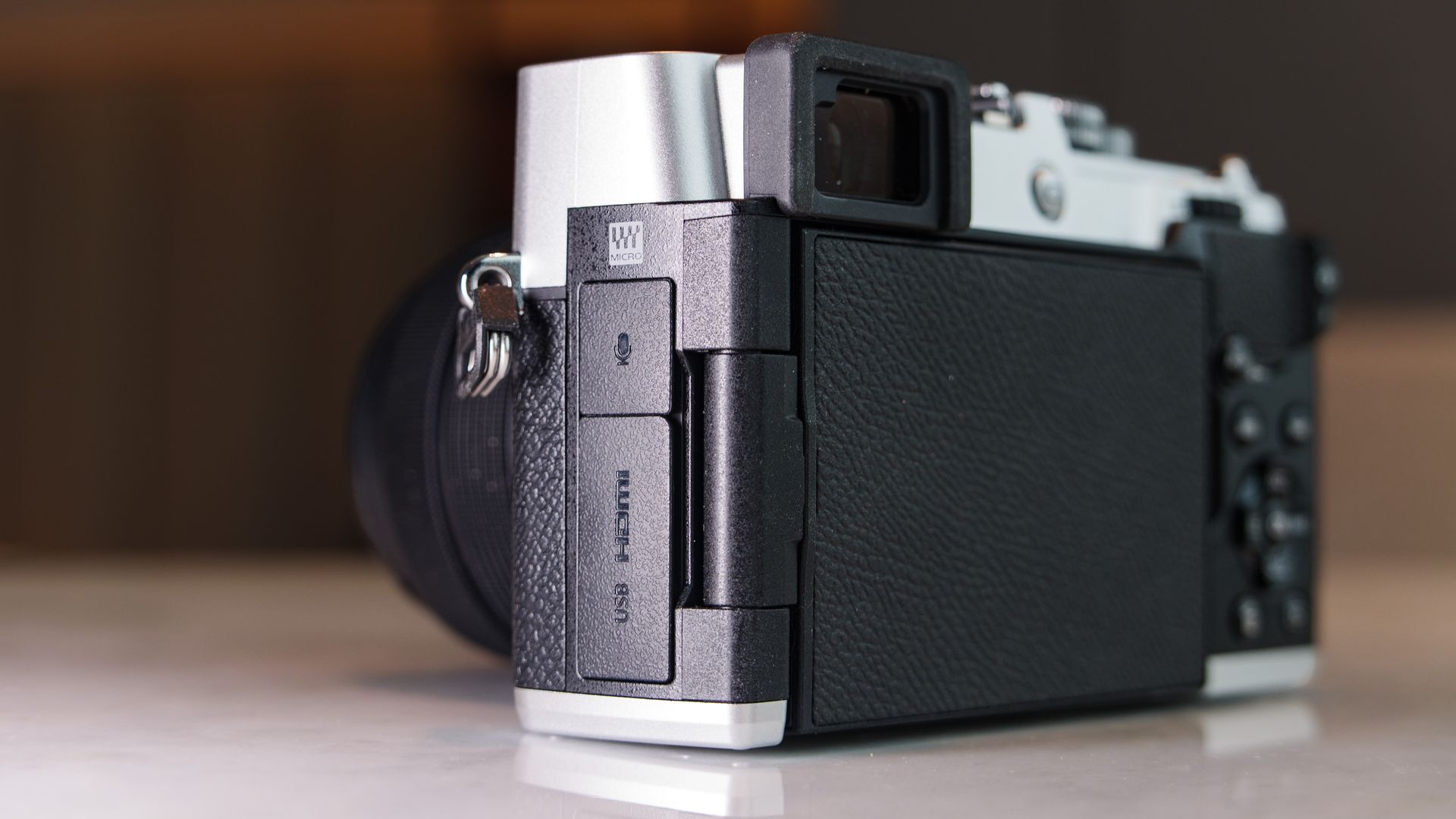
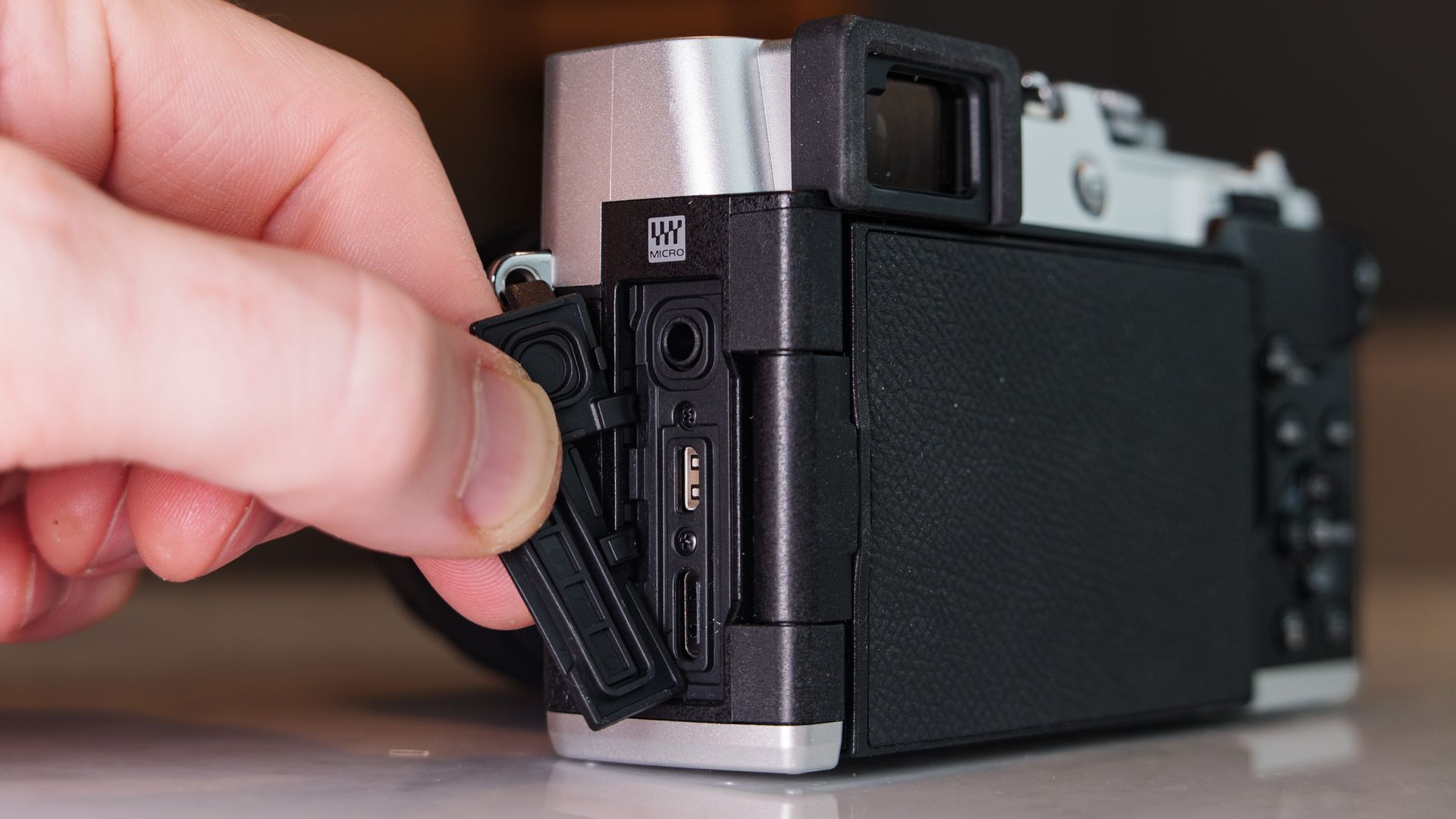
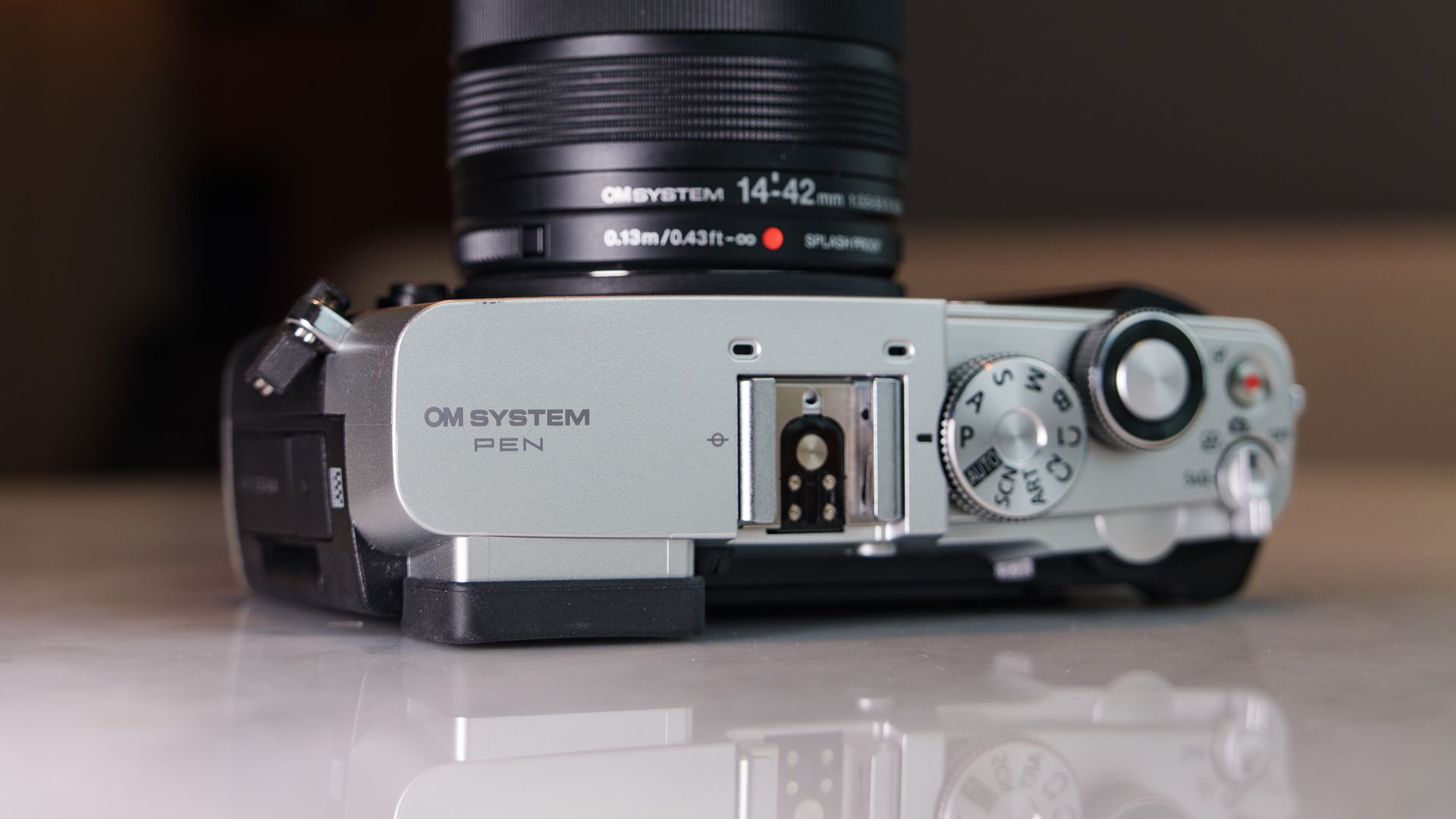
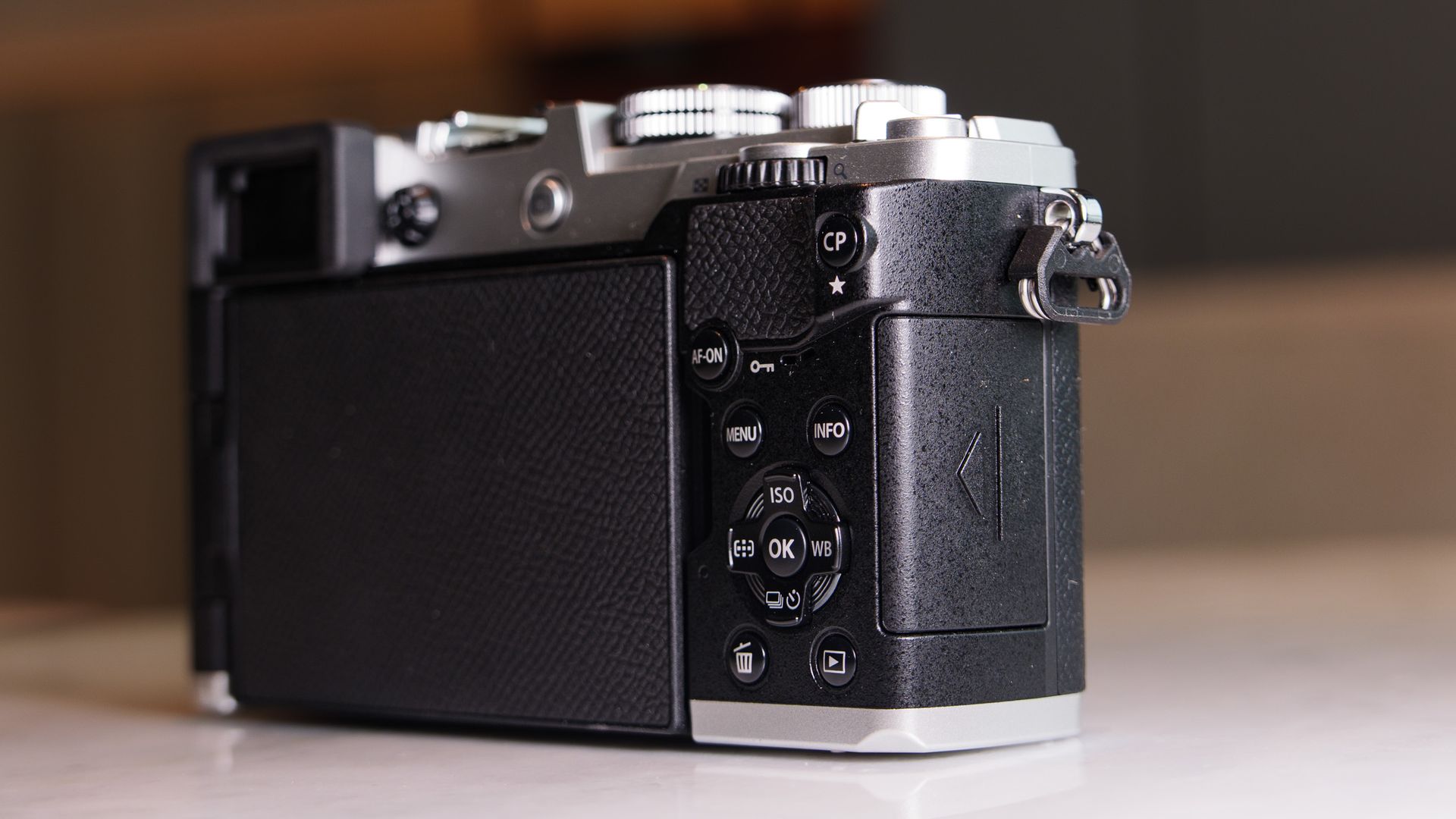
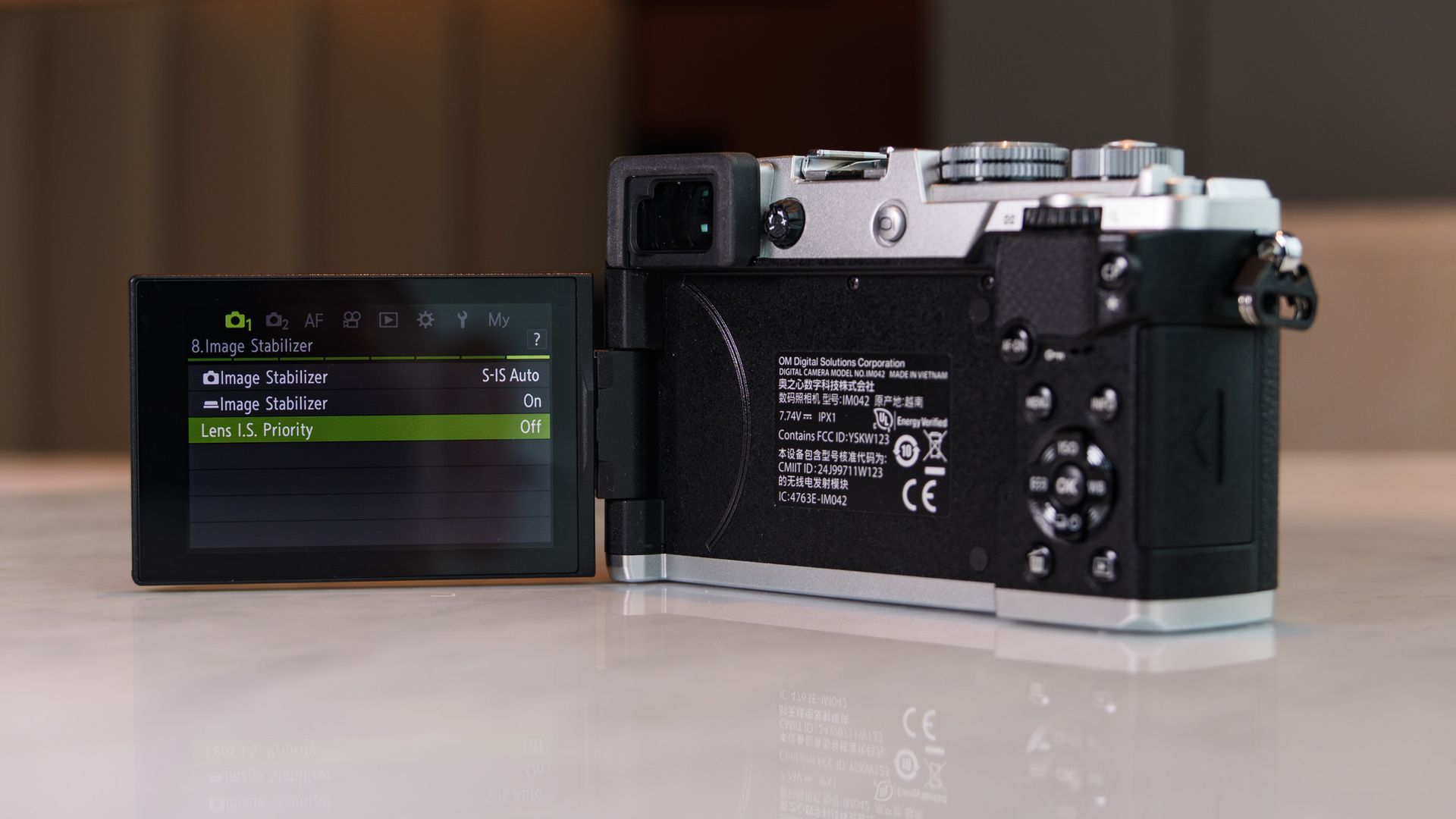
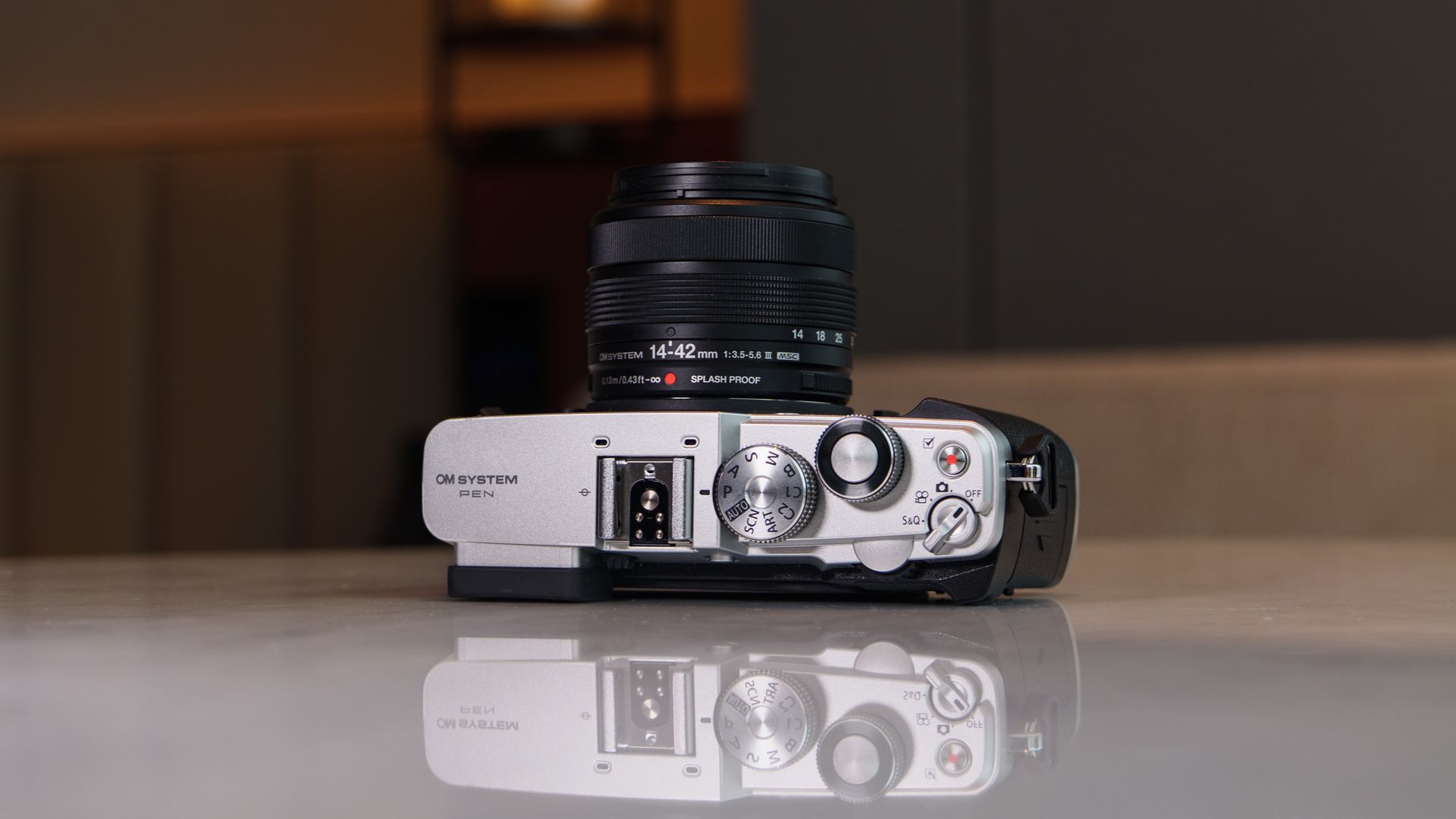
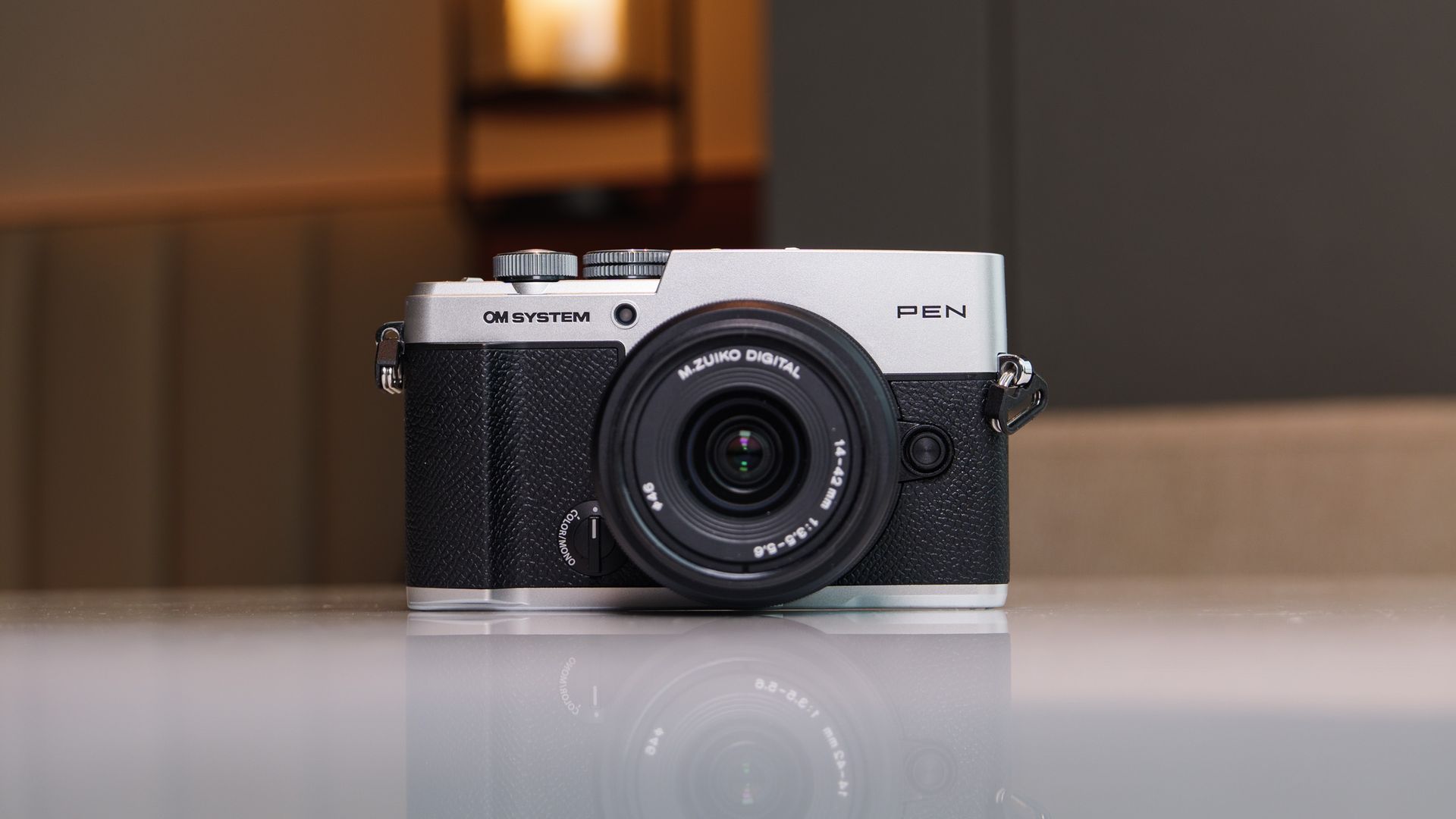
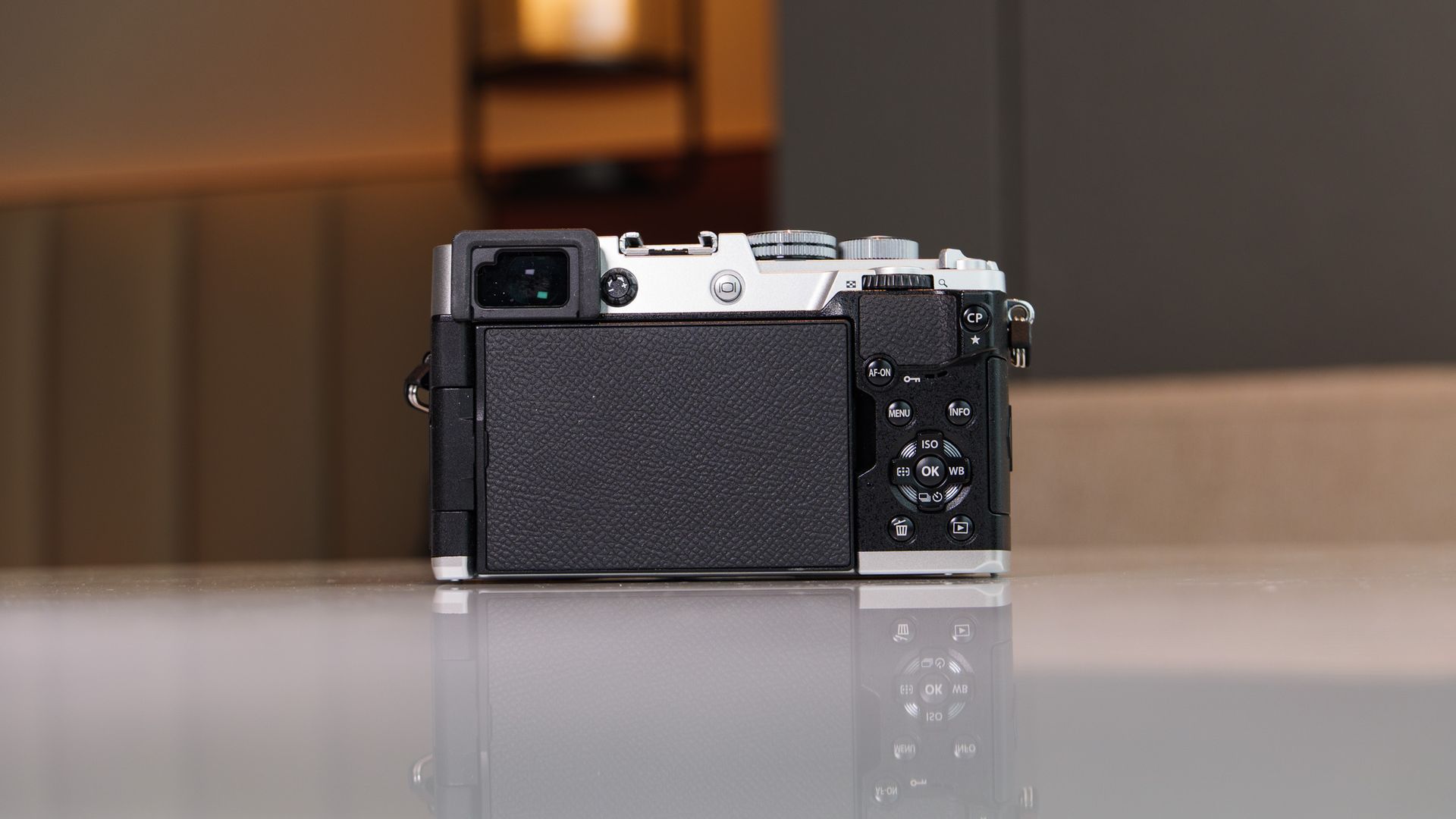
It has the retro charm we've come to expect from Olympus / OM System bodies, and I particular liked the black and silver version I had for this review. It's equipped with a hotshoe for accessories such as an external flash (there's no built-in flash), a Mono / Color profile switch, a USB-C port for charging, micro HDMI, mic jack and a single SD card slot.
Most of the buttons are small and can be a little fiddly. I found accessing the computational photography a pain — you need to hold down the 'CP' button while rotating the top dial (that the shutter button is set within) to access the menu. Why not require just a press of the CP button to open the menu?
The on/off switch is poorly designed, too — good luck trying to land on the photography setting without skipping past it to the video mode. If you have moderately large hands like I do, the whole layout might feel a little fiddly. And I'm sure there are some retro camera fans who will be disappointed that there's no cable-release thread in the shutter button. All that being said, I still very much enjoyed using the PEN.
OM System PEN review: Performance







- 20.4MP CMOS sensor with 5-axis stabilization
- BLS-7 battery with 410-shot CIPA rating
- 121-point hybrid phase detection autofocus with subject tracking
A 20.4MP Micro Four Thirds sensor is nothing to get too excited about in and of itself when you consider the larger sensor, higher resolution alternatives that are available.
Computational photography modes can close the gap where there are drawbacks; addressing the fewer pixels and lesser dynamic range versus larger-sensor alternatives, though they don't work for every scenario. (I've included some examples, above.)
With 5.5EV image stabilization, the High Res Shot mode can be used handheld to increase resolution from 20MP to 50MP, though it won't work for scenes with movement in them. The same can be said for the HDR modes, which also work by combining several images captured sequentially together into one, and would otherwise have ghosting in them where there's movement in the scene during capture. For still scenes, HDR works perfectly well for increasing dynamic range.
As a starter camera, however, the level of detail this tried and tested sensor is able to capture is easily sufficient for travel and everyday photography. Add a decent lens — and there are hundreds to choose from including the low-cost 45mm f/1.8 for portraiture — and you have the foundation for smartphone-beating images.





There's nothing wrong with OM System's 121-point hybrid phase detection autofocus system, despite its stripped back selection of subject detection options that includes humans or animals (cats and dogs).
I've used other systems with a wider range of subject detection modes, but for the most part you'd struggle to see a major difference in performance — when tracking birds, for example, I found the animal detection autofocus to be sticky. There's not the same degree of complexity for face and eye detection, though — it's reliable, but you can't manually switch which eye the camera autofocuses on.
Battery life is decent, being rated at 410 shots, but video specs are fairly basic for 2026 — 4K up to 30fps / C4K up to 24fps, with a wide choice of color profiles including OM System's flat OM-Log400 profile, but just 8-bit color depth. The slow and quick mode unleashes up to 120fps slow motion recording, or down to 1fps quick motion, but in 1080p only. Image stabilization works for video, though, which is a major draw for a camera at this price point.







Should I buy the OM System PEN?
Buy it if...
You're a smartphone upgrader
The experience using the PEN compared to a smartphone is both wildly different and somehow familiar — its retro design and viewfinder are highly appealing, while its modern features such as computational photography eke out the best image quality possible and creative techniques, much like a decent smartphone camera can. View Deal
You want a highly enjoyable everyday/ travel camera
The PEN's compact and classy design features a decent EVF, vari-angle touchscreen and capable image stabilization, making it a highly versatile and enjoyable walkaround snapper.View Deal
Don't buy it if...
You're more into outdoors and action photography
Yes the PEN is capable in all photography genres, but its design is less suited to long lenses and inclement weather, for which the slightly pricier OM-5 II is a better bet (or even pricier OM-1 II). View Deal
You're unlikely to buy more lenses
Micro Four Thirds cameras are blessed with a plentiful number of lenses. However, if you're only likely to buy the camera with the kit lens, you might find it doesn't scratch your photography itches — I would budget for a fast aperture prime. View Deal
OM System PEN review: also consider
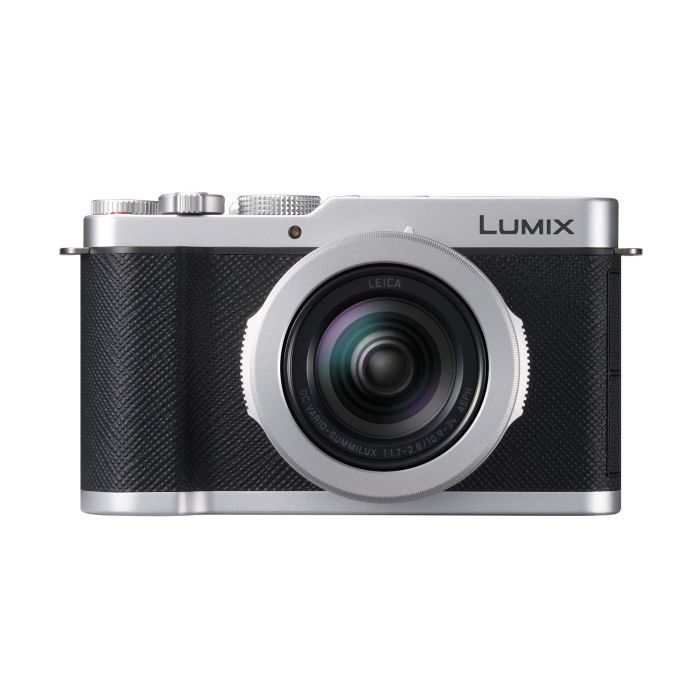
Panasonic Lumix L10
The Lumix L10's design is strikingly similar to the PEN, and it also uses a micro four thirds sensor. Where the cameras differ is how the Lumix model is a compact camera with no stabilization and a built-in 24-75mm f/1.8-2.8 lens and it costs more, while the PEN has stabilization and a MFT lens mount. I've compared the two cameras directly to find out which is best.
Read our Panasonic Lumix L10 reviewView Deal
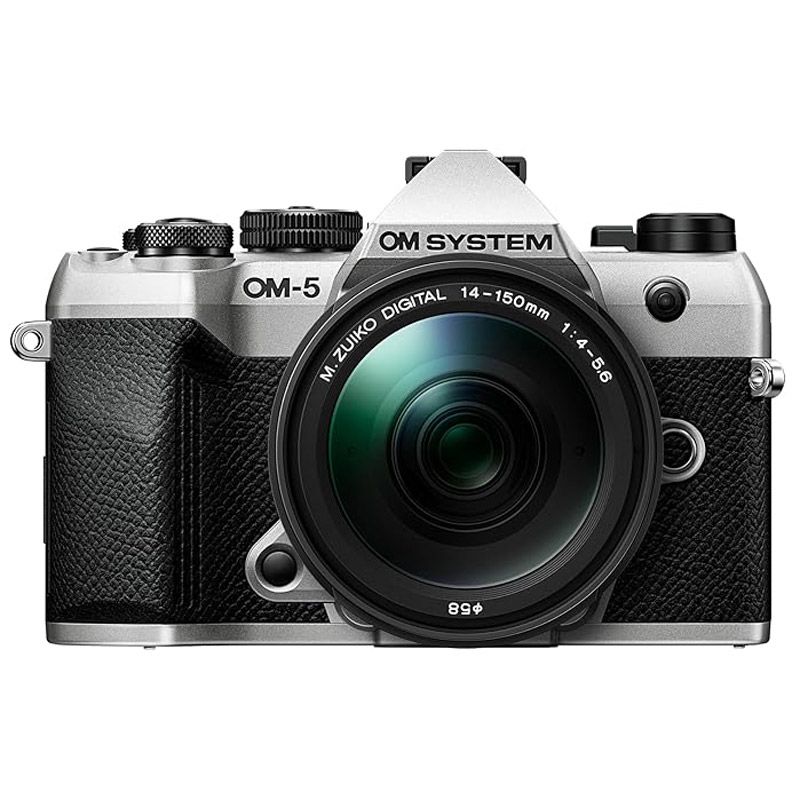
OM System OM-5 II
If you like the sound of the PEN's features but you'd rather a tougher body, chunkier grip for comfortable use with a wider range of lenses, plus pronounced viewfinder design, the OM-5 II is the camera for you, and it doesn't cost too much more than the PEN. The Fujifilm X-T30 III is another option and it costs the same as the PEN, coming with an 26MP APS-C sensor, but no image stabilization.
How I tested the OM System PEN
- OM System loaned me the black and silver version of the PEN and the 14-42mm f/3.5-5.6 III kit lens for several weeks
- I also used it with Olympus 45mm f/1.8 / Leica 12-60mm f/2.8-4 lenses
- I took the camera to China for a work trip, and used it in a variety of scenarios and tried out the various computational photography modes
OM System sent me the black and silver version of the PEN with the new 14-42mm f/3.5-5.6 III kit lens, and I used the kit regularly for several weeks, including during a multi-day work trip to China. I also paired the camera with an Olympus 45mm f/1.8 lens and a (Panasonic) Leica 12-60mm f/2.8-4 lens.
I've tried the various computational photography modes, used slow shutter speeds and shot video handheld to test the image stabilization effectiveness, and tried out various autofocus modes.
I've used the camera in light rain and in bright light, testing its splash proof credentials and the brightness of its displays. Along the way, I compared the PEN to a similar camera with micro four thirds sensor — the Lumix L10.
- First reviewed: October 2026
- Read more about how we test




