

Dali Kupid: Two-minute review
Dali may have been concentrating on the loftier parts of the audio market lately with its various loudspeaker and headphone product launches, but with the Kupid it wants you to know it hasn’t abandoned the entry level. The company has had plenty of success with its affordable speaker ranges before now, and it wants to bring those days back.
The Kupid is a small, neatly finished standmounting design that’s available in a couple of quite vibrant finishes (blue and yellow) along with the more usual black, white and walnut. Its compact nature means it should be easy to position, though its rear-facing bass reflex port means you can’t just plonk it anywhere. Rather unpromising impedance and sensitivity figures turn out to be no major real-world issue when it comes to pairing these speakers with appropriately affordable amplification, though.
And, in practice, the Kupid turns out to be a very successful proposition where performance, as well as appearance, are concerned. One of the best stereo speakers on the market? You bet...
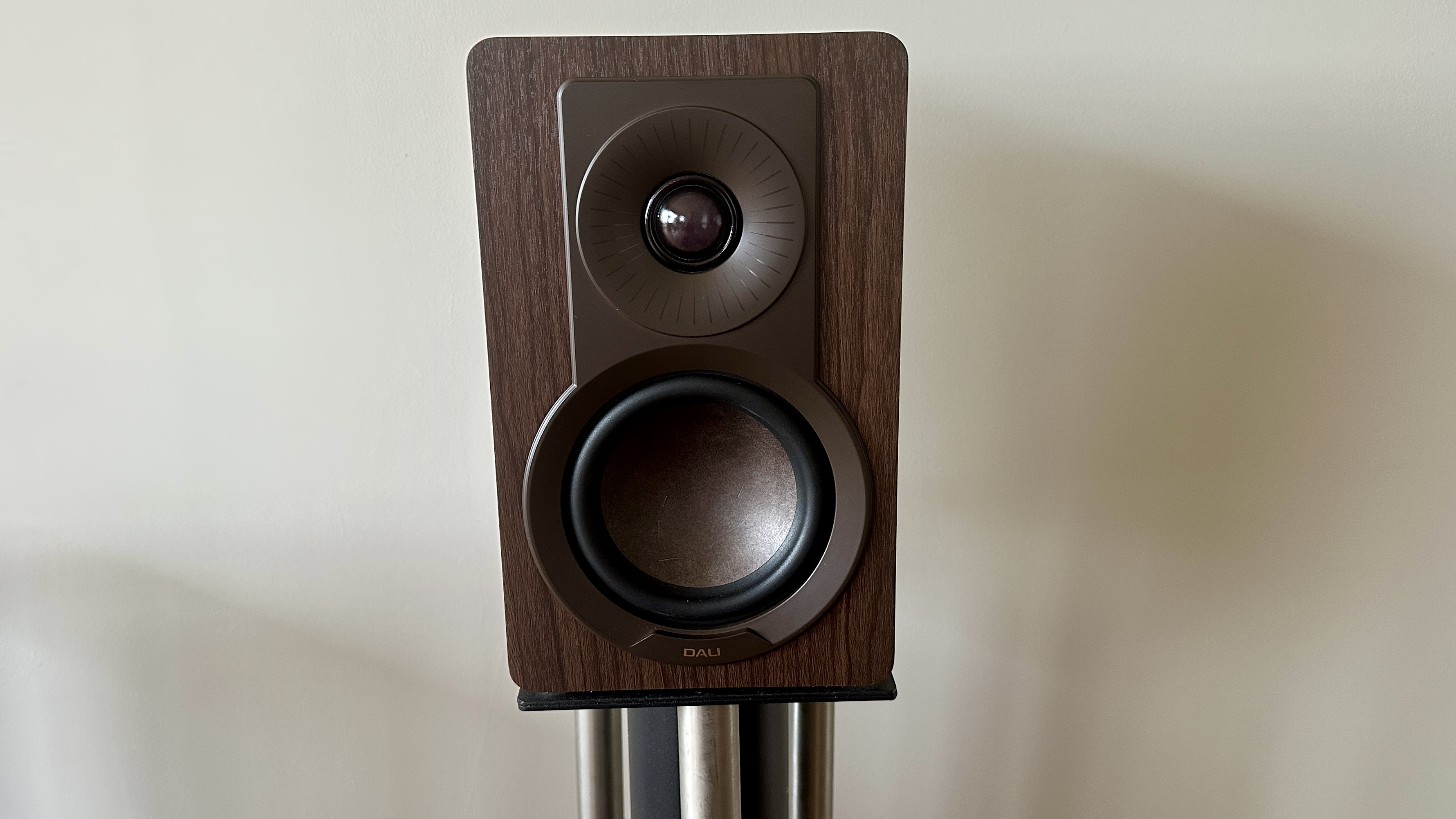
Dali Kupid review: Price & release date
- Released October, 2025
- Priced $599 / £299 / AU$599
The DALI Kupid standmount loudspeakers launched in October 2025, and in the United Kingdom they cost £299 per pair. In Australia they’re a predictable AU$599, while in the United States they cost a slightly less predictable $599.
The American market is a law unto itself at the moment, I suppose, and DALI is almost certainly being pragmatic enough to factor in any whim-based fluctuations in tariffs and the like.
Dali Kupid review: Features
- 26mm soft dome tweeter
- 114mm wood-fiber/paper mid/bass driver
- Rear-facing bass reflex port
These are affordable passive loudspeakers, so it won’t come as all that much of a surprise to learn they’re not exactly overburdened with features. Those features the Kupid do have, though, seem entirely fit for purpose.
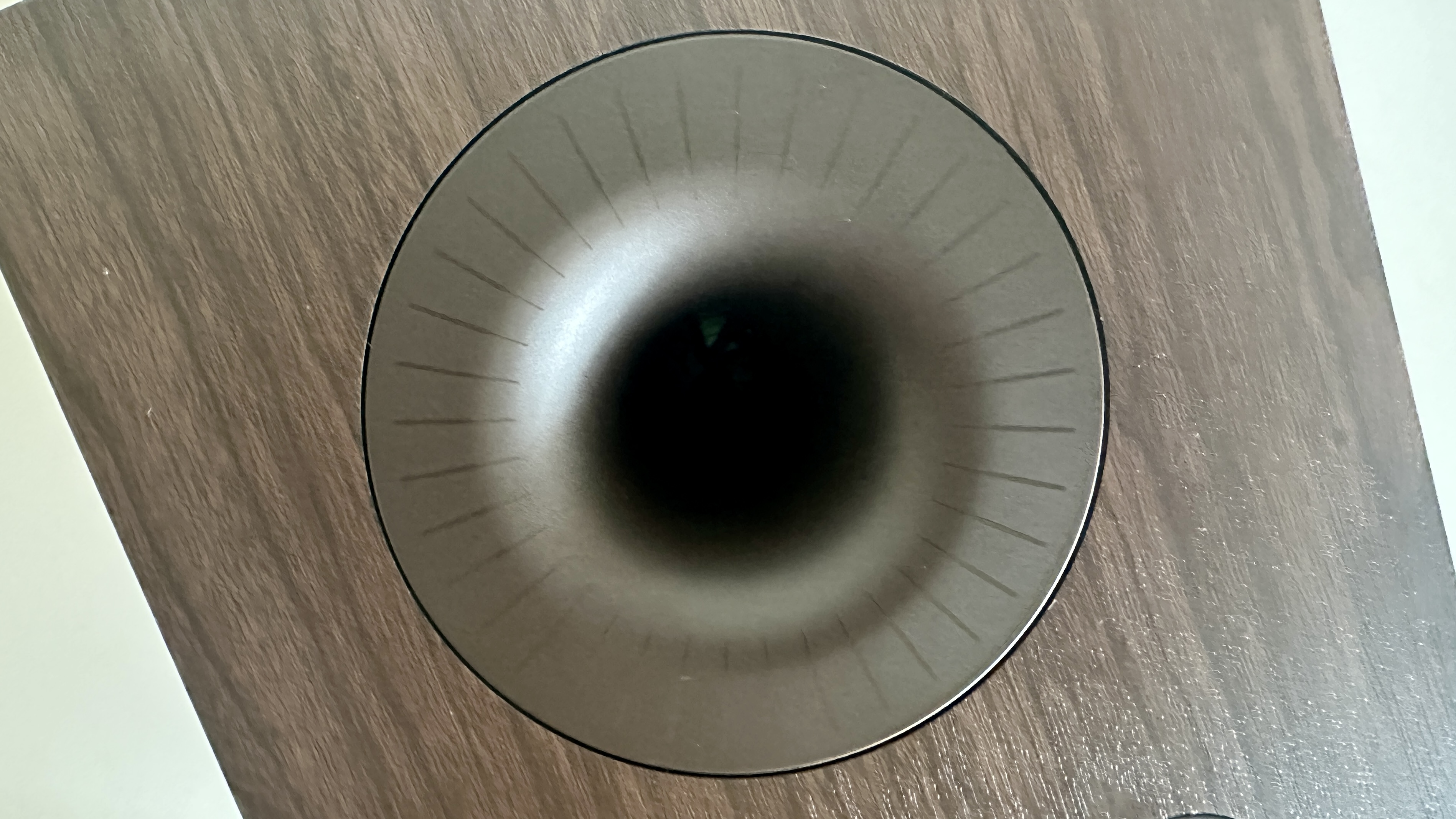
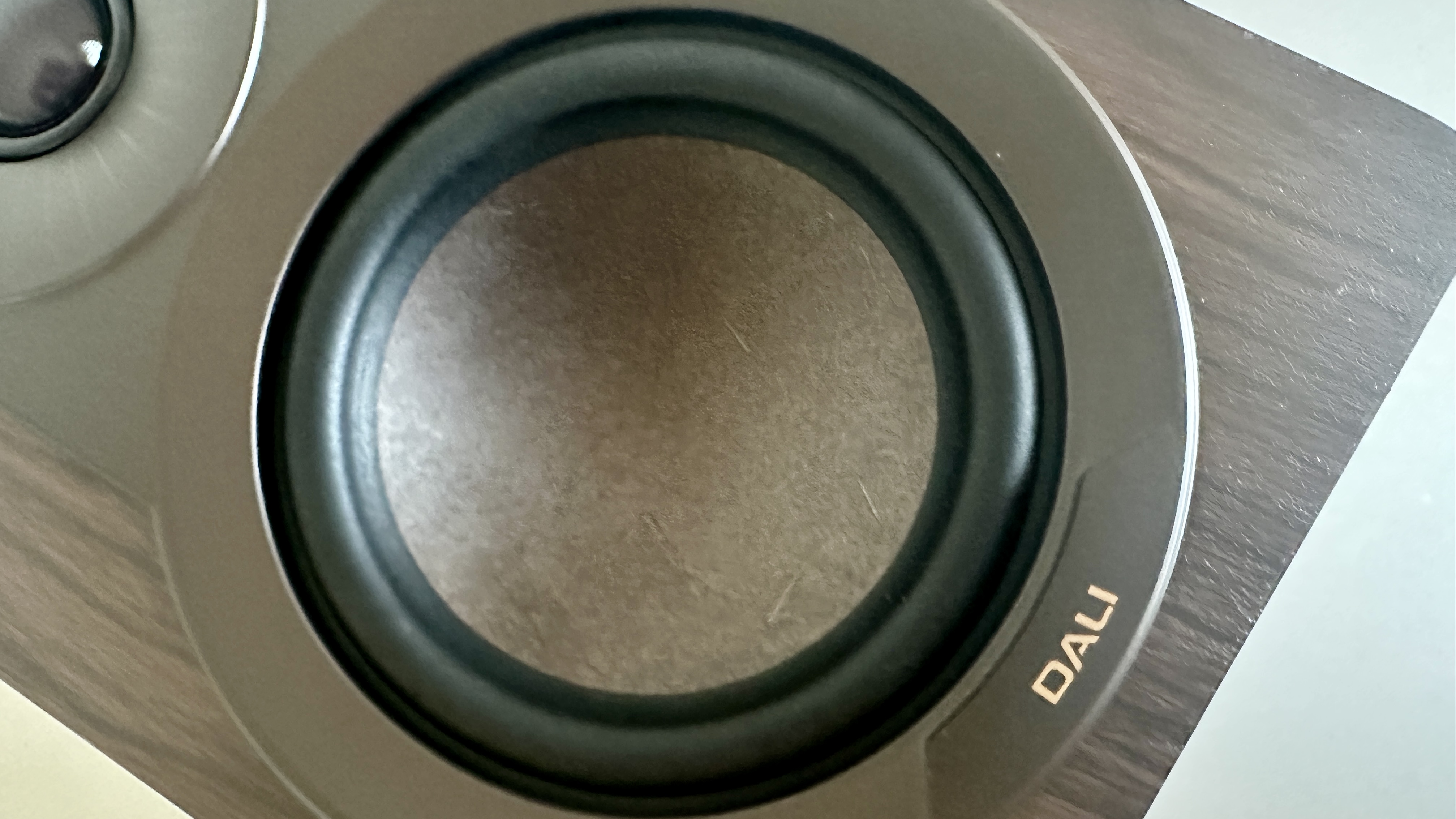
At the front they have a 26mm soft dome tweeter sitting behind a mildly dished waveguide. Beneath this there’s a 114mm mid/bass driver made from the same mixture of paper and wood-fiber pulp the company has been refining for quite some time now. This duo is supported by a rear-firing bass reflex port that; a) contributes to an overall frequency response of 63Hz - 25kHz; and b) makes the Kupid slightly less appealing as a shelf-mounting proposition than they otherwise would be.
Crossover between the drivers is sensibly positioned at around 2.1kHz. Nominal impedance (4 ohms) and sensitivity (83dB) mean that the Kupid will be just a little trickier to drive than the majority of the size- and/or price-comparable rivals.
In theory, at least…
- Features score: 5/5
Dali Kupid review: Sound quality
- Rapid, energetic sound
- Impressive grasp of rhythm
- Unlikely levels of dynamism and punch
You’re entitled to expect certain things from a loudspeaker, no matter how small and/or affordable it is. But there are some things that are not quite so easy to come by when you’re talking about compact, (relatively) inexpensive loudspeaker designs. What’s remarkable about the Dali Kupid is how they manage to deliver everything you expect and a fair bit of what you might only be hoping for.
A listen to a 24bit/96kHz FLAC file of ScubaZ The Vanishing American Family gives a strong flavor of both of these things. The tonal neutrality and even frequency response you are expecting is present and correct, but the dynamism, and low-frequency extension and solidity the Kupid are capable of falls squarely into the ‘unexpected’ category.
Detail levels are decently high, and if they’re sympathetically positioned the Dali are capable of creating a fairly large and quite carefully controlled soundstage. Control of low-frequency activity is good, so rhythmic expression is convincing, and despite the unpromising nature of most of the numbers here, there’s more than enough low-end energy available to ensure there’s weight and punch to the Kupid sound.
The midrange communicates quite freely. There’s plenty of space for the voice during King Hannah’s Big Swimmer to project ahead of the similarly close-mic’d guitar – these speakers can do ‘intimate’ just as readily as they can do ‘animated’. The top of the frequency range, while rounded off just slightly in the name of ‘good taste’, can nevertheless bite and crunch with the best any price-comparable rival can summon.
Momentum levels never dip (provided the recording doesn’t dictate it, of course), but the Dali never sound forced – they’re just pleasantly on the front foot. Yet despite the sort of attitude that begins at ‘exciting’, the Kupid retain the headroom to make big dynamic shifts in volume or intensity perfectly apparent.
Music is meant to be fun, isn’t it? Well, most of the time anyway – I guess we all like to pop on a bit of Elliott Smith or Joy Division every now and then. But if it’s ‘fun’ you’re predominantly after, along with the sort of authenticity that can only come from a well-sorted loudspeaker, the sound of the Dali Kupid is the perfect place for most of us to start.
- Sound quality score: 5/5
Dali Kupid review: Design
- Extensive range of finishes
- Very acceptable build quality
- 245 x 150 x 198mm (HxWxD)
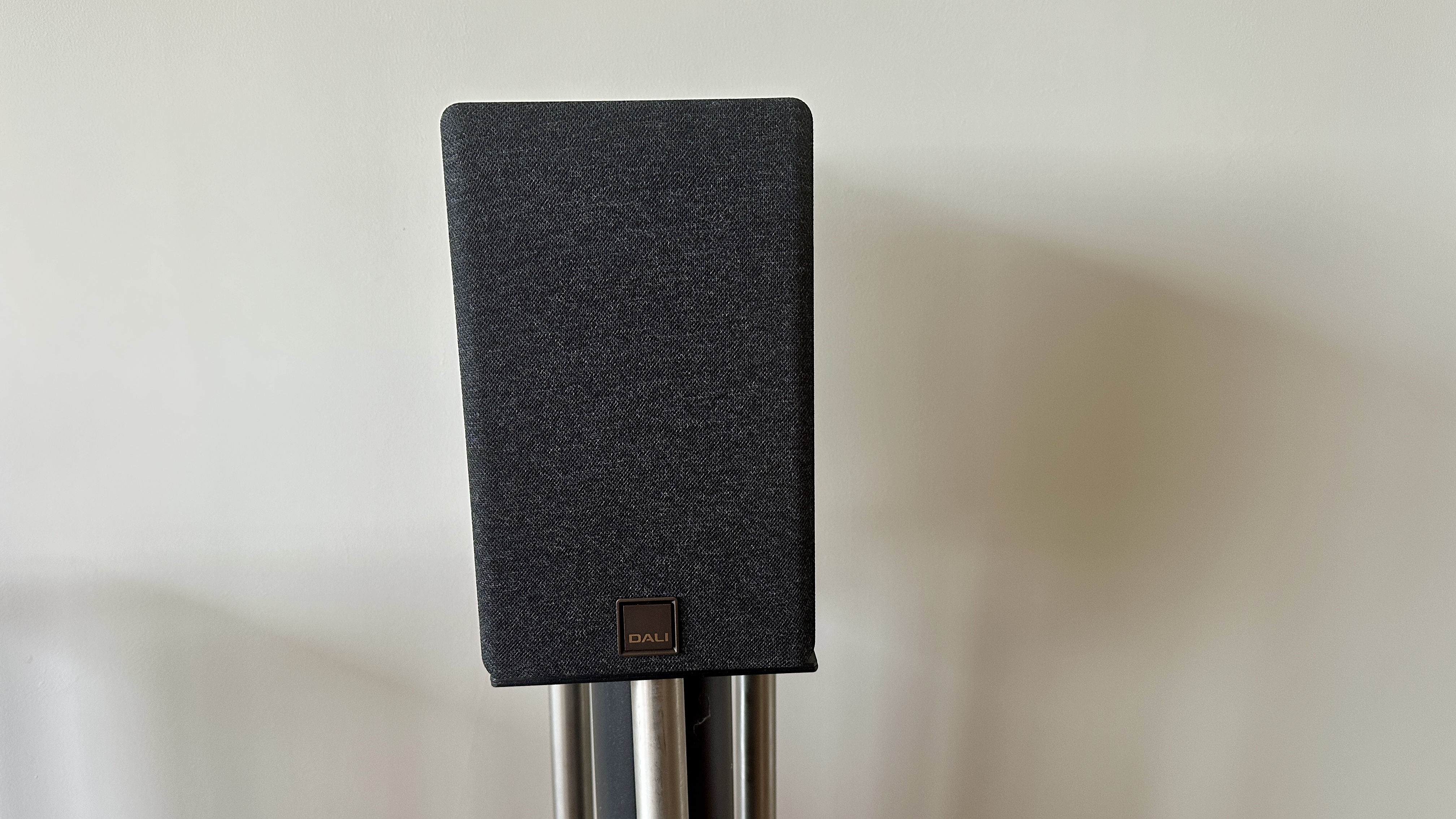
There are a couple of immediately striking things about the Dali Kupid's design. The first is the size of the cabinets – at just 245 x 150 x 198mm (HxWxD) the speakers are almost small enough to perch on a windowsill, let alone a shelf or speaker stand.
The other, if you encounter one of the livelier finishes is, well, the finish. Sure, you can have your Kupid in black, white or the species of fake walnut that my review sample rather disappointingly showed up in, but why would you, when ‘chilly’ blue and ‘golden’ yellow are also available?
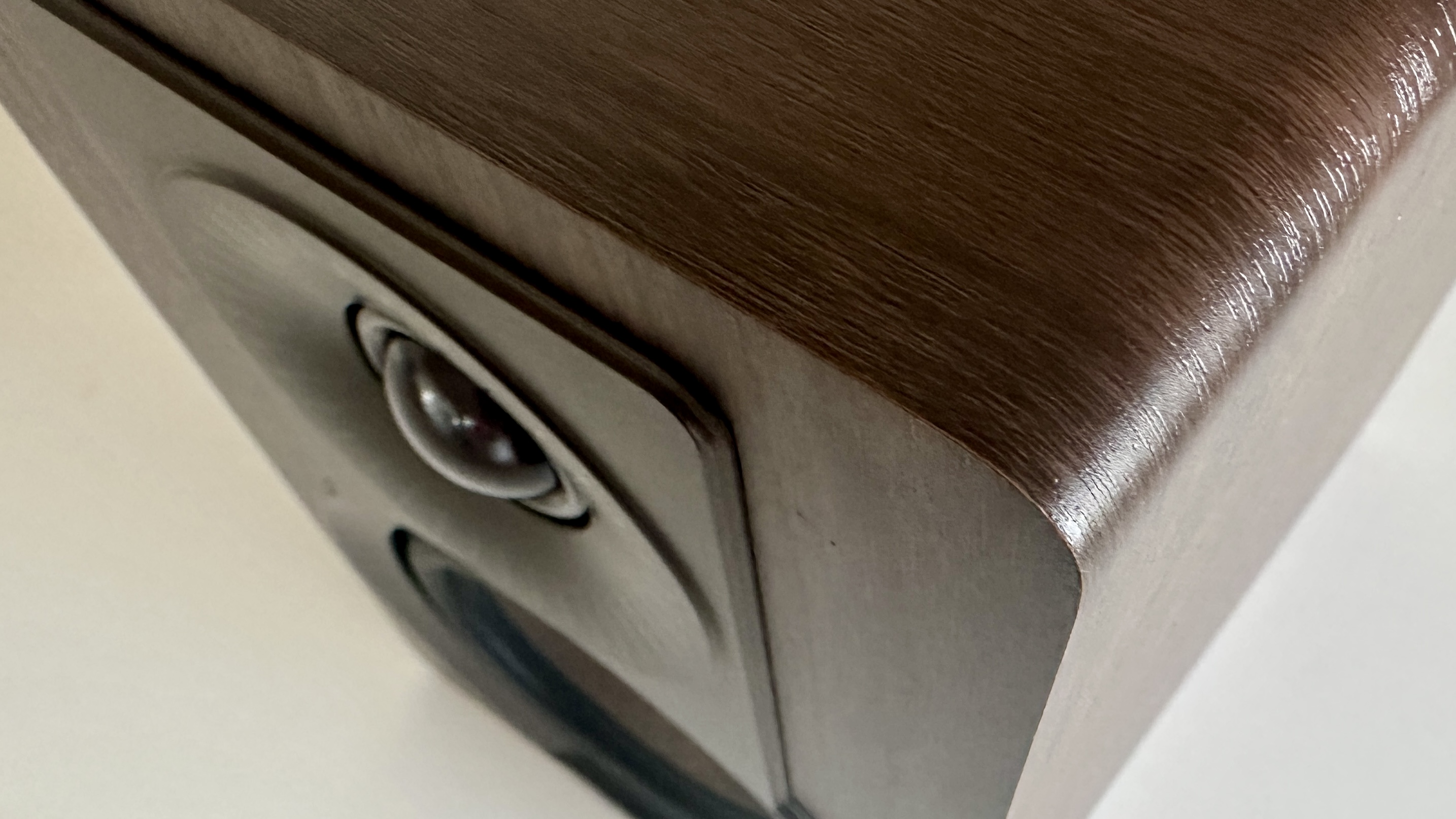
As the asking price strongly suggests, there’s nothing special about the materials used here, and at just 2.9kg per speaker they’re not what you might describe as ‘weighty’. But the standard of construction is perfectly sound, and the gently curved cabinet edges offer a slightly more upmarket appearance than the straight-edged alternative that’s more common at this sort of price.
The fact that the grilles attach magnetically, meaning there are no lug-holes in the front baffle of the speaker, only adds to the impression of thoughtful design.
- Design score: 5/5
Dali Kupid review: Setup and usability
- Wall-brackets and rubber feet are provided
- Single-wire speaker terminalsS
- Some running-in required
Where do you want to position your Dali Kupid?
If they’re going on speaker stands, you have plenty of choice from plenty of specialist brands. If you want to put them on a shelf, Dali provides eight little rubber feet in the box to help with decoupling. If you fancy hanging them on the wall, there are rudimentary wall-brackets supplied, too.
As regards setup, there’s really not a lot to it. You have a stereo amplifier, presumably – if not, you’ll need one. Each Kupid has a single pair of speaker cable terminals on the rear of the cabinet – try to keep the lengths of cable you use to connect each one roughly the same length.
And, like all loudspeakers, a period of running-in is required before you hear them at their best. Dali reckons you should expect to put 100 hours on the Kupid before they sound how they’re supposed to sound…
- Setup and usability score: 5/5

Dali Kupid review: Value
The Dali Kupid are by no means your only choice when you’re looking for compact and affordable passive loudspeakers. But they’re more compact than most, which many will find appealing, and the combination of some vibrant finishes and relatively good-looking cabinet-work doesn’t do any harm where perceived value is concerned either.
Best of all, though, and the real deal-sealer, is the energetic and engaging sound these speakers make. Pair them with an affordable streaming amplifier (like the similarly titchy WiiM Amp, for instance), and you can create a compact, high-achieving audio system for a relatively small amount of money. And that means ‘value for money’ all day long in my book.
- Value score: 5/5
Should you buy the Dali Kupid?
Buy them if...
You’re after a taste of authentic hi-fi sound but don’t want to break the bank
For the performance that’s on offer, $599 / £299 / AU$599 seems like a bit of a bargain…
You want big sound, not big cabinets
The Kupid won’t fill an authentically large room with sound, but they nevertheless sound a lot bigger than they look.
You prefer your loudspeakers to be interestingly coloured
Ignore the pics of my review sample and check out the blue and yellow alternatives instead.
Don't buy them if...
Your amplifier is on the tentative side
They’re not as burdensome as the numbers suggest, but the Kupid still require a reasonably pokey amp if they’re going to work efficiently.
You’re expecting thumping bass presence
You know how this works, right? A speaker this size will never shift enough air to rattle your windows…
You think $599 / £299 / AU$599 should buy a luxurious standard of build and finish
It doesn’t.
Dali Kupid review: Also consider
Q Acoustics 3020c
The 3020c by Q Acoustics are down to Dali Kupid money these days, and they’re a great-sounding pair of speakers for the money. The cabinet is relatively deep, though, which means they’re very much a standmounting proposition rather than being suitable for a shelf or a windowsill.
Read our full Q Acoustics 3020c review here
Wharfedale Diamond 12.1
For even less money than the Kupid, Wharfedale will sell you a pair of its Diamond 12.1 loudspeakers. They’re not as decorative as the Dali, but in their own way they’re just as satisfying to listen to.
How I tested the Dali Kupid
- Connected to a Naim Uniti Star and an A&R Cambridge Audio A60
- Vinyl listening via Technics SL-1300G turntable
- Playing a wide variety of music from a number of different sources
I connected the Dali Kupid to a Naim Uniti Star and also to a ‘vintage’ A&R Cambridge A60 for amplification purposes, and then used the Naim as a network streamer, a Rega Apollo for CD playback and a Technics SL-1300G (via a Leema Elements pre-amp) as a vinyl source.
This allowed me to listen to lots of different types of music from a variety of formats. And, let me tell you, doing so for well over a week, on and off, proved no kind of hardship whatsoever.
First reviewed: December 2025
Read more about how we test at TechRadar




