

Samsung S95H review: Two minute review
Sitting at the top of Samsung’s 2026 TV lineup, the Samsung S95H is a flagship OLED TV that delivers excellent performance, particularly when it comes to picture, and a full set of features both for smart TV and for gaming. This could easily be one of 2026’s best TVs.
The S95H has a full list of features. Its NQ4 AI Gen 3 Processor comes with a stack of AI tools for picture, such as AI Motion Enhancer Pro and AI 4K Upscaling Pro, AI tools for sound such as Adaptive Sound Pro, and other AI tools for content recommendation. All of these fall under the Samsung Vision AI banner.
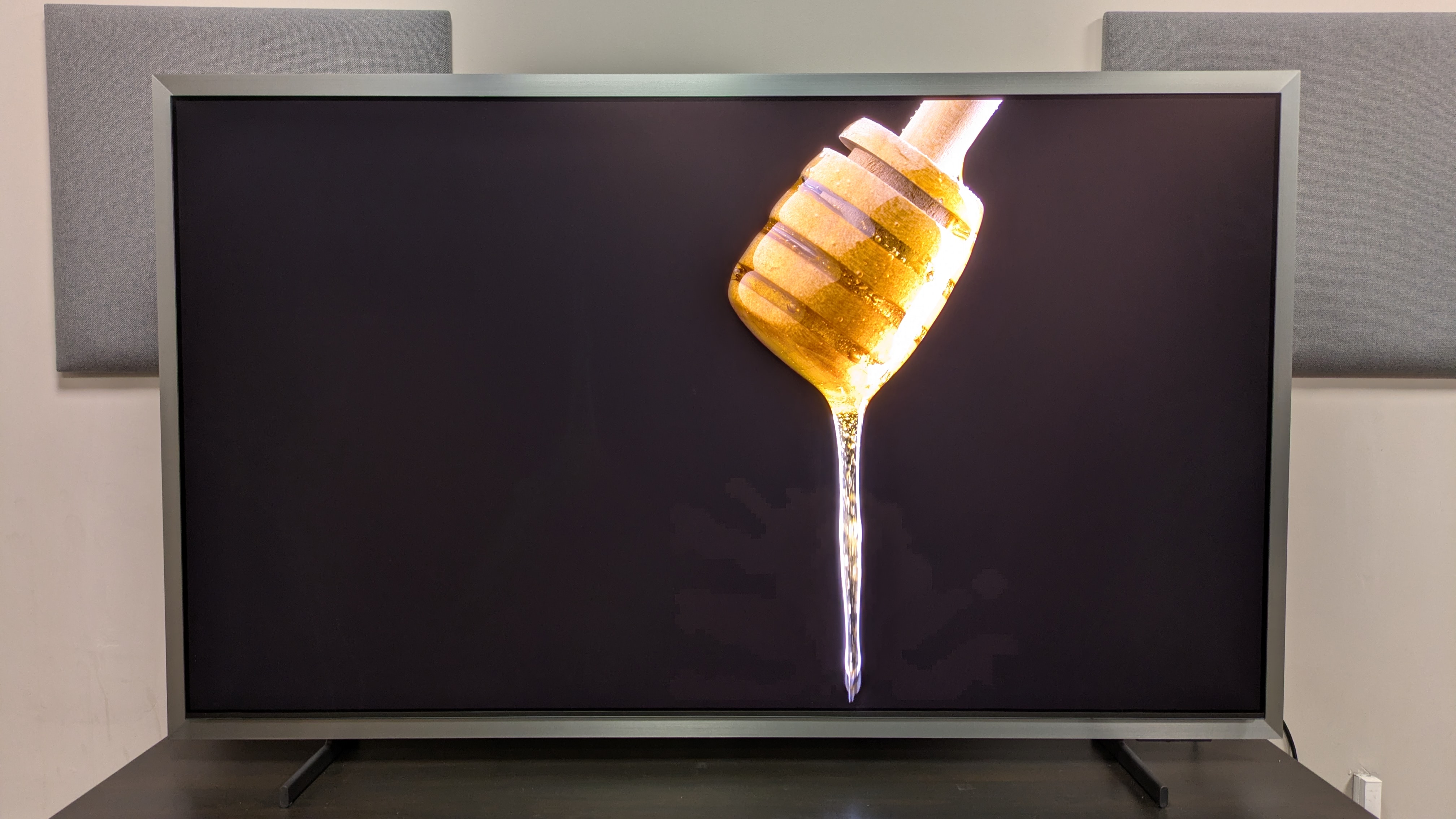
Picture quality on the S95H is superb. It delivers the highest brightness to date from a flagship OLED TV, along with vibrant, accurate colors, crisp textures and powerful contrast. Its anti-reflection screen is effective at eliminating reflections and while its Filmmaker Mode is a little dim in bright conditions, its Movie mode is a great brighter alternative.
Motion handling is mostly smooth and natural for both movies and sport, and while there are some hints of black crush in certain movies I tested, the S95H’s picture is still up there with the best OLED TVs.
The Samsung S95H delivers solid overall built-in sound. Its accuracy and precision are its strengths, with an excellent connection between the action on screen and the sound. The bass is punchy, there’s some nice impact and the soundstage can be wide. Still, this level of picture quality deserves a fuller sound, so I’d recommend one of the best soundbars or speakers.
Design is arguably the S95H’s most controversial topic this year. A new silver frame around the TV, called the FloatLayer Design, has been added and I personally found the frame to be distracting. While meant for wall-mounting, the extra width may cause space issues for some people and the handsome central pedestal stand of its predecessor has been replaced by two plastic feet. The One Connect Box has been removed, with ports returning to the TV itself — but you can connect Samsung Wireless One Connect Box to add more HDMI ports.
The S95H is a phenomenal gaming TV. Carrying four HDMI 2.1 ports that support 4K 165Hz, full VRR, HDR10+ gaming and ALLM, and boasting an ultra-low 9.5ms input lag at 60Hz, performance is smooth and the picture always looks great. Easily one of 2026’s best gaming TVs.
One UI Tizen is the S95H’s smart TV platform. It supports all major streaming apps, delivers pretty smooth performance and is easy to navigate. While there are some quirks that I found frustrating (namely auto-playing Samsung TV Plus), it’s still a good smart TV platform. Its Vision AI companion can be useful for those who enjoy AI, and while it doesn’t quite measure up to LG’s webOS, it’s still solid.
The 65-inch S95H I tested costs $3,399 / AU$5,299, putting it at the premium end of the TV market. While this is a high price, the S95H delivers features and performance to justify the price and it’s competitively priced with rivals, with the LG G6 65-inch costing $3,299 / AU$4,999. I expect prices for the S95H will drop shortly, with some deals already active in Australia at the time of writing.
Samsung S95H review: Prices & release dates
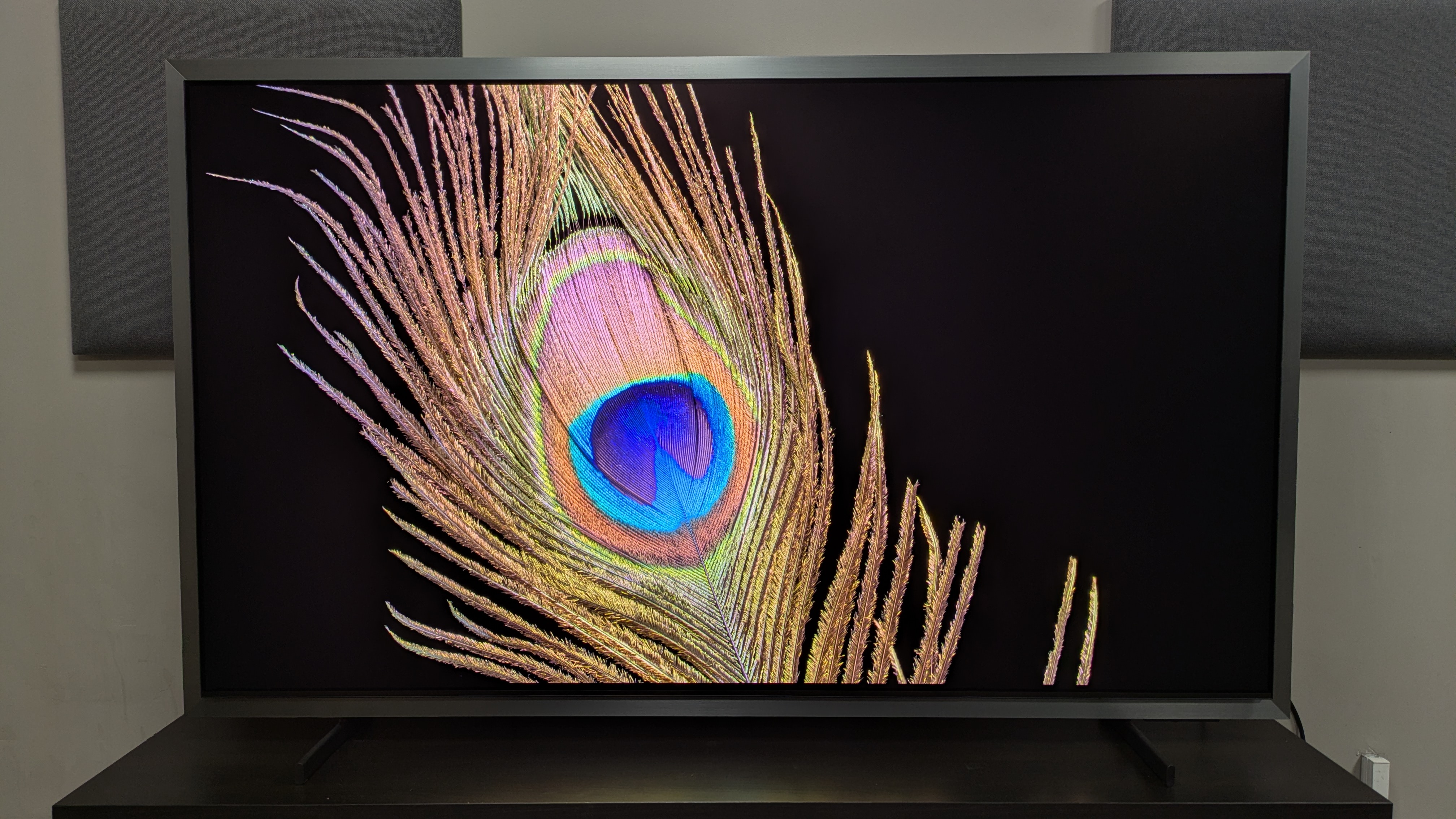
- Release date: June 2026
- 55-inch price: $2,299 / AU$3,999
- 65-inch price: $3,299 / AU$5,299
- 77-inch price: $4,299 / AU$7,999
- 83-inch price: $6,299 / AU$9,999
The Samsung S95H is the flagship OLED in Samsung’s 2026 TV lineup. It sits above the mid-range Samsung S90H and budget Samsung S85H. The 65-inch model I tested launched in June 2026 at $3,299 / AU$5,299.
In the few weeks since its release, prices have remained the same, though we have seen some price reductions in Australia, particularly in larger-sized models, with up to AU$1,500 off the 83-inch model. The S95H’s launch prices are cheaper than both its predecessor, the S95F, and the rival G6. However, the G6 has been out for longer, so its prices have dropped over time.
Samsung S95H review: Specs
Screen type | QD-OLED |
Refresh rate | Up to 165Hz |
HDR support | HDR10+, HDR10, HLG |
Audio support | Dolby Atmos |
Smart TV | Tizen |
HDMI ports | 4 x HDMI 2.1 |
Built-in tuner | ATSC 1.0 (US) |
Samsung S95H review: Benchmark results
Brightness measurements
Taken using a colorimeter and test pattern generator. Click the test name to see more measurements and choose a test from the dropdown menu
| Product | HDR Filmmaker Mode (10% window) (nits) | HDR Filmmaker Mode (Fullscreen) (nits) |
|---|---|---|
| Samsung S95H | 2739 | 449 |
| LG G6 | 3004 | 451 |
| Samsung S95F | 2132 | 390 |

Samsung S95H review: Features
- NQ4 AI Gen 3 processor
- OLED Glare Free screen
- AI enhancements including AI Football Pro mode
The flagship Samsung OLED has typically used a QD-OLED panel in its 55-77-inch sizes in the past. Based on my testing measurements, I am certain that the 65-inch model I tested does use a QD-OLED panel, though Samsung doesn't confirm this either way. The 83-inch model will use an LG W-OLED panel, because QD-OLED panels don't come in that size.
The S95H features an anti-reflection, matte screen, called OLED Glare Free by Samsung, that is designed to reduce mirror-like reflections, and keep reflections from a light to minimum.
The S95H uses Samsung’s own NQ4 AI Gen 3 processor, which provides visual AI-based enhancements such as AI Motion Enhancer Pro, 4K AI Upscaling Pro and Auto HDR Remastering Pro, as well as the introduction of AI Soccer Mode Pro, designed to provide the best picture and sound for Soccer. AI audio enhancements include AI Sound and AI Sound Controller Pro.
For HDR support, HDR10+, HDR10 and HLG are once again supported, but there is still no support for Dolby Vision. For enhanced audio formats, Dolby Atmos is supported, but not DTS.
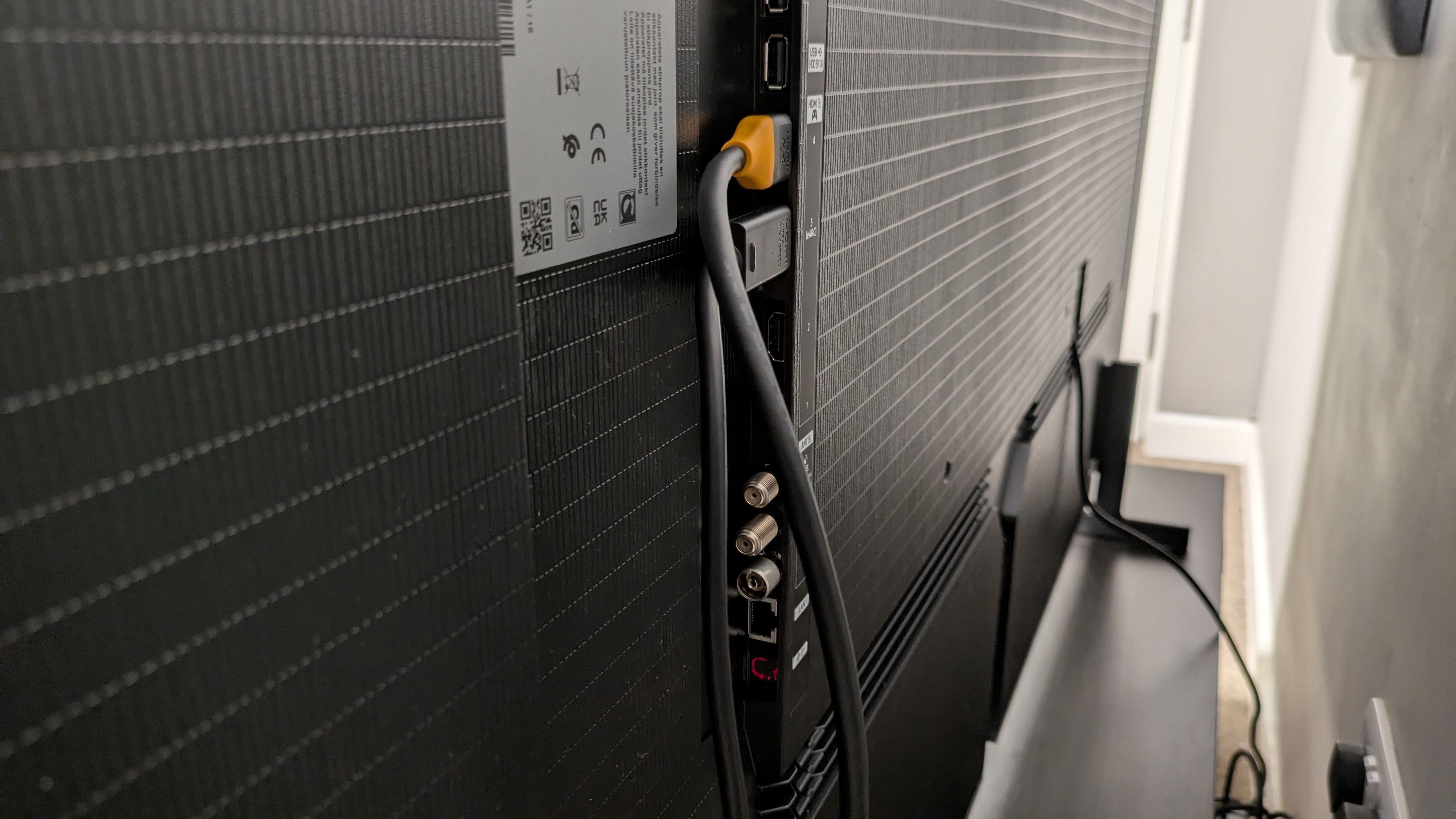
The big design change with the S95H, compared to last year’s S95F, is the addition of a wider, silver frame, which Samsung calls a FloatLayer Design, which adds a couple of extra inches all around the TV. As a result, the One Connect Box is gone and ports have returned to the rear panel of the TV itself.
It’s worth noting that, as well as the four HDMI 2.1 ports on the rear panel, Samsung says that its Wireless One Connect Box can be added in addition to the other ports, giving you a total of eight HDMI 2.1 ports (four built-in, four on the optional box).
For sound, the S95H features a built-in 4.2.2-channel, 70W speaker system that supports Dolby Atmos: the same core specs as last year’s S95F. Sound features include Object Tracking Sound+ (OTS+), Adaptive Sound Pro and Active Voice Amplifier Pro.
Gaming is well covered, with four HDMI 2.1 ports built-in that support 4K at up to 165Hz, full variable refresh rate options including AMD FreeSync Premium Pro and Nvidia G-Sync, HGiG, HDR10+ gaming and auto low latency mode. There’s also a Game Hub where cloud-based applications such as Xbox and Luna can be accessed.
Samsung uses its own Tizen smart TV platform on the S95H, which features the aforementioned picture and audio AI tools as well as Generative Wallpaper and Art Mode, the latter of which is the same found on the brand’s The Frame art TVs.
Tizen supports a vast array of apps including Netflix and Prime Video and uses Samsung TV Plus for broadcast TV. It does however only have a built-in ATSC 1.0 tuner, rather than the latest ATSC 3.0.
- Features score: 5 / 5
Samsung S95H review: Picture quality
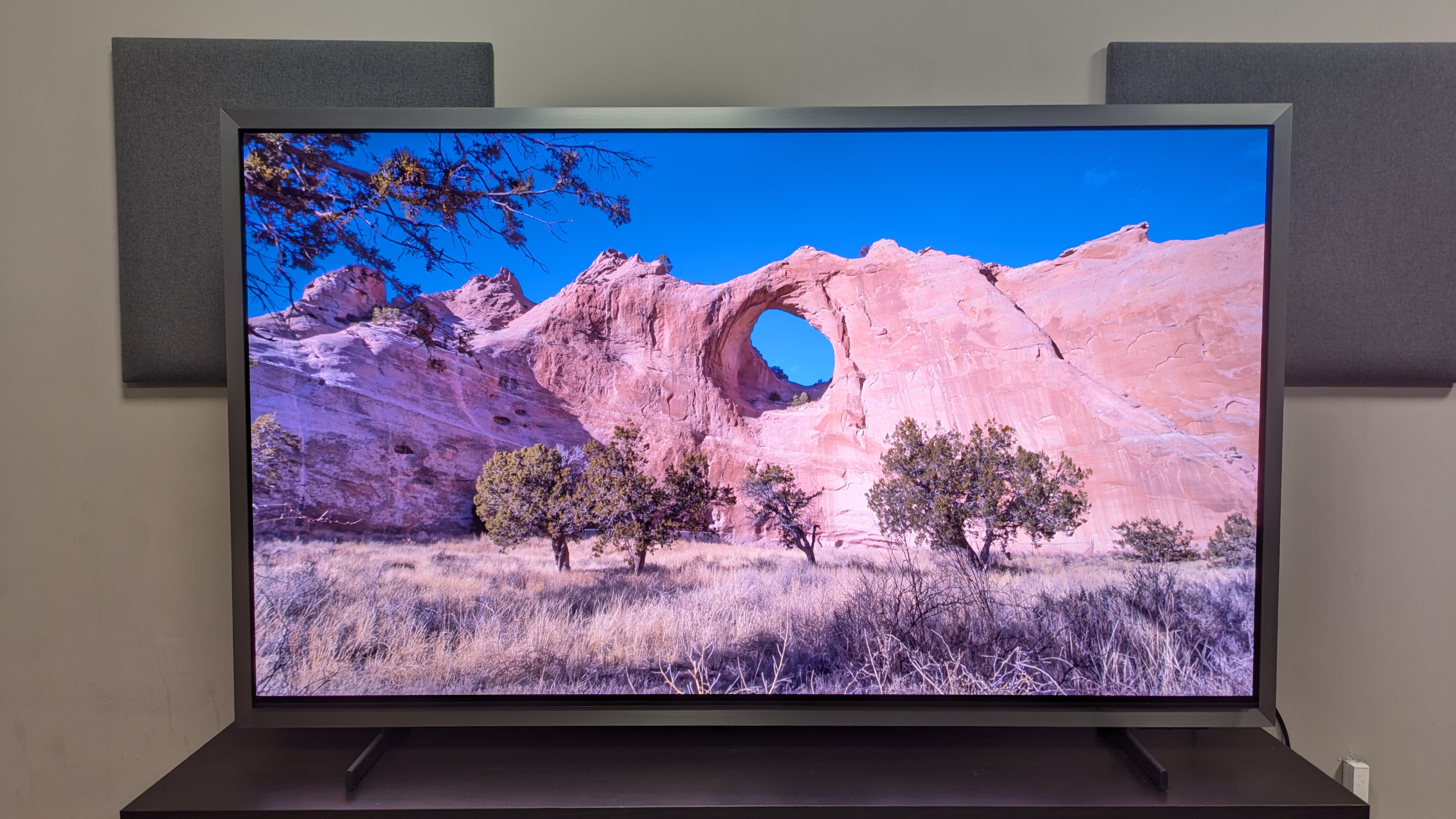
- Spectacular color display
- Effective anti-glare matte screen
- Strong contrast and inky black tones
The S95H boasts some strong brightness results, clocking in at 2,739 nits in Filmmaker Mode and 2,831 nits in Standard for peak HDR brightness. I used Movie mode for some of my testing, and this registered at 2,751 nits peak HDR. This is a big jump over 2,132 nits and 2,135 nits the S95H’s predecessor, the S95F, registered in the same HDR Filmmaker and Standard modes respectively.
Even fullscreen HDR brightness has had a nice boost, registering 449 nits in Filmmaker, 460 nits in Standard and 450 nits in Movie. This is a jump over the 380 nits and 390 nits the S95F achieved in Filmmaker and Standard mode.
The S95H’s has an anti-reflection, matte screen. If you’re viewing in a bright room, with unavoidable light, the S95H should be near the top of your shopping list. While I preferred the LG G6 over the S95H for actual content in bright rooms, the S95H is still the better TV for eliminating reflections outright.
The S95H demonstrates effective upscaling of SDR sources. Watching a mix of reality shows and Wimbledon via Samsung TV Plus, the S95H did a good job sharpening textures and giving colors a richer look. With HD sources, detail upscaling looked realistic and definitely had a 4K-like level of detail.
I tried out the Auto HDR Remastering Pro tool, and while it did boost brightness and sharpen textures, it all looked too artificial for my liking.
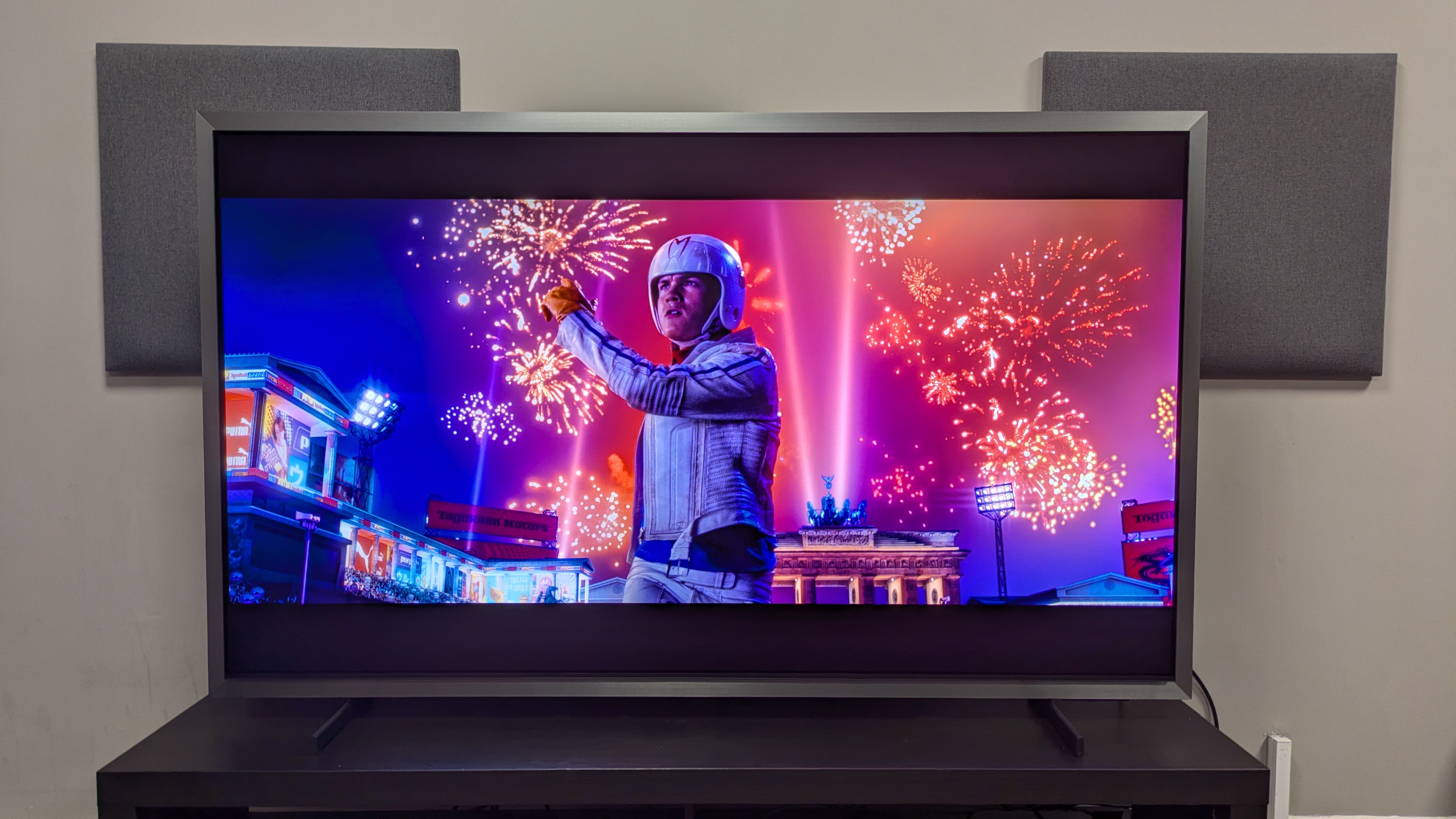
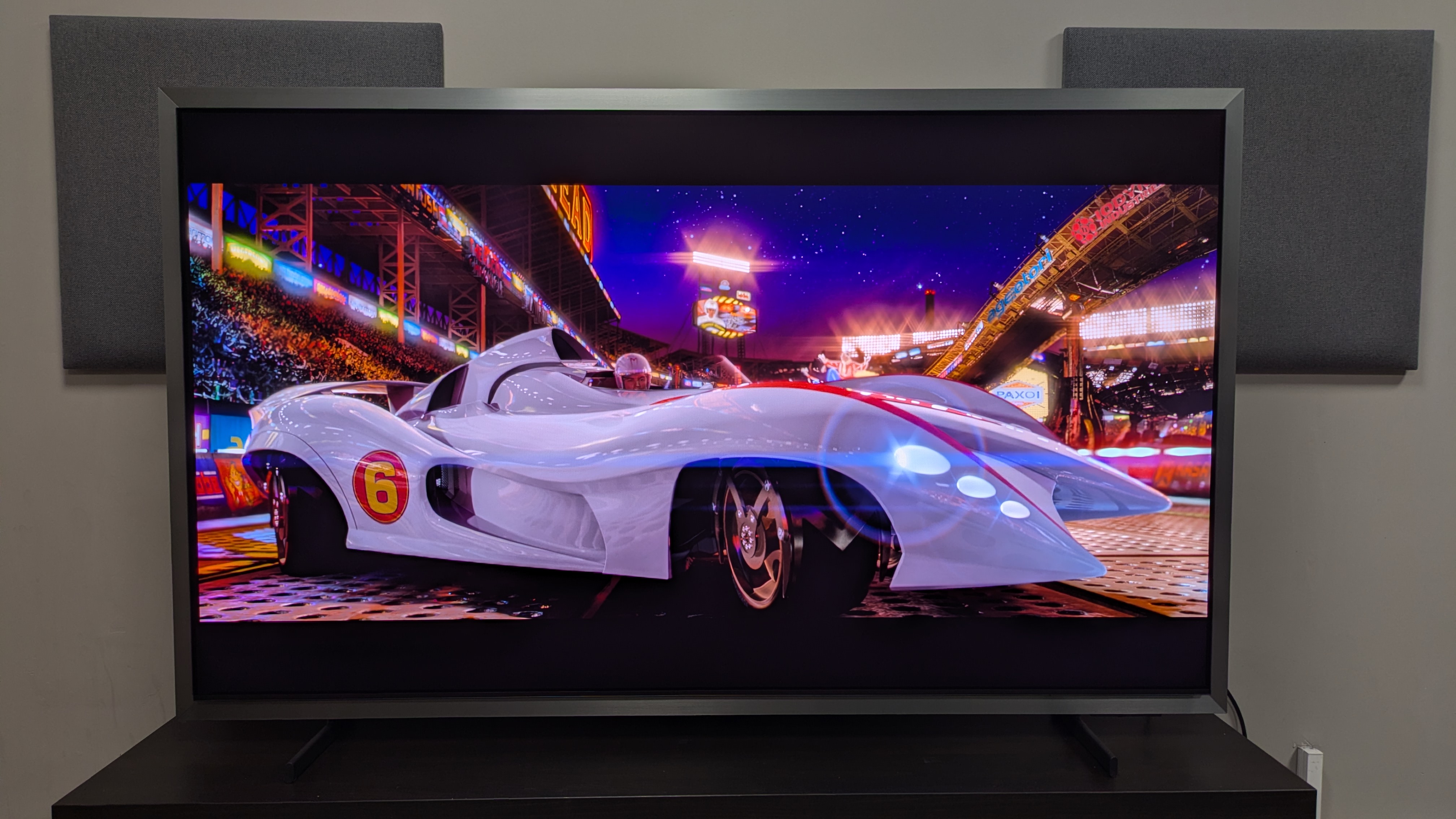
Moving to HDR sources, I first tested the S95H’s colour reproduction. Watching Speed Racer, a recent addition to my 4K Blu-ray testing rotation, the S95H delivered bright, bold colors that accurately captured the cartoon-style colours of the movie. Close-up shots of Speed Racer show vibrant reds in the interior of his cockpit and his ‘M’ logo, while later scenes show gorgeous, bright blues of clear skies and neon-like greens of a field in a schoolyard.
Comparing the S95H to the G6, I did find that the S95H made some reds a little pale and orange in appearance at times, but viewed in isolation, the S95H’s colors still looked superb. Moving to La La Land, Mia’s yellow dress was punchy, but accurate on the S95H and the gradient of pinks and purples in the sunsets looked realistic, but still lively.
It’s no real surprise that colors looked bold on the S95H, as I measured its HDR color gamut coverage at 89.2% of the BT.2020 colour space and 99.97% of the DCI-P3 color space: both outstanding results.
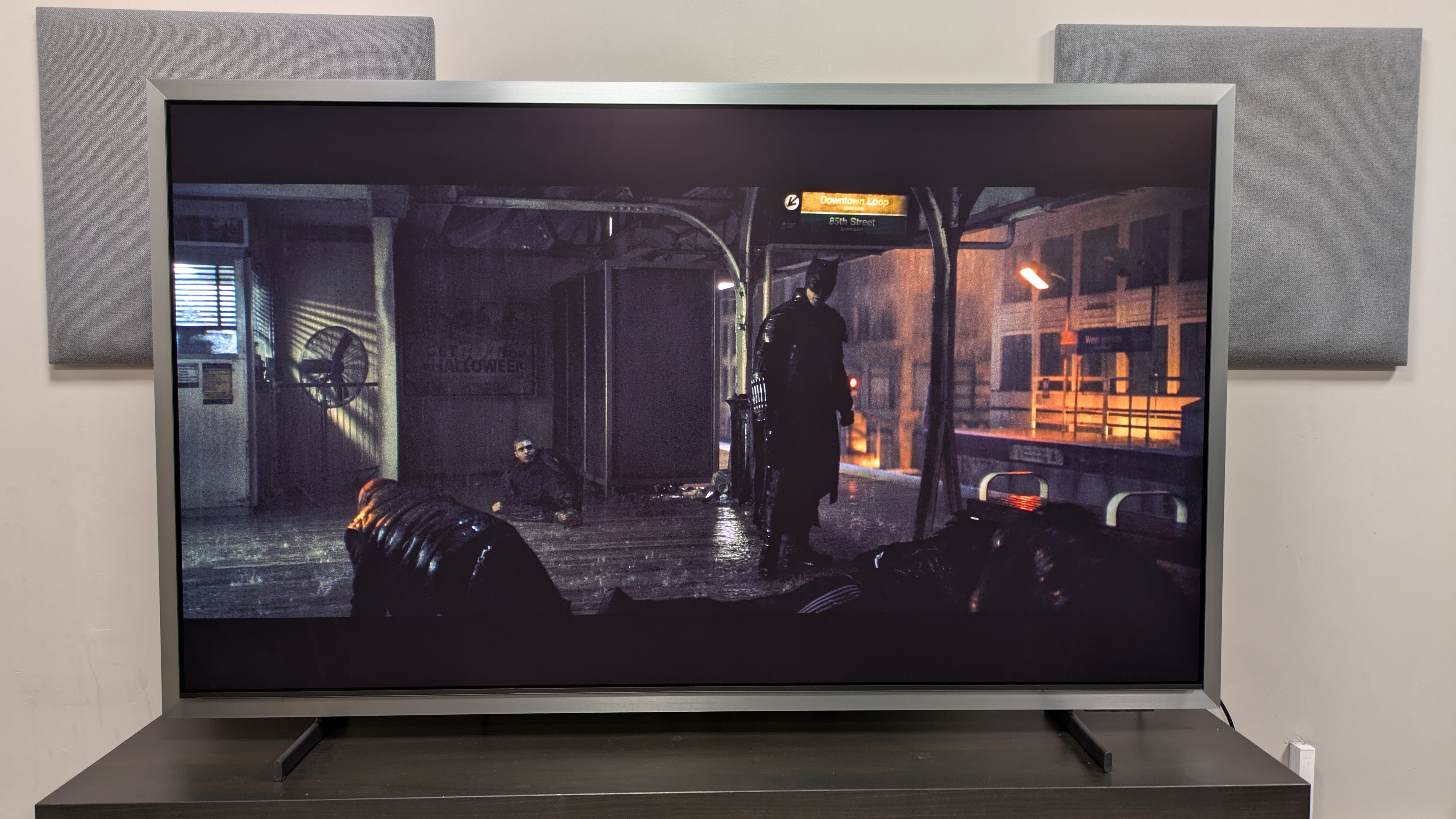
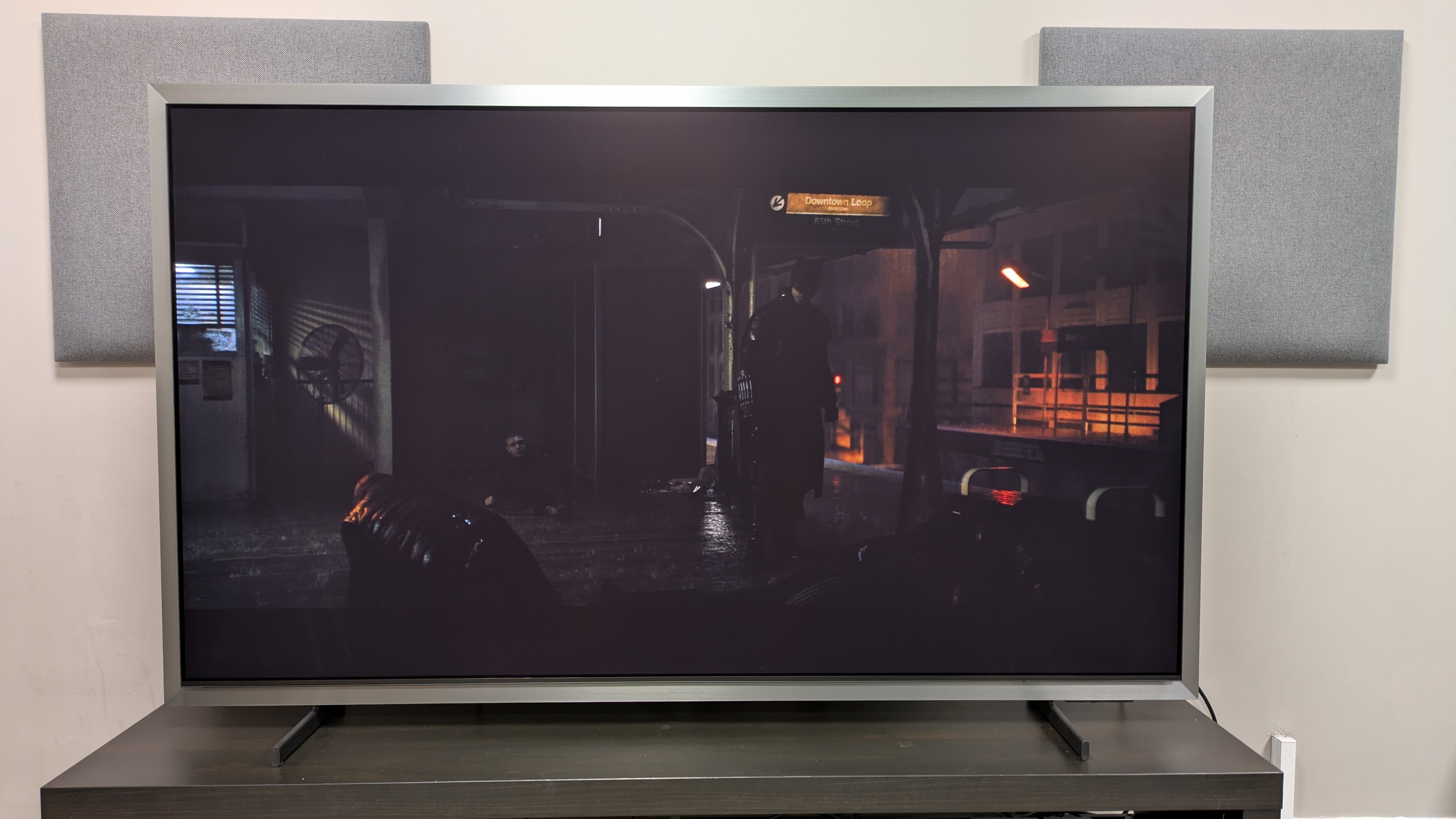
For darker movies, it was important to get the right picture mode for the situation. I found The Batman was too dim to watch in the default Filmmaker Mode with the lights on in our testing lab, but Movie mode worked fine. In a darker room however, Filmmaker Mode worked.
Throughout The Batman, the S95H’s strong contrast shone through, aided by its punchy highlights from its newfound brightness and rich black tones. Whether Batman stood in a dark subway or the camera cut to a ceiling-high, wide-angle shot of the Batcave, there was an excellent balance between light and dark tones.
I found during my testing that in Filmmaker Mode, the S95H was prone to black crush during the darker parts of the movie, resulting in detail loss. Batman’s armor in the aforementioned subway scene is obscured, as the S95H prioritizes deeper blacks. This wasn’t as true in a ‘brighter’ dark movie, such as Alien: Romulus, where detail is more preserved, but there were still hints of black crush.
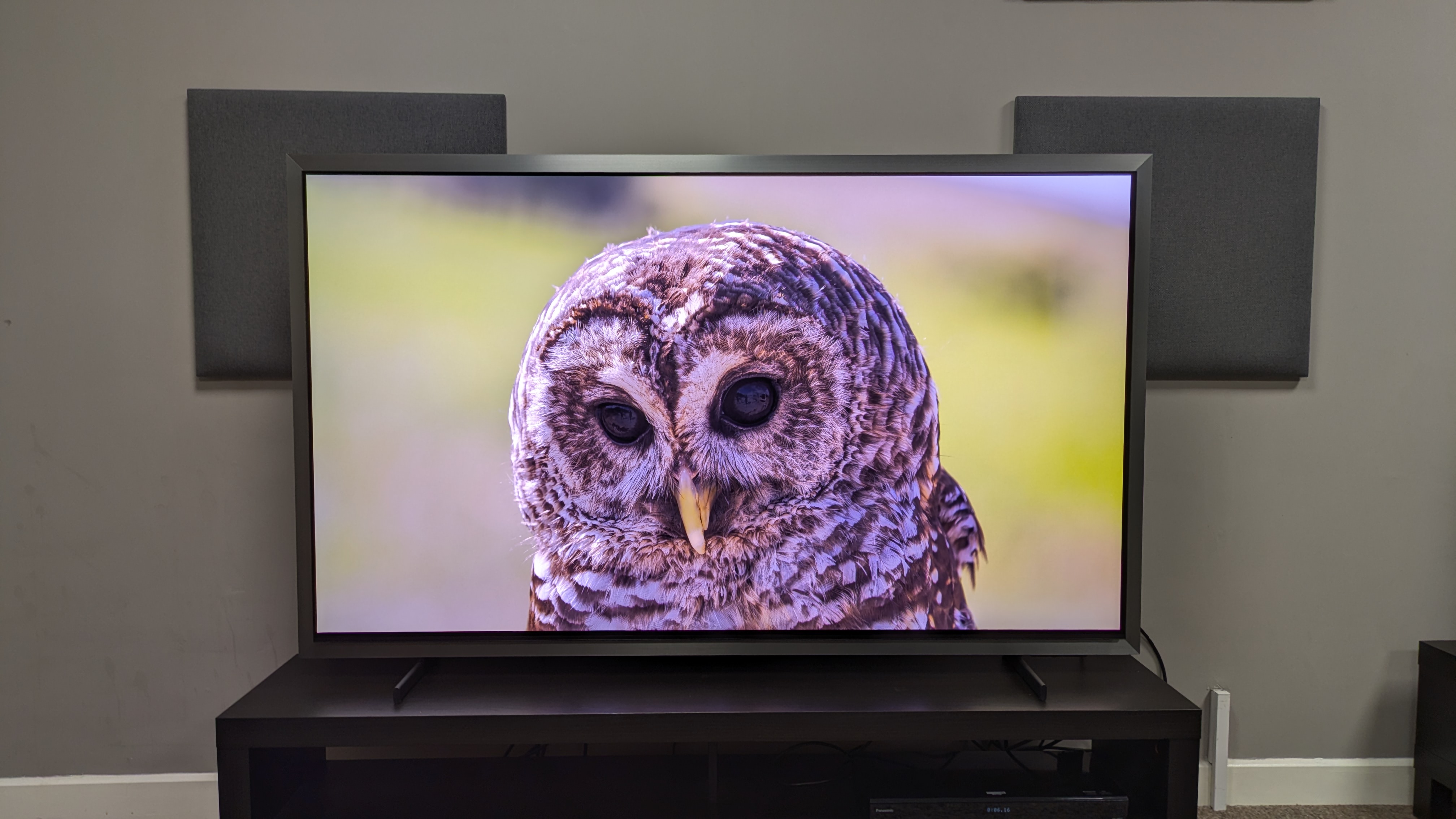
The S95H’s textures are crisp and 3D-like, no matter the content. Skin, clothing and objects all look lifelike, especially in HDR. I actually found I preferred the look of the S95H’s skin tones better than the G6 in my comparison of the two.
Finally, motion. The S95H demonstrated good motion throughout my testing, but I found it was best to set motion to 3 blur and 3 judder. Any higher, and motion looked artificial and unnatural. Going back to Speed Racer, the S95H did a good job handling the fast racing sequences as cars swerved from side-to-side. I did find there was some judder as commentators panned across the screen, but I found this on every TV I’ve tested with the disc so far.
I tried out the S95H’s AI Soccer Mode Pro and it was somewhat effective. The commentary was clearer and louder, the picture was more detailed and motion was smoother. If you don’t want to use any AI tools, then Standard picture mode with judder and blur set to 3 worked well for sports.
- Picture quality score: 5 / 5
Samsung S95H review: Sound quality
- 4.2.2-channel speaker system with Dolby Atmos
- Great accuracy and clarity
- No DTS support
The S95H features a 4.2.2 channel, 70W speaker array and supports Dolby Atmos. There is however no DTS support. Along with its two sound modes, Standard and Amplify, there are AI Sound tools such as Adaptive Sound Pro and Active Voice Amplifier that can be used to adjust sound.
Watching Speed Racer with the S95H set to the Amplify sound mode, the S95H demonstrates solid bass and power, accurately delivering the rumble and revving of engines. Collisions as cars battle during races also have good impact, along with clear speech, even during the most hectic of races.
The S95H’s Object Tracking Sound+ (OTS+) is superb for delivering precise sound placement. When Speed Racer grinds a rail in the opening race, the sound was clean and audible, despite other loud effects.
Trying out the S95H’s AI Sound mode, it adds some width to the soundstage, giving more volume to more subtle effects. However, I personally found that the AI Sound was a little more compressed and some power was compromised, so I preferred the default Amplify setting.
While overall the S95H’s built-in speakers did a good job, I still felt the sound was contained to the screen's width, and while there was some good delivery of Atmos effects, they again were lost in the mix. For a TV with this picture quality, I’d still recommend a soundbar at least for the full cinematic experience.
- Sound quality score: 4 / 5
Samsung S95H review: Design
- Extended silver frame will be divisive
- Stand replaced with feet
- No One Connect Box included
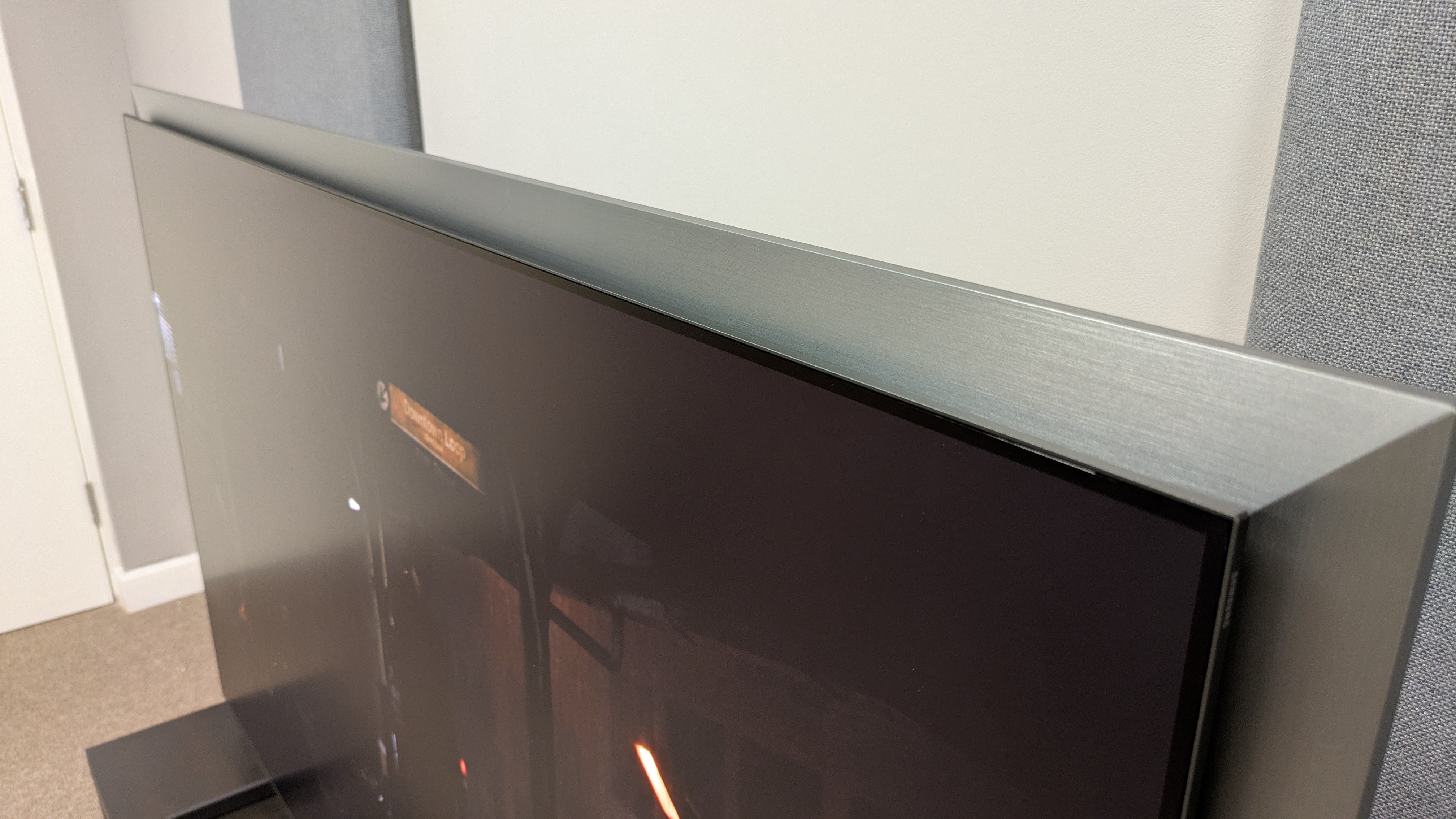
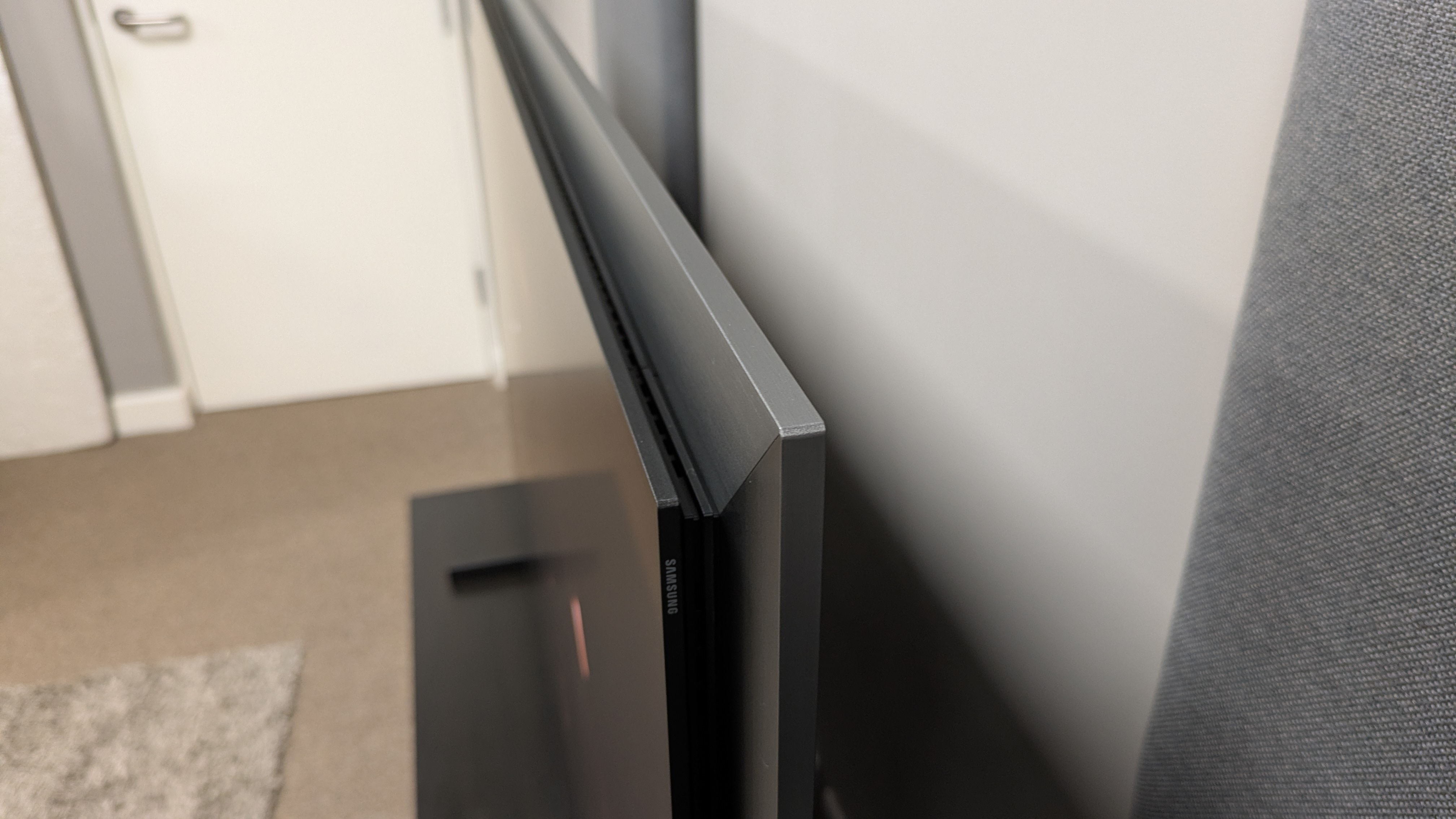
Arguably the biggest talking point for the S95H this year is the physical design changes compared to last year’s S95F. The most notable is the FloatLayer Design, a silver frame that surrounds the TV, giving it a floating, 3D look. This is going to be a controversial addition and for some, it will mean a re-think on where to put the TV, since it adds width and height.
Personally, I’m not a fan, as I find the silver to be a bit distracting and when viewed off-centre, the frame looks odd.
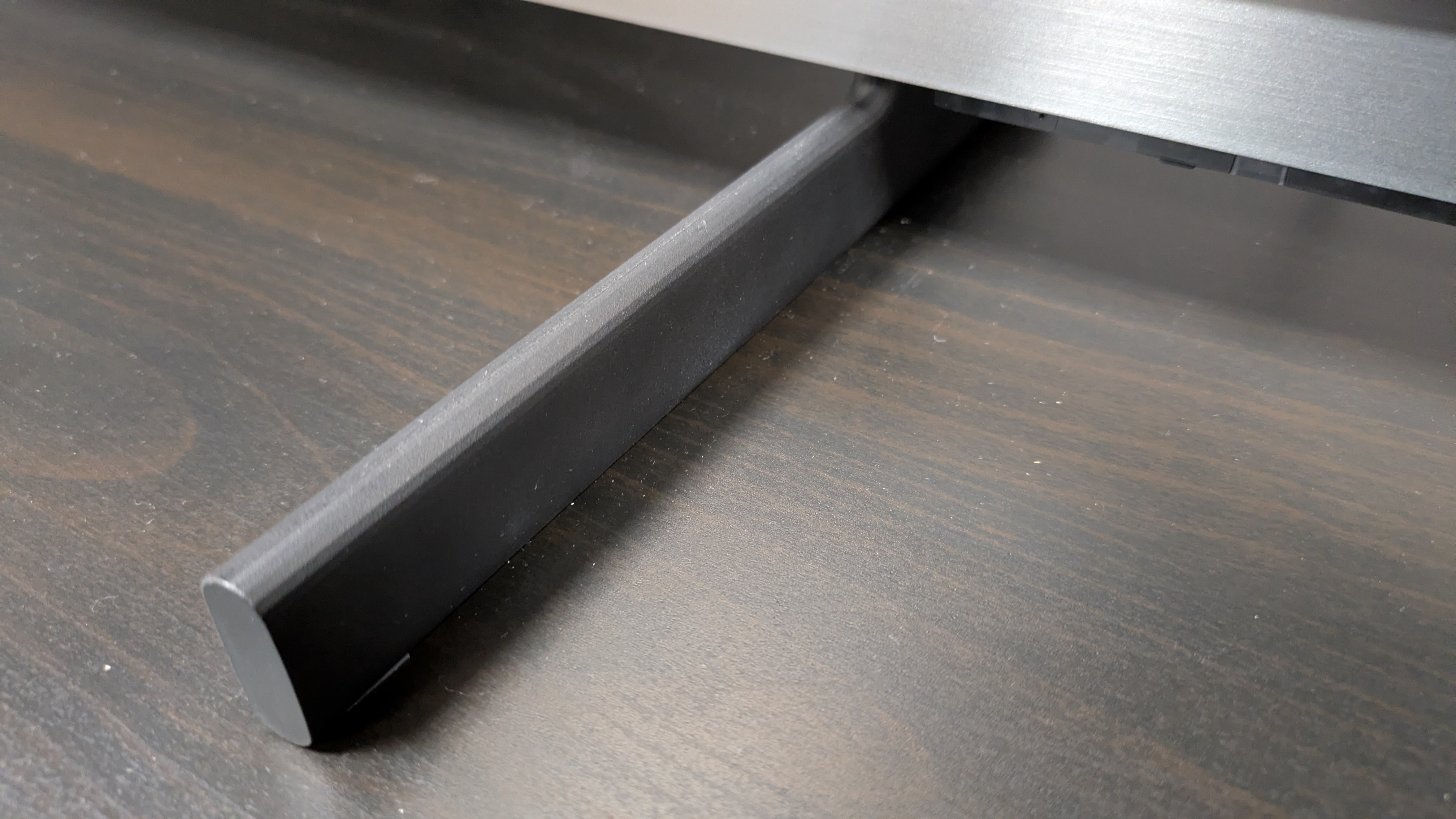
The black, metal, pedestal stand from the S95F has been replaced by two plastic gray feet. While these feet are sturdy and easy to install, I still feel it’s a downgrade for a premium TV. The TV’s bezel is still sleek and ultra-thin, however, and gives it a high-quality feel (but is slightly spoiled by the frame behind it).
The other big change is the removal of the One Connect Box, an external box that housed the TV’s connections and processing. Now, the ports have returned to the rear panel on the TV itself.
For some, this will be welcome news. The S95H is compatible with the Wireless One Connect Box too, so if you liked the external connections, this is still an option you can add on — and not only that, the box can work in tandem with the TV’s built-in connections, meaning a potential eight HDMI 2.1 ports. Who needs an AVR?
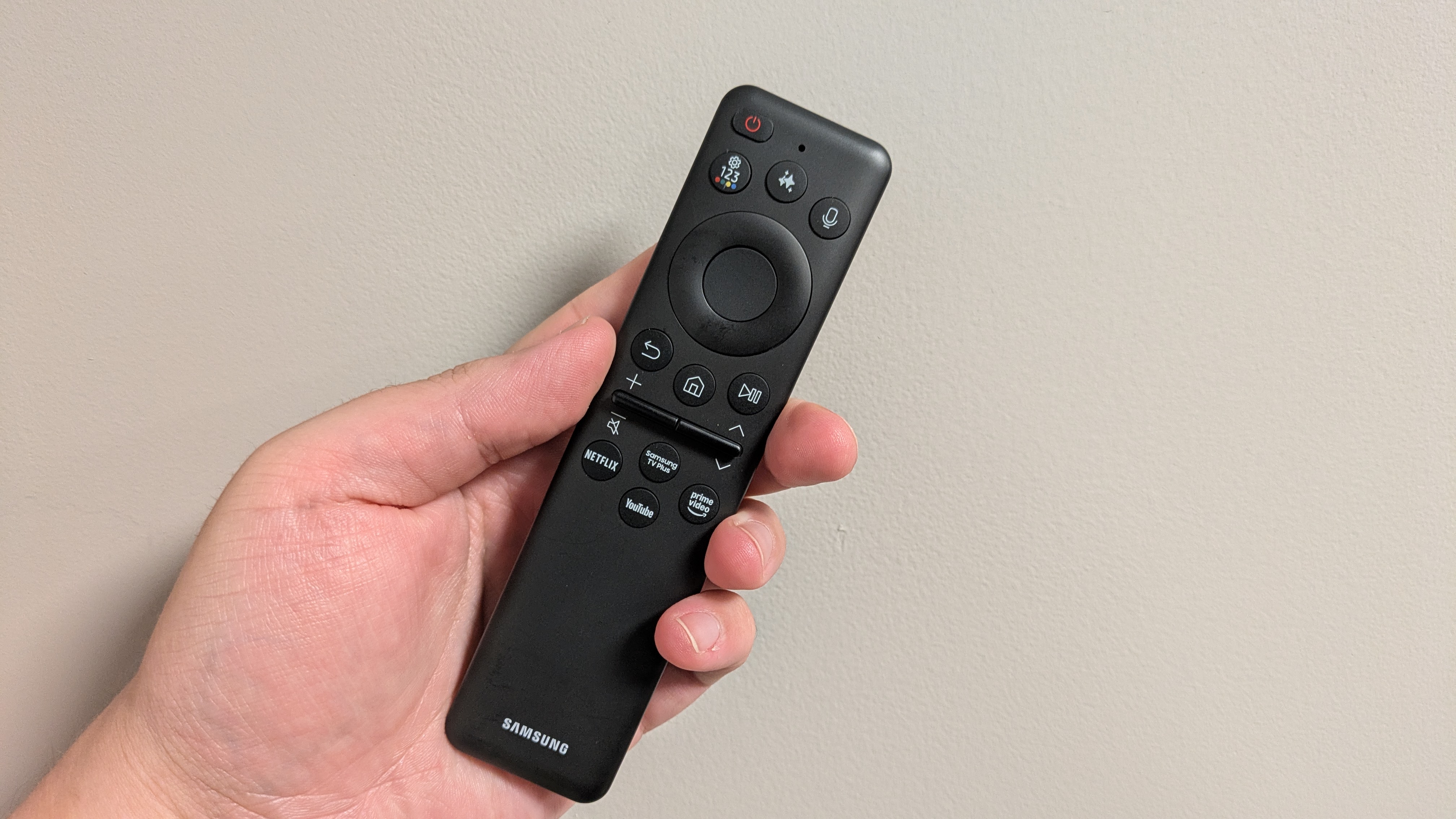
The SolarCell remote returns once again, and while there’s been no real changes or additions to it, it’s still a light, sleek, USB-C and solar rechargeable remote that’s probably one of the better remotes on the market.
- Design score: 4 / 5
Samsung S95H review: Smart TV & menus
- One UI Tizen smart TV platform
- Vision AI features
- Home, Gaming, Art Hubs
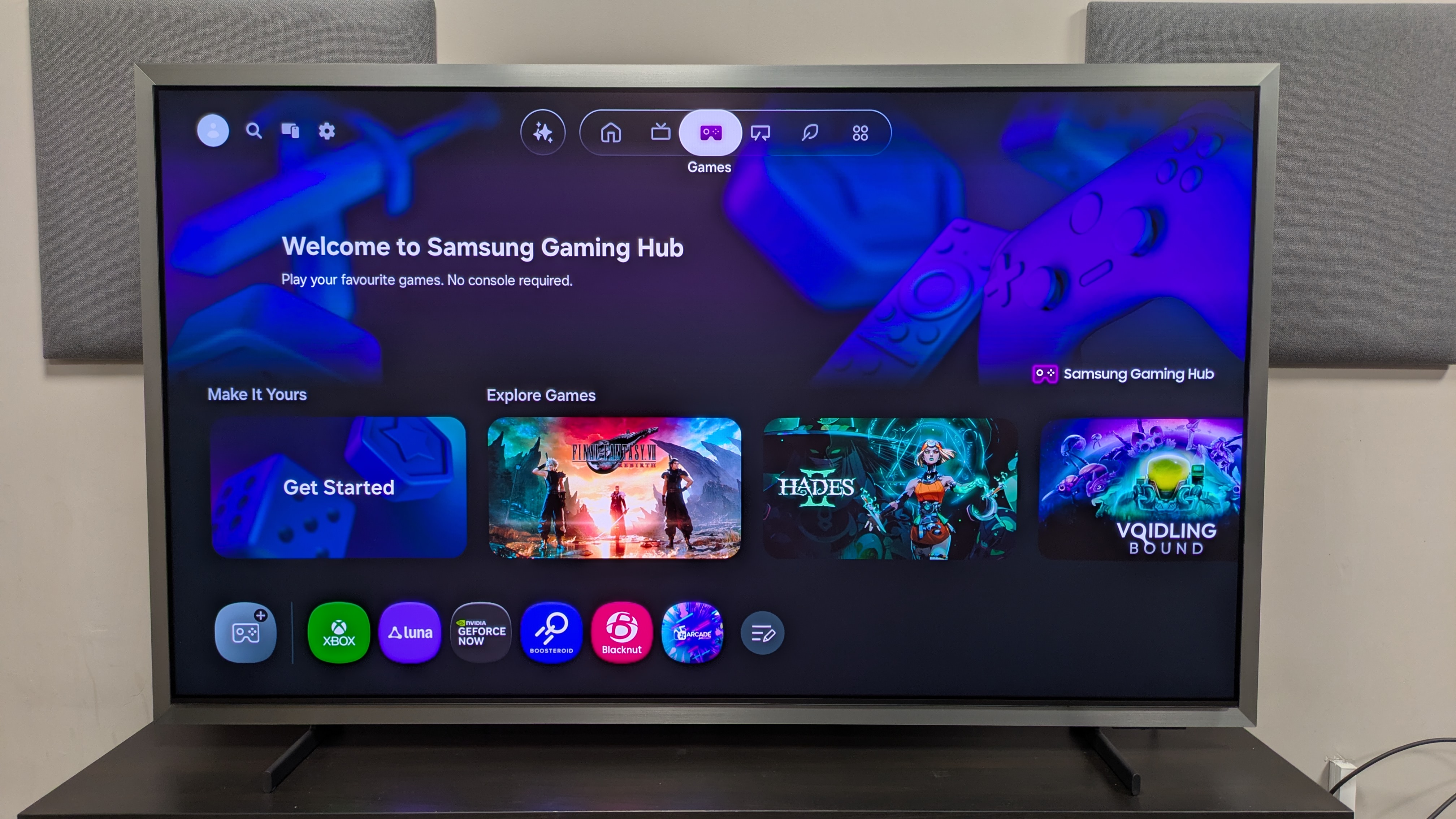
The S95H uses Samsung’s own One UI Tizen smart TV platform, with the headline addition this year being the Samsung Vision AI Companion, which can be used to find related content to what you're watching, and can answer general questions you may ask AI. Microsoft Copilot is supported.
Tizen supports major streaming apps such as Netflix, Prime Video, Apple TV+ and more.
Tizen uses a number of different hubs as a way to organize relevant apps and content. Home houses streaming apps and content recommendations based on your viewing. Game houses all things gaming, including cloud based apps from the likes of Xbox. Daily hosts apps for office and health use, while Art hosts the Art Store, where artworks can be downloaded to be used as screensavers.
Art mode is a new addition, and basically means you can turn this into an artwork display, just like Samsung's The Frame TV. This may explain the new frame-like design. The Art mode costs a monthly subscription for access to all artworks.
Tizen is intuitive enough and easy to use. There is a space at the top of the home screen for banner ads, but this is common on most smart TV platforms nowadays. One thing I did find frustrating was that whenever I lingered on the home screen, Samsung TV+ would autoplay and overwrite whatever I was doing. There seemed to be no way to turn this off, short of deleting the app.
There are a good number of picture settings present, as well as AI-based tools for picture and sound settings.
- Smart TV & menus score: 4.5 / 5
Samsung S95H review: Gaming
- Four HDMI 2.1 ports
- FreeSync and G-Sync supported
- 9.5ms input lag time
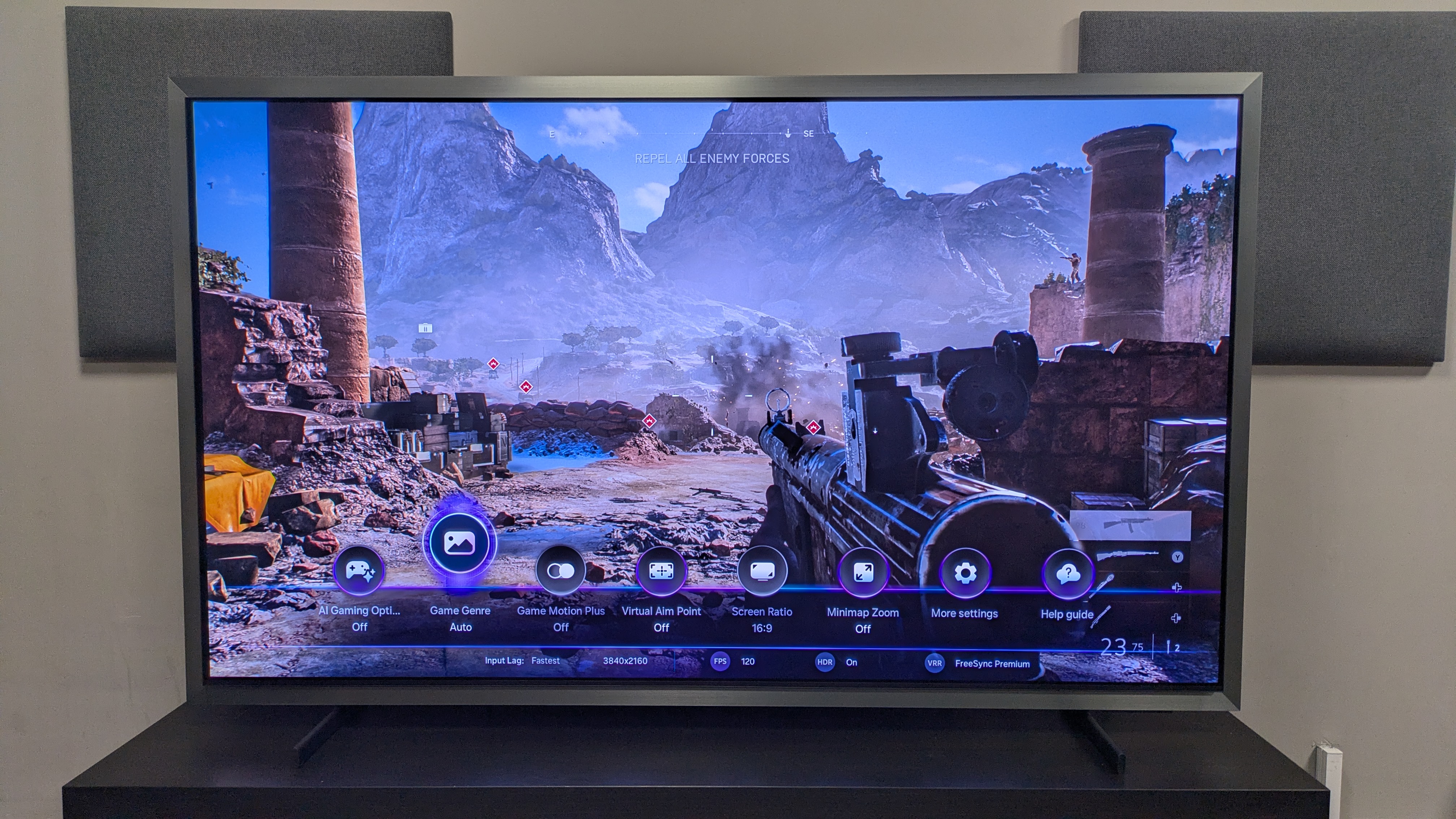
The S95H is an excellent TV for gaming. Across its four HDMI 2.1 ports, it supports 4K 165Hz, full VRR including AMD FreeSync and Nvidia G-Sync, HDR10+ gaming and ALLM. It also features a Game Hub, where gaming related content and cloud based gaming apps such as Xbox and Luna are supported.
The S95H’s gaming performance is smooth and responsive, thanks to its ultra-low, measured 9.5ms input lag time. As I dashed around a desert battlefield in Battlefield V playing at 4K 120Hz, snapping between targets and diving for cover, there was never any sign of judder from the S95H, which expertly handled the chaos.
With its strong colors, high brightness and powerful contrast, the S95H looks great while gaming too. During the same desert mission in Battlefield V, it did a superb job capturing the relentless heat of the African sun. Detail in weapons and textures of environments were crisp and refined throughout gaming as well.
- Gaming score: 5 / 5
Samsung S95H review: Value
- Premium OLED price
- Competitive with other elite OLEDs
- Great features and performance for the money
As a flagship OLED TV, the S95H carries a premium price tag. The 65-inch model I tested costs $3,299 / AU$5,299, although I’ve seen offers in Australia dropping the same model to $AU4,799.
This puts its pricing right in line with its rival, the LG G6, which costs $3,299 / AU$4,999 for the 65-inch size. Really, it comes down to preference between the two and how important the differences such as total reflection reduction versus maintain black tones are.
Right now, if you want a flagship Samsung OLED, a 65-inch S95F is still available for roughly $2,499 (stock looks depleted in Australia) and while the S95H is an upgrade, the S95F is easily the best value option right now. Once the S95F goes out of stock, which looks to be sooner rather than later, the S95H’s prices will continue to fall, and it’ll be a more-than-worthy successor.
- Value score: 4 / 5
Should you buy the Samsung S95H?
Attributes | Notes | Rating |
|---|---|---|
Features | The Samsung S95H has a full suite of features for movies, gaming and smart TV. Dolby Vision HDR is still not supported however. | 5 / 5 |
Picture quality | The S95H's picture is bright, bold, rich and detailed and it's excellent for bright rooms. Some signs of black crush, but an excellent picture overall. | 5 / 5 |
Sound quality | Clear, accurate sound quality with solid bass and impact, but can feel contained to screen. Separate sound is recommended to match the picture. | 4 / 5 |
Design | A new extended silver frame that will prove divisive, plus the central stand is replaced by cheaper plastic feet. Aside from this, the TV does look modern and feels very sturdy. | 4/5 |
Smart TV and menus | A good smart TV platform wit plenty of settings and AI tools. There are some annoying quirks here and there though. | 4.5 / 5 |
Gaming | A full list of gaming features with top-tier performance to match. An excellent elite OLED for gaming. | 5 / 5 |
Value | The S95H comes at a premium price, but has the features and performance to justify it. | 4 / 5 |
Buy it if...
You want a bold, colorful picture
The S95H's picture is brighter than ever, with gorgeous colors and 3D-like textures that look great regardless of what's on screen.
You want an elite OLED for gaming
With four HDMI 2.1 ports that support 4K 165Hz and all VRR options, and razor-sharp performance, the S95H is a superb TV for gaming.
You want to watch in a bright room
The S95H's anti-reflection screen is effective at eliminating mirror-like reflections, even in the brightest rooms.
Don't buy it if...
You want a straightforward design
The S95H's new silver frame will prove divisive, both aesthetically and because it might mean some will have to re-think their TV's placement.
You want Dolby Vision HDR
Like all Samsung TVs, the S95H doesn't support Dolby Vision HDR, instead featuring support for HDR10+.
You're on a budget
A flagship OLED TV comes at a price and while it does mostly justify its price, other, cheaper mid-range OLEDs with similar features are available.
Also Consider
Samsung S95H | LG G6 | Samsung S95F | Sony Bravia 8 II | |
|---|---|---|---|---|
Price (65-inch) | $3,299 / AU$5,299 | $3,299 / AU$4,999 | $2,499 / N/A | $2,999 / AU$4,999 |
Screen type | QD-OLED | OLED | QD-OLED | QD-OLED |
Refresh rate | 165Hz | 165Hz | 165Hz | 120Hz |
HDR support | HDR10+/HDR10/HLG | HDR10, HLG, Dolby Vision | HDR10+/HDR10/HLG | HDR10, HLG, Dolby Vision |
Smart TV | One UI Tizen | webOS 26 | Tizen 9.0 | Google TV |
HDMI ports | 4x HDMI 2.1 | 4x HDMI 2.1 | 4x HDMI 2.1 | 4 (2x HDMI 2.1) |
Built-in tuner (US) | ATSC 1.0 | ATSC 1.0 | ATSC 1.0 | ATSC 3.0 |
LG G6
The S95H's main rival, the LG G6 is brighter and has better black levels in bright-room viewing. It also supports Dolby Vision HDR. The S95H does have crisper-looking textures and the anti-reflection screen for extreme bright rooms, however. This choice may come down to price.
Read our full LG G6 review
Samsung S95F
The S95H's predecessor, the Samsung S95F is available for nearly half the price and has the same features and delivers similar performance in a more standard design. The S95H, however does have higher brightness and improved black-level handling.
Read our full Samsung S95F review
Sony Bravia 8 II
Sony's flagship OLED TV, the Sony Bravia 8 II also uses a QD-OLED panel for outstanding colors and it also delivers a fuller built-in sound. The S95H is brighter and has more gaming features though.
Read our full Sony Bravia 8 II review
How I tested the Samsung S95H
- Reviewed in our TV testing room in varying lighting conditions
- Tested using both SDR and HDR sources
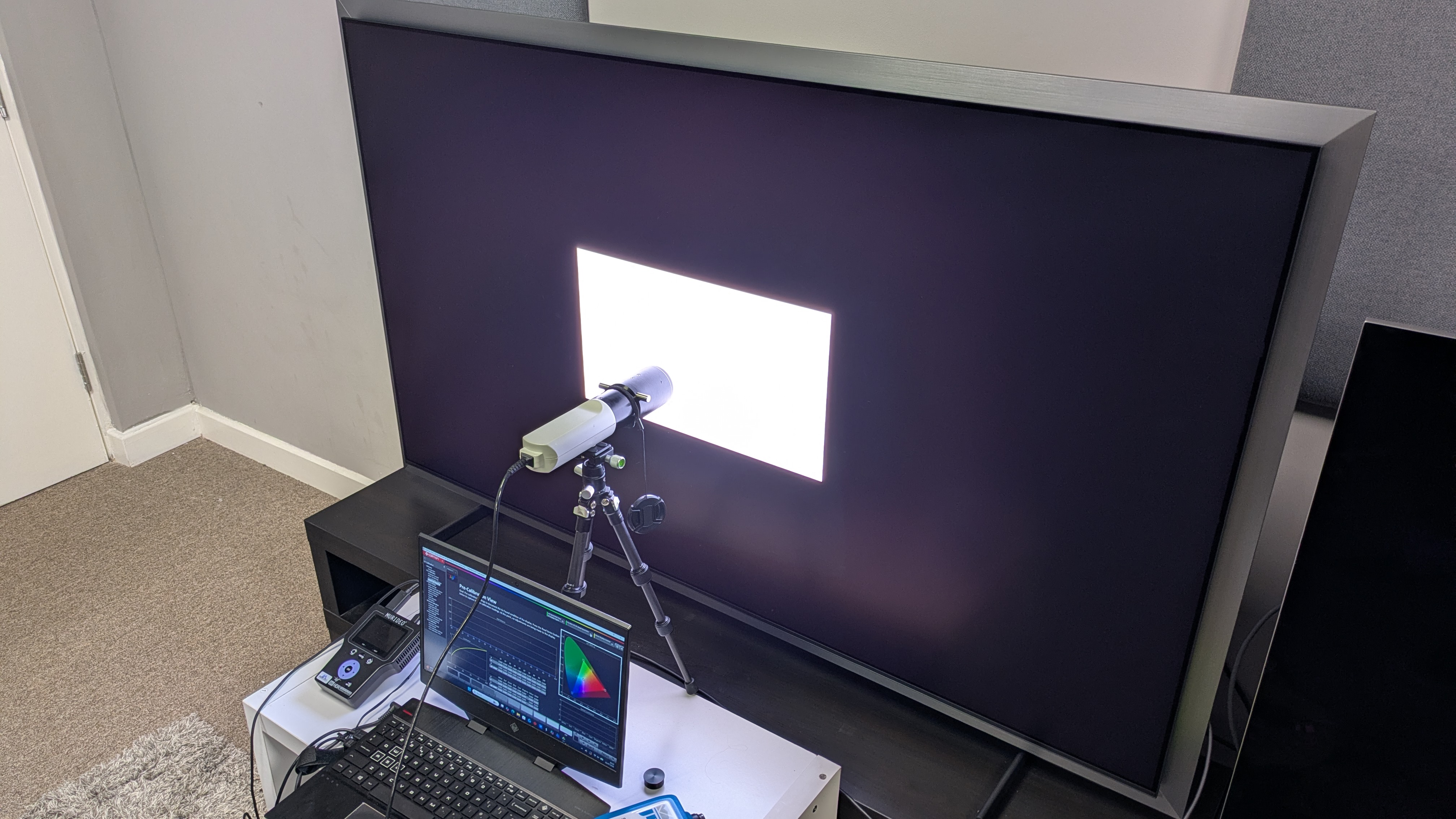
- Measurements taken using Portrait Displays' Calman color calibration software
The first step in testing the S95H was to determine its best picture modes. I settled on three: Filmmaker Mode for dark-room movie viewing; Movie for bright-room movie viewing and Standard for sports and daytime TV.
After this, I began by testing the S95H's picture quality using both SDR (broadcast TV) and HDR (4K Blu-ray and streaming), focusing on color, contrast, detail, upscaling and motion.
I also tested the S95H's sound quality using reference scenes from Speed Racer among other movies, and I tested its gaming performance using Battlefield V on Xbox Series X.
Once subjective testing was completed, I moved onto taking objective measurements. I did this using a Klein K-10A colorimeter (profile with a Jeti Spectral 15VA Spectroradiometer), a Murideo Six G 8K Metal test pattern generator and recorded measurements using Portrait Displays' Calman color calibration software.
I started with brightness measurements, using white window patterns in sizes 1-100% in both SDR and HDR. The two primary results I focus on are peak (10%) and fullscreen (100%) brightness.
Next, I measured the S95H's color and grayscale accuracy in SDR, and then measured its HDR color gamut coverage, using the DCI-P3 and BT.2020 color spaces, hoping for a result of over 95% in the DCI-P3 space.
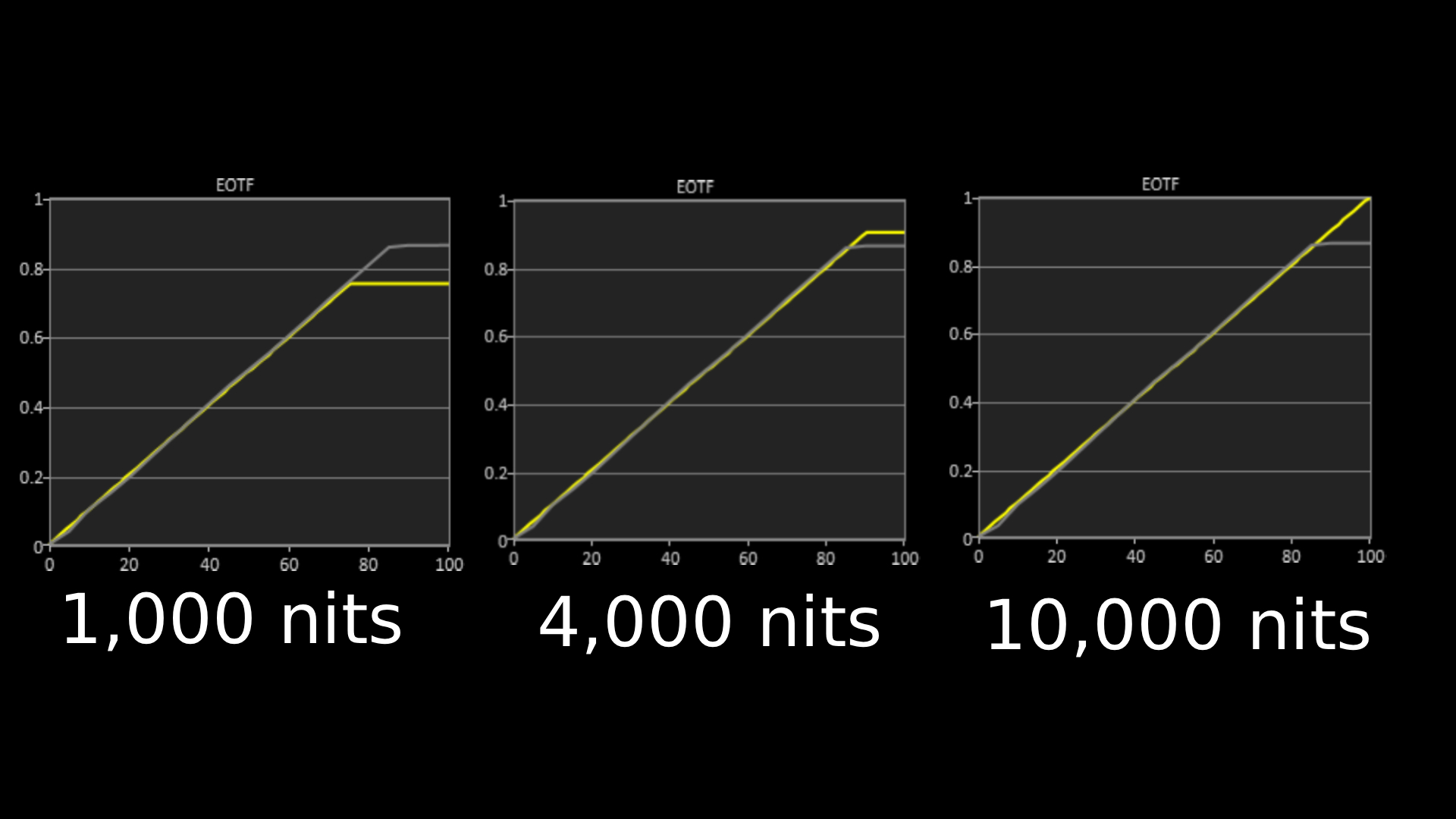
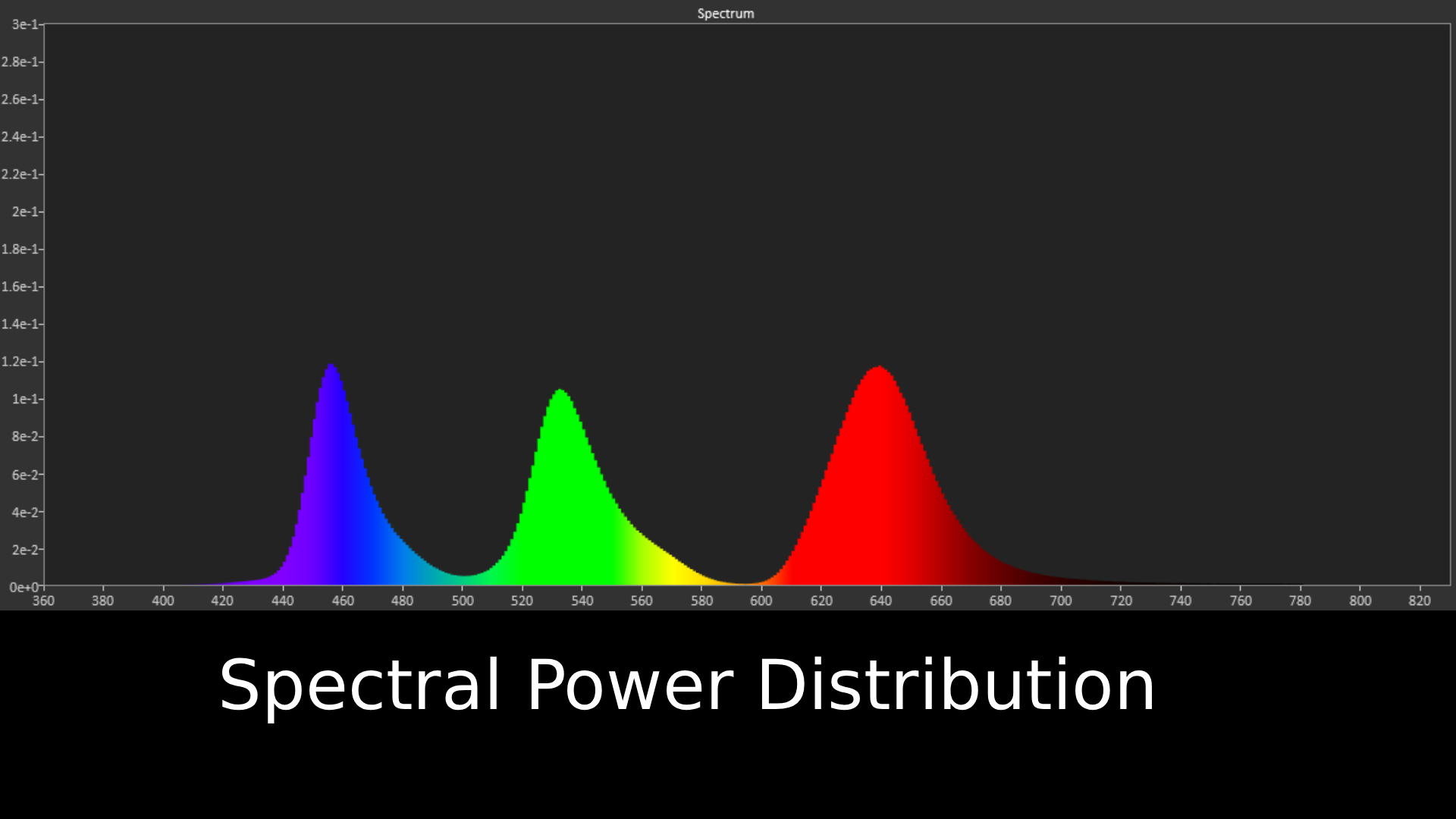
We recently introduced two new tests into our measurements. The first is the HDR EOTF, which shows the accuracy of a TV's brightness across its range, using 1,000, 4,000 and 10,000 nits targets. Then, there is the Spectral Power Distribution test, which measures how a TV recreates colors.
My final test was to measure the S95H's input lag using a Leo Bodnar 4K HDMI Input Lag Tester. I measured both 4K 60Hz and 1080p 120Hz results in milliseconds (ms).
- First reviewed: July 2026
- Read TechRadar's reviews guarantee




